
Black Tie Attire: The Complete Guide to What to Wear and What to Avoid
An invitation that says “black tie” can create more stress than almost any other dress code, mostly because people are unsure exactly what is required and how much room there is for interpretation. Get it wrong and you either stand out for being underdressed or feel out of place in something too casual for the room.
This guide explains exactly what black tie attire means for both men and women, how it differs from similar dress codes like black tie optional and formal, and the details that separate a confident, correct outfit from a common mistake.
What Is Black Tie Attire
Black tie is a formal evening dress code that traditionally requires a tuxedo for men and a formal evening gown or equally formal dress for women. It originated in the late 19th century as a slightly less formal alternative to white tie, which requires a full tailcoat, and has remained the standard for formal evening events such as galas, formal weddings, award ceremonies, and upscale evening parties.
The defining principle of black tie is formality and consistency. Unlike more flexible dress codes, black tie has fairly specific expectations, even though modern interpretations allow some room for personal style within those boundaries.
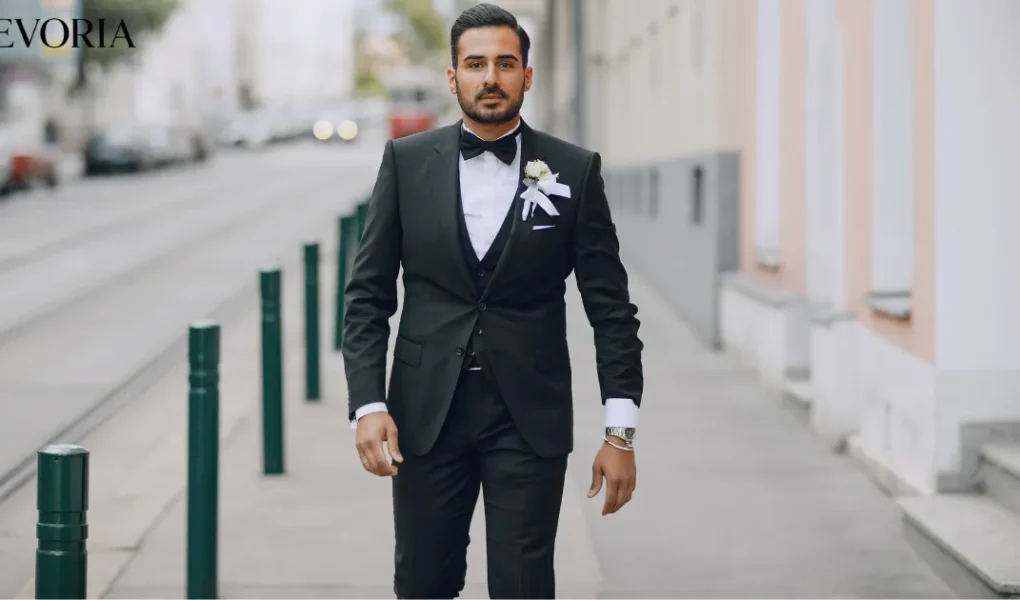
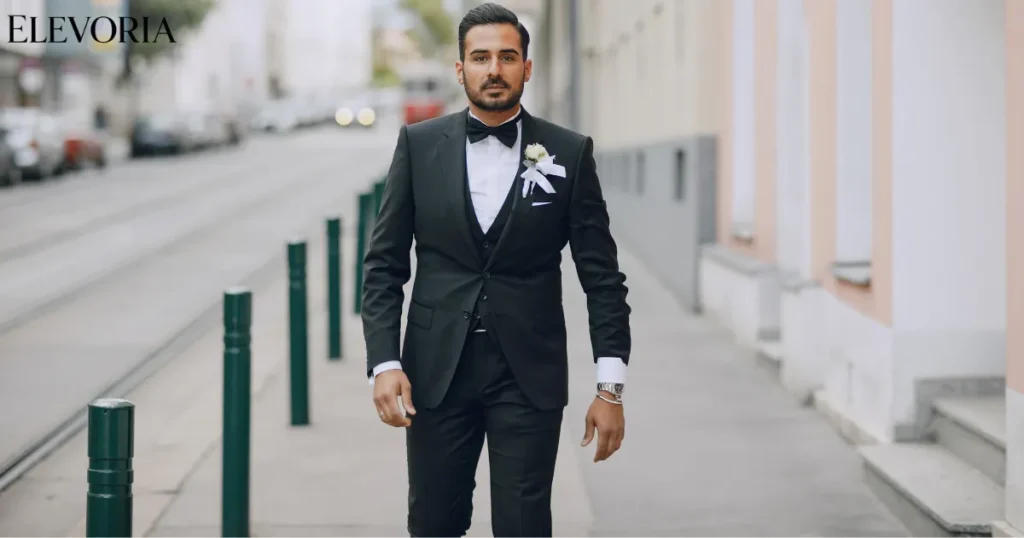
Black Tie Attire for Men
The Core Requirements
- Tuxedo jacket: Traditionally black, though midnight blue is also considered classic and acceptable, often with satin or grosgrain lapels in a peak, shawl, or notch style.
- Formal trousers: Matching the jacket, typically with a satin stripe down the outer seam.
- White dress shirt: Usually a pleated or marcella front shirt with a spread or wing collar designed to accommodate a bow tie.
- Black bow tie: Self-tie is traditionally preferred over pre-tied, though pre-tied options are widely accepted today.
- Cummerbund or formal waistcoat: Worn to cover the waistband, typically matching the bow tie in fabric.
- Black formal shoes: Patent leather oxfords or formal black leather shoes, paired with black dress socks.
- Studs and cufflinks: Used in place of standard buttons on a formal dress shirt, typically in a simple, understated design.
Common Variations
Some modern black tie interpretations allow a black necktie instead of a bow tie, or a solid black waistcoat instead of a cummerbund. These variations are generally accepted at less traditional events but may not be appropriate for very formal or old-guard occasions such as certain galas or exclusive formal weddings.
Black Tie Attire for Women
The Core Requirements
- Formal evening gown: Typically full length, in a fabric appropriate for evening wear such as silk, satin, chiffon, or velvet.
- Elegant cocktail dress as an alternative: A floor length gown is traditional, but a formal, elegant cocktail length dress is widely accepted at most modern black tie events.
- Formal fabric and finish: Fabrics with a refined finish, such as satin or beaded detailing, generally read as more appropriate than casual fabrics like cotton or jersey knit.
- Formal footwear: Heels are traditional, though formal flats or low heels are increasingly accepted, particularly for comfort at longer events.
- Refined accessories: Fine jewelry, a formal clutch, and an evening wrap or shawl complete a black tie look appropriately.
Common Variations
Jumpsuits in formal fabrics have become a widely accepted alternative to a gown at many modern black tie events, provided the fabric and tailoring maintain the same level of formality. A well-tailored formal pantsuit in an evening-appropriate fabric can also work at many events, though it remains less traditional than a gown.
Black Tie vs Other Formal Dress Codes
Confusion often comes from dress codes that sound similar but carry different expectations. Here is how they compare.
| Dress Code | Men | Women | Formality Level |
|---|---|---|---|
| White Tie | Tailcoat, white bow tie, formal waistcoat | Full length gown, gloves often expected | Highest formality |
| Black Tie | Tuxedo, black bow tie | Full length or formal cocktail gown | Very formal |
| Black Tie Optional | Tuxedo preferred, dark formal suit acceptable | Formal gown or dressy cocktail dress | Formal, with some flexibility |
| Creative Black Tie | Tuxedo base with personalized details or colors | Formal gown with room for bold color or design | Formal but expressive |
| Formal / Cocktail Attire | Dark suit, tie | Cocktail dress or dressy separates | Moderately formal |
What Does Black Tie Optional Mean
Black tie optional means a tuxedo is preferred but not strictly required. For men, a dark, well-tailored suit with a conservative tie is an acceptable substitute if a tuxedo is not available. For women, the same range of formal gowns or dressy cocktail dresses used for standard black tie remains appropriate.
This dress code gives guests some flexibility, but it does not mean casual dress is acceptable. The expectation is still evening formal wear, simply with slightly more room in exactly how that formality is achieved.
What Is Creative Black Tie
Creative black tie keeps the traditional black tie structure in place, such as a tuxedo silhouette for men or a formal gown for women, while allowing more personal expression through color, pattern, or styling details. A midnight blue velvet jacket, a patterned bow tie, or a gown in a bold color with formal detailing would all generally fit within creative black tie, while still respecting the underlying formality of the dress code.
Common Mistakes People Make
Wearing a regular dark suit to standard black tie. Unless the invitation specifies “black tie optional,” a suit is generally considered underdressed for a strict black tie event.
Choosing a casual fabric for a formal dress. A dress in the right silhouette but the wrong fabric, such as cotton or jersey, often reads as less formal than the occasion calls for.
Skipping the bow tie for a standard necktie without checking event formality. While increasingly accepted, this substitution can look out of place at more traditional or upscale events.
Assuming black tie always means black clothing exclusively. The dress code refers to formality and structure, not a strict color requirement, particularly for women’s attire and creative black tie variations.
Ignoring the invitation’s specific wording. “Black tie,” “black tie optional,” and “black tie invited” all carry slightly different expectations, and treating them as identical can lead to being overdressed or underdressed.
Expert Insight: The Invitation’s Wording Is the Most Reliable Guide
A detail often overlooked is that the exact wording on an invitation is more useful than general internet guidance, since event hosts sometimes use dress code terms loosely. If an invitation says “black tie invited” rather than “black tie required,” this typically signals a black tie optional level of formality rather than strict black tie. When in doubt, following the more formal interpretation of an ambiguous dress code is generally safer than assuming a more casual reading.
Actionable Recommendations
- Read the invitation wording carefully and treat any ambiguity as a sign to lean more formal rather than more casual
- For men without a tuxedo, prioritize a dark, well-tailored suit and a conservative tie over a lighter colored or casual suit
- For women, choose fabric and finish as carefully as silhouette, since a casual fabric can undercut an otherwise formal dress design
- Confirm with the host or event coordinator if the invitation uses an unfamiliar or nonstandard dress code phrase
- Keep one versatile black tie appropriate outfit on hand if formal events come up regularly, to avoid last minute stress before each occasion
Conclusion
Black tie attire follows a fairly specific formula, a tuxedo for men and a formal gown or elegant dressy alternative for women, but understanding the variations like black tie optional and creative black tie is what actually prevents confusion. Paying close attention to the exact wording of an invitation, along with fabric, fit, and finish, is the most reliable way to get a black tie outfit right with confidence.
Frequently Asked Questions
What qualifies as black tie attire? For men, a tuxedo with a black bow tie, formal shirt, and black formal shoes. For women, a full length evening gown or an elegant, formal cocktail dress.
Can you wear a suit instead of a tuxedo to a black tie event? Only if the invitation specifies “black tie optional.” For strict black tie events, a tuxedo is expected, and a regular suit is generally considered underdressed.
What is the difference between black tie and black tie optional? Standard black tie requires a tuxedo for men and a formal gown for women. Black tie optional allows a well-tailored dark suit as an alternative for men, while women’s expectations generally remain the same.
What should women wear to a black tie event? A full length evening gown is traditional, though a formal, elegant cocktail length dress or a formal jumpsuit in an evening-appropriate fabric is widely accepted at most modern events.
Do black tie events always happen in the evening? Traditionally yes, since black tie is specifically an evening formal dress code. Daytime formal events typically call for a different, less formal dress code unless otherwise specified.
Is a black tie required at every wedding that says formal? Not necessarily. “Formal” and “black tie” are not always identical, so checking the specific wording on the wedding invitation is important, since formal weddings sometimes use black tie optional rather than strict black tie.
Can you wear a colored bow tie to a black tie event? For standard black tie, a black bow tie is traditional. Colored or patterned bow ties are more appropriate for creative black tie events, where personal expression within the formal structure is expected.
What shoes are appropriate for black tie attire? For men, black patent leather oxfords or formal black leather shoes. For women, formal heels are traditional, though formal flats or low heels are increasingly accepted for comfort.
Read More: Linen Pants: Fit, Care, and Styling Guide


[…] Read More: Black Tie Attire: Complete Dress Code Guide […]