
Designer Jumpers 2026: The Complete Guide to Luxury Knitwear
Introduction
A designer jumper is not simply a garment. It is an investment in craft, provenance, and a certain way of moving through the world. Where a high street knit might last a season or two, a designer jumper is made to be worn for years, becoming softer and more personal with every wash. It is the piece you reach for when you want to feel both comfortable and considered, warm and refined.
In 2026, the designer jumper is at the centre of a significant shift in how people shop. According to retail intelligence platform EDITED, a structural shift is happening in luxury retail, as shoppers swap logos and fleeting trends for tactile, long-lasting craftsmanship. The value in knitwear is tangible, driven by hand-knitted construction, zero-waste engineering, and high-quality fabrications. The numbers bear this out. Full-price sellouts across sweaters and cardigans are up year-on-year for key luxury players. In 2026, knitwear sellouts increased 40% at Loro Piana and 23% at Brunello Cucinelli, while the knitwear category saw strong gains across houses including Dior and Gucci. Demand for premium yarns like cashmere has surged, now accounting for a third of knitwear sellouts across luxury retailers.
This guide covers everything you need to know about designer jumpers in 2026. From the key trends and the fabrics that make a jumper worth investing in to the designer brands defining the category, styling guidance, sizing, care advice, and sustainable options, it is a comprehensive resource for anyone building a luxury knitwear wardrobe.
What Makes a Jumper a Designer Jumper?
The distinction between a designer jumper and a high street knit is not simply about price. It is about provenance, construction, and materials. Coveti’s guide to quiet luxury knitwear identifies three things that separate designer knitwear from the rest: natural fibres first (cashmere, merino, and silk over synthetics), hand finishing second (the linked seams and trims a machine cannot fake), and no loud branding (the value is in the cloth and the cut, not a logo).
The best designer jumpers are made from fibres that have been sourced with care, spun to exacting standards, and knitted with a precision that ensures the garment holds its shape, drapes beautifully, and improves with age. They are pieces designed to be worn for a decade rather than a season.
As designer Cecile Tulkens puts it: “I think it’s because it’s honest, you know? It’s hard to hide bad knitwear, you actually can’t fake it.” This honesty is what draws people to designer knitwear. When a jumper is made well, from the right materials, with the right construction, it shows. And when it is not, it shows just as clearly.
Key Designer Jumper Trends for 2026
The V-Neck Revival
The V-neck jumper is having a major moment in 2026. 2026 is witnessing a return to minimalist chic, with It Girls curating veritable uniforms that take the stress out of daily outfit decisions. From Hailey Bieber and Zoe Kravitz to Katie Holmes and Jennifer Lawrence, fashion week and red carpet stalwarts alike are switching out cumbersome, ostentatious outfits for a Didion-esque formula comprising a pleated skirt and a V-neck pullover jumper.
Miu Miu and Chloé have recently sent looks down the runway that feature argyle V-neck jumpers paired with flowing silk slips and pleated cotton skirts. Dior’s latest womenswear collection combines statement skirts featuring inimitable craft with seemingly simple but ever-luxurious V-neck knitwear.
“The V-neck is just so iconic,” says Red Online’s Deputy Editor and Fashion Writer, Georgia Weir. “It effortlessly opens up the décolletage and lets the collarbones peek through for a dainty and utterly chic look. It also carries this inherited prestige and unspoken confidence that can lift even the most basic of outfits. It’s certainly an investment piece everyone needs in their wardrobe.”
The Quarter-Zip
The quarter-zip jumper is set to dominate 2026. Few garments earn their keep quite like a fisherman-style quarter zip. Practical by origin and enduring by nature, it sits in that rare category that truly never goes out of style. From winter 2025 into spring 2026, the quarter-zip is set to hit an all-time peak in popularity, thanks in large part to Chanel. Matthieu Blazy’s first Métiers d’art collection for the iconic fashion house showcased the classic jumper in full force, cementing its place in the 2026 fashion agenda.
Originally designed to withstand harsh conditions, the fisherman knit carries a sense of purpose that translates seamlessly into everyday wear. The weight of the yarn, the tactile ribbing and the reassuring structure all speak to utility, while the quarter zip introduces an element of ease and collegiate prep. Left slightly open, it softens the look and allows for movement; pulled up, it becomes a cocooning layer that holds its own against unpredictable weather.
Crossover Jumpers
Crossover jumpers are a fresh knitwear trend for 2026. The accentuated V-neck leaves the décolletage bare, making it a great piece for spotlighting a favourite necklace. The ribbed design comes together to cinch at the waist, creating a complementary silhouette that works beautifully with an A-line skirt or wide-leg jeans.
Retro Ski Jumpers
Vintage ski jumpers are stealing the spotlight both on and off the slopes in 2026. Oversized, boldly coloured or patterned, and boxy enough to layer over polo necks and tees on particularly cold days, they have been spotted on some of the chicest women on the internet and have made a confident return to the collections of several favourite retailers. Varley has dipped into Fair Isle territory, Khaite has delivered elevated cashmere iterations, and J.Crew has marked a collaboration with a capsule collection.
Pointelle
Pointelle is having a moment. Once the preserve of childhood underwear, the patterned knit is now bringing nostalgia and comfort to adults. On her recent world tour, Rosalía appeared on stage in Paris wearing a pointelle bodysuit. Sabrina Carpenter appeared on the cover of Perfect magazine wearing cyan eyeshadow and a pointelle underwear set. According to Aurora Benson, womenswear buying manager at John Lewis, “pointelle is no longer just for lounging”. She charts its resurgence as “a move on from the cottagecore and grandpacore aesthetics of previous years. Its delicate lace-like texture leans into a vintage nostalgia while offering modern technical functionality”.
Cable Knit and Fair Isle
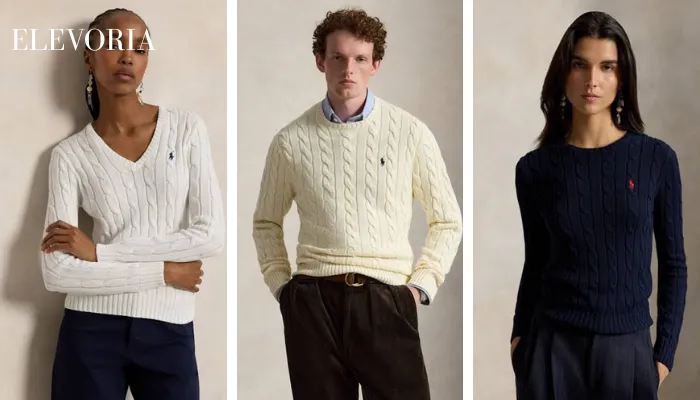
Classic patterns are back for autumn 2026. The classic cable-knit jumper is back in a big way, playing into the ongoing trend for all things preppy. Fair Isle knits, named after the Scottish island of their origin, are formed by knitting numerous coloured yarns together into a geometric pattern. They are an emblem of the cosiness and slow lifestyle of the countryside, and ever since the royals endorsed them decades ago, they have retained their reign over autumn/winter wardrobes.
Shaggy and Textured Jumpers
Shaggy jumpers are an example of the perfect kind of organised chaos, an intentional tangle of unruly fibres that create fuzzy, dimensional silhouettes. From mohair blends to brushed yarns, these textural jumpers will elevate even the most casual of looks.
Statement Colour
Colour is having a moment in designer knitwear. A lipstick-red jumper is all it takes to wake up an autumn wardrobe. Jil Sander continued to prove that red jumpers lend themselves to a certain sex appeal with a sheer peekaboo knit layered over a cobalt blue polo neck.
Designer Jumper Fabrics: A Guide to Luxury Fibres
The fabric of a designer jumper determines how warm it is, how it feels against the skin, how it drapes, and how long it lasts. Understanding the differences between luxury fibres is the foundation of building a knitwear wardrobe that works.
Cashmere
Cashmere is not sheep’s wool at all. It is the fine winter undercoat of the cashmere goat, combed out once a year, mostly in Mongolia and China. A single goat yields only a small fraction of what a sheep gives, and the fibre must be separated from the coarse outer coat by hand and machine before it can be spun. That scarcity is the price tag. The reward is a fibre so fine it barely registers against the skin, with a warmth-to-weight ratio wool cannot match. The trade is durability: cashmere is delicate, pills readily at points of wear, and demands careful washing and storage.
Merino Wool
Merino is wool from the merino sheep, a breed developed over centuries for the fineness of its fleece. It is soft enough to wear against the skin, but it keeps the working character of wool: it is elastic, so garments recover their shape; it insulates even when damp; it breathes indoors; and it stands up to years of regular wear.
John Smedley uses Extra Fine Merino Wool sourced from New Zealand and spun in Italy to create lightweight luxury knitwear with outstanding comfort and versatility. Their Merino fibres measure just 18 to 19 microns, producing knitwear that feels exceptionally comfortable while maintaining greater resilience for everyday wear.
Lambswool
Lambswool is breathable and warm, finer than traditional wool and retains its shape well. It generally comes from the first shearing of lambs and is sought after for its softer feel.
Alpaca
Alpaca is a luxury fibre known for its softness, warmth, and durability. Zankov’s Fall Winter 2026 collection features knitted suits in viscose crêpes and brushed alpacas that interact with Melton wool tailoring.
Mohair
Mohair fibres are thicker than Merino wool fibres, giving a distinctive fluffy texture. Mohair blends are used in shaggy jumpers and textured knits.
The Honest Comparison
When it comes to softness, cashmere wins, and it is not close. If the jumper’s job is to feel luxurious, cashmere does that job. For warmth, cashmere is warmer gram for gram, but a chunky merino knit closes the gap by simply carrying more wool, and it does so without the fragility. For durability, merino wins decisively. A good merino jumper worn weekly will outlast most cashmere worn monthly. Cashmere wears out gently; merino just keeps working. Both want hand washing, but merino forgives mistakes that would finish a cashmere piece. Good cashmere costs multiples of good merino, and cheap cashmere is usually a false economy: short fibres, loose knitting, and pilling within a season.
The Designer Brands Defining Luxury Knitwear
The designer jumper market is defined by a cohort of brands that have built their reputations on exceptional materials, craftsmanship, and an understated aesthetic. These are the houses that set the standard for luxury knitwear.
Brunello Cucinelli
Brunello Cucinelli is the reference point for the entire quiet luxury knitwear category. Founded in 1978 in the Umbrian hamlet of Solomeo and now publicly listed, Cucinelli built its name on coloured cashmere and a soft palette of greiges. The womenswear signature is the monili, fine beaded trim at a collar and cuff. Prices sit at the top of the category. This is the flagship buy.
Loro Piana
Loro Piana is the fabric house turned ready-to-wear name. Founded in 1924 and now part of LVMH, Loro Piana is known for the rarest raw materials: vicuña, baby cashmere, and superfine wool. The knitwear is understated to the point of invisible, which is the point. Expect the highest fabric quality in the group, at flagship prices. In 2026, knitwear sellouts increased 40% at Loro Piana.
Fabiana Filippi
Fabiana Filippi is the value pick of the Umbrian set. Founded in 1985 in Giano dell’Umbria and still family-owned, Fabiana Filippi makes cashmere knitwear and quiet tailoring in Italy, finished by hand with its signature Filo Diamante, a slim chain of brass beads at the neckline. It offers much of the Cucinelli look and craft at a more accessible price, making it the everyday choice for a logo-free wardrobe.
Max Mara
Better known for coats, but its knitwear earns a place here. Founded in 1951 in Reggio Emilia, Max Mara pairs clean Italian tailoring with reliable wool and cashmere knits at the most accessible price in this group. A sensible entry point to the category.
The Row
The American name on the list. Founded in 2006 by Mary-Kate and Ashley Olsen, The Row turned minimalism into a house style, with cashmere and wool knits cut clean and roomy. It carries the strongest fashion-insider cachet, at prices to match Cucinelli and above.
Agnona
Agnona is the quiet specialist. Founded in 1953 and long tied to the world of fine Italian fabrics, Agnona makes cashmere and wool knitwear with a pared-back, architectural hand. A lesser-known name that rewards the buyer who already knows the category.
John Smedley
John Smedley is a British knitwear manufacturer with a heritage dating back to 1784. The brand uses Extra Fine Merino Wool sourced from New Zealand and spun in Italy to create lightweight luxury knitwear with outstanding comfort and versatility.
Barrie
Barrie was founded in 1903 in the Scottish borders town of Hawick and is known for its exquisite cashmere knitting craftsmanship. It has long produced high-end knitwear for CHANEL and officially joined CHANEL’s Métiers d’Art artisan collective in 2012.
Other Notable Designers
Khaite, known for elevated cashmere iterations, has been a key driver of the retro ski jumper trend. Jake’s, August Barron and Doublet are transforming traditional notions around knitwear with unexpected colours and silhouettes. Other recent needle-movers include Bangkok-based Nong Rak, Tokyo-based Pillings, and London brands like Raquel de Carvalho, Chet Lo and Pauline Dujancourt.
The Neo Knitwear Boom
The designer jumper market in 2026 is experiencing what Vogue calls a “neo knitwear boom”. Over the past few years, a growing cohort of designers who put knitwear at the centre of their creative practice has emerged, challenging preconceptions about knitwear and filling demand for pieces that combine craft with technical innovation.
“There’s definitely a rise in interest around knitwear in general at the moment, both traditional and experimental,” says Nick Tran, head of buying and merchandising for Dover Street Market Paris.
The boom represents both opportunities and challenges. Advances in knitting technology and lower production minimums, combined with a growing appreciation for authentic, “human” clothing, is opening the door for a new generation of designers. But success depends on more than making cosy sweaters. Today’s knitwear brands need to stand out in an increasingly crowded market while navigating rising material costs, a warming climate, and a decline in skilled workers.
As consumers pay more attention to fabric, knitwear brands are well-placed to stoke demand. “We are seeing a meaningful shift in the role material and fiber play in the purchase decision,” says Laura Armstrong, head of demand creation at Woolmark. “In our consumer research, fabric composition has moved from the fifth most important purchase consideration to the third, which suggests consumers are paying much closer attention to what products are made from.”
How to Style Designer Jumpers
A designer jumper is versatile by design. It can be dressed up or down, layered or worn alone, styled for work or the weekend. The key is to understand proportion, layering, and the details that elevate a simple knit.
The Sweater Drape
One of the most enduring ways to style a designer jumper is the sweater drape: tying it around your shoulders. From the Dior, Chanel and Loewe SS26 runways to the wardrobes of Meghan Markle and Bridgerton’s Nicola Coughlan, the preppy-style tied sweater trend is taking over. At Chanel’s Métiers d’art show, ambassador Gracie Abrams wore a black jumper nonchalantly knotted about the shoulders. Kendall Jenner is another fan, draping a grey knit over a pinstripe shirt to offer a fresh take on business casual.
“For me, the appeal of knotting a sweater over the shoulders lies in its effortlessness,” says Charlotte Hicks, founder and creative director of womenswear label Esse Studios. “It’s a small styling gesture that shifts a look instantly, adding intentional dimension without ever feeling overconsidered. There’s a sense of nonchalance to it, almost like wearing a sculptural accessory. It carries a quiet confidence and ease, yet remains undeniably classic. It’s a subtle way to introduce texture and warmth without overwhelming the silhouette, a kind of modern armour that still feels undone and relaxed.”
For Work
A designer V-neck or quarter-zip jumper can be styled for the office with tailored trousers and loafers. The V-neck is particularly effective, as it opens up the décolletage and creates a flattering line. When it comes to shoes, the instinct is towards stylish loafers that are reminiscent of The Row, but a kitten heel would also do wonders.
For Casual Days
Wear a sumptuously soft cashmere jumper with nothing underneath, or paired with a boxy plain white T-shirt and some boyfriend-fit jeans. Think Carolyn Bessette Kennedy chic. A chunky cable knit looks as though you have borrowed it from a sporty fling who lives on the Upper East Side of NYC.
For Evening
A fine-knit cashmere jumper in a rich colour, paired with a satin midi skirt and heeled mules, creates an elegant evening look. Matthieu Blazy showed how the quarter-zip jumper can be eveningwear-worthy too, styling a black version with a statement midi skirt, heels and elegant drop earrings to striking effect.
Tonal Styling
A brown jumper is a shortcut to chic. The best way to wear them is creating monochrome looks, by pairing brown jumpers with matching trousers, skirts and jackets. Team chocolate knits with velvet trousers, leather or shiny satin skirts, suede jackets and long fluffy coats. Add further contrast by going for a tonal approach to colour with caramel and tobacco shades.
The Quarter-Zip Styling Guide
For the quarter-zip, the styling is key. The jumper should not be paired with red chinos. Instead, style it with a pleated knee-length skirt and toe-cap pumps, tailored barrel-leg trousers, or straight-legged jeans with a heel to polish the silhouette. At Miu Miu’s AW25 show, it was all about the off-kilter zip on elevated rugby-style colour-block jumpers, worn with matching trousers. Tory Burch offered up the style as a means for chic colour combos, layering a bright red knit beneath a blue coat and finishing with brown trousers for a high-end sporty vibe.
Sizing and Fit for Designer Jumpers
Sizing for designer jumpers varies significantly between brands. Understanding how a specific designer cuts their knitwear is the key to finding a jumper that fits well.
General Sizing Guidance
Knitwear often runs differently to other garments. A jumper that fits well in one brand may feel oversized or tight in another. The most reliable approach is to check the specific brand’s size chart and read customer reviews for fit advice.
Tellar’s sizing expert Robin Blake advises investing in two or three natural fibre pieces: “a classic crew neck merino, a cashmere V-neck, perhaps a chunky wool cardigan. These are your ‘forever’ pieces.”
Sizing by Fit
Slim Fit: Merino wool jumpers and fine-gauge knits often come in a slim fit. If you prefer a looser silhouette, sizing up is a common recommendation.
Regular Fit: The most common fit for jumpers. Usually true to size.
Oversized Fit: Intentionally loose and boxy. Some brands recommend sizing down if you prefer a closer fit.
Sizing by Brand
Sézane’s Federica Jumper advises: “If you are between two sizes, choose the size below.” However, their Charly Jumper advises: “If you are between two sizes, choose the size above.” This illustrates the importance of checking each specific product’s guidance.
The One-Line Rule for Designer Jumpers
Check the specific brand’s size chart. If the jumper is a fine-gauge knit or a slim fit and you prefer a relaxed silhouette, size up. If it is an oversized style and you prefer a closer fit, size down. If you are between sizes, the brand’s specific guidance is the best indicator.
How to Care for Designer Jumpers
Proper care extends the life of designer knitwear, keeping it looking and feeling beautiful for years. Cashmere and fine wool are delicate fibres that require careful handling.
Washing
Cashmere is hand wash or dry clean only. Never wring by twisting. Dry flat on a horizontal surface so the garment recovers its shape without elongating. Superfine merino can be machine washed on a wool programme at 30°C or hand washed. Wool and cashmere clean themselves to a significant degree, and a monthly wash, or even every two months, is sufficient for a jumper in regular rotation worn over a shirt.
Drying
Always lay knitwear flat to dry. Hanging a jumper can cause it to stretch out of shape, particularly at the shoulders. Dry away from direct sunlight and heat sources.
Storage
Fold knitwear rather than hanging it. Store in a dry place with lavender sachets or cedar blocks to deter moths. For wool and cashmere, a breathable garment bag or cotton dust bag is ideal.
De-Pilling
Pilling is a natural occurrence on many knitwear fabrics, particularly cashmere. Use a fabric shaver or a cashmere comb to remove pills gently. Do not pull at pills, as this can damage the fibres.
General Tips
- Wash less often. Wool and cashmere are naturally odour-resistant and can be aired between wears.
- Turn garments inside out before washing.
- Use a mesh laundry bag for delicate knits.
- Avoid fabric softener, which can coat the fibres and reduce breathability.
Sustainable Designer Jumpers
Sustainability is increasingly important in luxury fashion, and knitwear is no exception. There are more lower-impact options than ever for building a responsible designer jumper collection.
Sustainable Fibres
Recycled Cashmere: Maglificio Pini uses eco-friendly yarns, regenerated cashmere, and biodegradable packaging in its luxury knitwear production.
Responsible Wool Standard (RWS): RWS wool ensures high standards of quality, animal welfare and environmental care.
Khoroo Recycled Cashmere: Tengri, a British luxury brand, champions sustainable luxury from the steppes of Mongolia to its design studio in the Scottish Highlands, using Khangai noble fibres.
Organic and Natural Fibres: Atelier Solana sources heirloom-quality natural fibres and knits, made to last a lifetime. The brand champions a zero-waste model via its closed-loop system, meaning all excess materials are repurposed.
Sustainable Brands
Atelier Solana: A luxurious slow-fashion knitwear brand with every design handcrafted by artisans in Canada. The brand sources heirloom-quality natural fibres and knits, made to last a lifetime.
Haikure: Haikure’s knitwear blends Italian craftsmanship with a modern, sustainable philosophy. Built with responsible fibres and production methods that reduce water use and exclude harmful chemicals, these knits feel luxurious yet conscience-driven.
Tengri: A British luxury brand crafting knitted essentials from Khangai noble fibres, championing sustainable luxury from Mongolia to the Scottish Highlands.
Future Vintage: A Scottish knitwear brand specialising in heirloom-quality garments, using traditional machinery and natural materials with a commitment to traceability.
Artknit Studios: An Italian knitwear brand championing Italian artisanal craft, preserving the excellence of Italian craftsmanship while reimagining how luxury knitwear can be made and consumed in a more conscious way.
The Textile Exchange provides certification and guidance on preferred fibres, including organic cotton, recycled materials, and other lower-impact alternatives.
Common Mistakes to Avoid
Mistake 1: Assuming All Designer Jumpers Are the Same
A Loro Piana cashmere crew neck is a different garment to a Brunello Cucinelli monili-trimmed piece or a The Row oversized knit. Understand the fabric, the fit, and the brand’s signature before buying.
Mistake 2: Ignoring the Fabric Composition
A cashmere jumper requires different care to a merino or an alpaca blend. Check the composition before buying to ensure you are happy with the care requirements.
Mistake 3: Not Checking the Size Chart
Sizing varies significantly between brands. Always check the specific brand’s size chart and read reviews for fit advice.
Mistake 4: Washing Cashmere Incorrectly
Machine washing on a hot cycle or tumble drying on high heat will damage cashmere fibres. Always hand wash or use a gentle cycle with cold water, and lay flat to dry.
Mistake 5: Hanging Designer Jumpers
Hanging a jumper can cause it to stretch out of shape, particularly at the shoulders. Always fold knitwear for storage.
Mistake 6: Choosing Style Over Comfort
If a jumper itches, is too tight, or restricts movement, you will not enjoy wearing it. Prioritise comfort alongside style.
Actionable Recommendations
- Invest in natural fibres. Build your collection around two or three high-quality pieces: a classic crew neck merino, a cashmere V-neck, and perhaps a chunky wool cardigan. These are your “forever” pieces.
- Try the V-neck trend. The V-neck jumper is a defining trend for 2026. Pair it with a pleated skirt or wide-leg jeans for an effortlessly chic look.
- Consider a quarter-zip. The fisherman-style quarter zip is practical, enduring, and set to dominate 2026. It works brilliantly alongside a considered capsule wardrobe.
- Check the size chart. Sizing varies by brand. Always check the specific size guide and read reviews for fit advice.
- Layer with intention. A jumper can be layered over a shirt, under a blazer, or draped over the shoulders. The sweater drape is the easiest way to add dimension.
- Care for your knitwear properly. Hand wash or use a gentle cycle with cold water. Lay flat to dry. Fold for storage.
- Consider sustainable options. Recycled cashmere, RWS wool, and heirloom-quality natural fibres are increasingly available and beautiful.
- Shop across designers. Loro Piana, Brunello Cucinelli, Fabiana Filippi, Max Mara, The Row, and Agnona all offer different interpretations of luxury knitwear at different price points.
Frequently Asked Questions
What are designer jumpers?
Designer jumpers are luxury knitwear pieces made from premium natural fibres like cashmere, merino wool, and silk, with hand finishing and no loud branding. The value is in the cloth and the cut, not a logo.
What are the biggest designer jumper trends for 2026?
Key trends include the V-neck revival, the quarter-zip jumper, crossover jumpers, retro ski jumpers, pointelle, cable knit, Fair Isle, shaggy and textured jumpers, and statement colour.
What is the best fabric for a designer jumper?
Cashmere and merino wool are the benchmark for quality knitwear. Cashmere offers exceptional softness and warmth, while merino provides durability and versatility. Alpaca, lambswool, and mohair are also used in luxury knitwear.
What is the difference between cashmere and merino?
Cashmere is softer and warmer gram for gram, but more delicate. Merino is more durable, holds its shape better, and is more forgiving in care. Good cashmere costs multiples of good merino.
Where can I buy designer jumpers in the UK?
Loro Piana, Brunello Cucinelli, Fabiana Filippi, Max Mara, The Row, and Agnona are available through luxury retailers and their own boutiques. John Smedley offers British-made luxury knitwear, and Barrie is available through CHANEL.
How should I care for a designer cashmere jumper?
Cashmere is hand wash or dry clean only. Never wring by twisting. Dry flat on a horizontal surface so the garment recovers its shape without elongating.
What are sustainable designer jumper options?
Atelier Solana, Haikure, Tengri, Future Vintage, and Artknit Studios offer sustainable knitwear. Look for recycled cashmere, RWS wool, and heirloom-quality natural fibres.
How do I style a designer jumper for evening?
A fine-knit cashmere jumper in a rich colour, paired with a satin midi skirt and heeled mules, creates an elegant evening look. A black quarter-zip styled with a statement midi skirt, heels and drop earrings also works beautifully.
What is the sweater drape?
The sweater drape is the art of tying a jumper around your shoulders. It is a styling gesture that adds dimension and warmth without overwhelming the silhouette, and it has been seen on the Dior, Chanel and Loewe runways.
How do I prevent pilling on my designer jumper?
Pilling is natural on many knitwear fabrics. Use a fabric shaver or cashmere comb to remove pills gently. Wash on a cool cycle and avoid high heat when drying.
Conclusion
Designer jumpers in 2026 represent more than just luxury clothing. They are an investment in craft, provenance, and a way of dressing that values quality over quantity. In a market where shoppers are increasingly swapping logos and fleeting trends for tactile, long-lasting craftsmanship, the designer jumper has become a cornerstone of the modern wardrobe.
From the V-neck revival and the quarter-zip’s rise to the neo knitwear boom and the quiet luxury brands defining the category, there has never been more choice or more opportunity to find a jumper that will serve you for years. Whether you are drawn to the exceptional softness of Loro Piana cashmere, the accessible luxury of Fabiana Filippi, or the architectural minimalism of The Row, there is a designer jumper that will become a piece you reach for again and again.
The most important takeaway is this: a designer jumper is not an expense. It is an investment. Choose natural fibres, understand the fit, and care for your knitwear properly. A well-made jumper in cashmere or merino will outlast dozens of cheaper alternatives and feel better every time you put it on.
Read More: Matches Fashion 2026: History, Fall & Relaunch Guide

[…] Read More: Designer Jumpers 2026: Luxury Knitwear Guide & Trends […]