
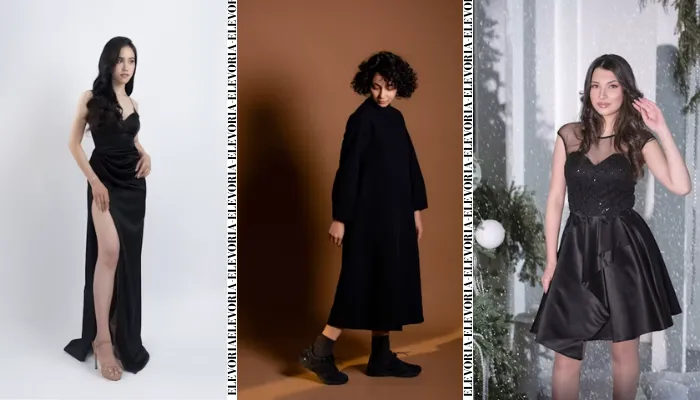
Black Dress: The Complete 2026 Guide to History, Trends, Styling and Buying
Introduction
The black dress is fashion’s most enduring creation. It is a garment that has survived wars, revolutions, and countless trend cycles, emerging each time as relevant and desirable as it was when it was first introduced a century ago. In 2026, the black dress is not simply a staple. It is a cultural force, reinterpreted by designers, embraced by every generation, and worn by women in every corner of the world.
The little black dress, or LBD as it is affectionately known, was introduced to the world in 1926 when American Vogue published an illustration of a woman wearing a long-sleeved black dress that fell just below the knee. The magazine likened this new style to the revolutionary Model T car, predicting that “all the world will wear” it . A century later, that prediction has proven remarkably accurate.
In 2026, the black dress has returned to the centre of the fashion conversation. Vogue reported that “ruminations on the power of a noirish Pantone seemed to pervade every corner of the autumn/winter 2026 collections” . At Comme des Garçons, Rei Kawakubo declared that “black is the color for me” and “the color that embodies the rebellious spirit” . At Chanel, Matthieu Blazy’s haute couture debut placed the little black dress at “the heart of the show,” honouring its lineage while reimagining it for a new era .
This guide covers everything you need to know about the black dress in 2026. From its fascinating history and the defining trends to styling advice for every occasion, body type guidance, plus size options, sustainable choices, care instructions, and where to shop in the UK, it is a comprehensive resource for anyone considering this most versatile of garments.
A Brief History of the Black Dress
From Mourning to Modernity
Before the 1920s, black was primarily associated with mourning. Queen Victoria’s decision to wear black following the death of Prince Albert in 1861 had cemented the colour’s association with grief and formality. Black was not considered chic. It was considered sombre.
Coco Chanel changed that. According to CNN, “the little black dress emerges from a period of ‘bereavement and sorrow, after the death of Arthur ‘Boy’ Capel (an English polo player), the first great love of her life” . But out of that grief came something revolutionary. Chanel’s 1926 design was “calf-length, straight, and decorated only by a few diagonal lines” . American Vogue described it as “the Chanel ‘Ford’, the frock that all the world will wear” .
The dress was “synonymous with the modern woman in the jazz age, with independence, strength and resilience,” according to Justine Picardie, author of Coco Chanel: The Legend and the Life . It was a departure from the restrictive, elaborate clothing of the previous era. It was simple, comfortable, and freeing.
The Evolution of the LBD
The black dress evolved throughout the 20th century, adapted by each generation to reflect its values and aesthetics. In the 1950s, Christian Dior described cocktail dresses as “elaborate and dressy afternoon frocks,” preferably in black taffeta, satin, chiffon and wool. “These confections became the personification of the ‘little black dress’ and were often accessorised with gloves and small, elaborate hats” .
The V&A holds a 1958 evening dress by Michael Sherard, a “black lace evening dress, with wide V neckline, long tight sleeves, fitted bodice and full skirt” trimmed with “appliqué flowers of taffeta” . This dress exemplifies the mid-century LBD: elegant, structured, and designed for the early evening gatherings that were a fixture of post-war social life.
By the 1990s, the black dress had become a symbol of minimalist sophistication. Calvin Klein, Ralph Lauren, and others refined the silhouette, while designers like Gianni Versace introduced the “safety-pin dress” and the “bondage dress,” challenging the boundaries of what black could express.
The Black Dress Today
In 2026, the black dress is more diverse than ever. It can be a sleek column dress, a romantic lace gown, a structured sheath, or a relaxed linen maxi. It can be worn to a wedding, to the office, to a gala, or to the grocery store. Its versatility is its defining characteristic. As Who What Wear puts it, “it’s easy to forget just how powerful of a wardrobe item a little black dress really is” .
Key Black Dress Trends for 2026
The LBD Revival
The most significant trend for 2026 is the revival of the little black dress. At Chanel, Matthieu Blazy’s haute couture debut placed the LBD at “the heart of the show” . His versions honoured the lineage of the original, with “some pared-back, with clean boat necklines and straight hems; others subtly adorned with small jewelled brooches. They felt modern without losing their timelessness” .
TheIndustry.fashion noted that Blazy’s reimagining of the LBD was one of the defining moments of the couture season . This is not a nostalgic revival. It is a reassertion of the LBD’s enduring power.
Black as the Dominant Colour
Across the Autumn/Winter 2026 collections, black dominated. Vogue reported that “the number of black opening looks” at Celine and other houses was notable even for an autumn/winter season . At Comme des Garçons, Rei Kawakubo unleashed “a romantic, unapologetically pretty collection” in black, using “lace, sequins, brocades, fringe and chiffon, which were shirred, draped, knotted into soft bows or assembled to evoke tendrils of wisteria” .
Kawakubo’s endorsement was unequivocal: “It’s just the strongest, the best for creation, and the color that embodies the rebellious spirit. And has the biggest meaning: the universe and the black hole” .
Gothic Romance
The fall 2026 collections featured a “Gothic turn,” with Roberto Cavalli’s Fausto Puglisi presenting “a mostly black” collection featuring “cropped leather biker-style jackets with a croc pattern” and “glossy, roomy trousers” alongside “bouncy ballerina skirts and multi-tiered dresses” . This Gothic romance is not dark and foreboding. It is romantic and expressive, drawing on the mood of Wuthering Heights and the Victorian era.
Sheer and Asymmetric Details
Rasario’s Spring Summer 2026 collection featured “maxi lengths leading the lineup. Maxi dresses dominate, while open backs, halter necklines and asymmetric cuts keep the shapes from settling into standard gala territory” . The black dress is being reimagined with sheer fabrics, asymmetric hemlines, and unexpected cut-outs that add modernity to a classic silhouette.
The Return of the Drop Waist
The drop waist, a defining silhouette of the 1920s, has returned. Chanel, Marni, and Tory Burch were among the houses to prove “the drop-waist trend has longevity” . For black dresses specifically, the drop waist creates a relaxed, elongated silhouette that is both contemporary and flattering.
Mini and Bodycon
The Spring/Summer 2026 runways also embraced the mini. Cosmo Ukraine noted that “transparent dresses with V-shaped necklines” were a dominant trend . Styling guides observed “an influx of asymmetrical bodycons and nightie-inspired slip dresses” on store shelves . The black mini dress is a statement piece, whether worn to a club, a party, or a summer wedding.
How to Style a Black Dress
The Golden Rule: Treat It as a Canvas
The most important principle for styling a black dress is to treat it as a canvas. Black is inherently neutral, which means it can handle accessories, layers, and colour combinations that might compete with a bolder colour. As Harper’s Bazaar notes, black dresses can be styled in countless ways, from “metallic accents” to “boudoir dressing” to “long lines” and “evening earth tones” .
For Daytime
For daytime wear, the key is to ground the look and strip away any formality. Who What Wear advises: “Style it with sandals or loafers and you have an easy daytime look. Swap them for heels and add some jewels, and suddenly it’s evening-ready” .
Grazia offers specific daytime formulas for summer 2026. The “Minimalist City Maxi” pairs “a simple black maxi in cotton or linen, cut straight and clean” with “sleek flat leather sandals, a structured tote, and black sunglasses” . The “Casual Cool Ultra Mini” pairs a short black dress with “rubber slides, a big straw tote, and a wide-brim hat” . For those who prefer a midi, “a smocked or puff-sleeve black midi with a gentle flare” works beautifully with “ballet flats or low mules” .
For Evening
For evening events, the black dress can be elevated with the right accessories. Glamour advises: “When layered under a trendy funnel-neck jacket, a black slip dress suddenly becomes a skirt. It’s a great trick, especially for unexpected showers and breezy summer nights” . For a night out, “sandals are perfect for the season ahead, but feel free to swap in sneakers or loafers instead” .
For a more formal evening look, Harper’s Bazaar recommends layering “a relaxed trench coat on top and accessorize with metallic accents, like silver earrings and footwear with sculptural hardware” . The key is to let the black dress provide the foundation while the accessories provide the interest.
For Weddings
The old rule against wearing black to weddings has retired. The Knot confirms that “guests can absolutely wear black to a wedding” . However, Glamour advises that “black is usually totally fine in autumn and winter. For summer or daytime weddings… Most little black dresses look too much like a night-out outfit” .
The solution is to choose a black dress that reads as festive rather than funeral-like. Baltini recommends that “a plunging neckline or a high slit can make a black dress feel more wedding-appropriate” . Dakota Johnson’s wedding guest dress, for example, featured “a long scarf that ties at the back of the neck as well as a high slit, both adding to the drama of the semi-sheer dress” .
With Tailoring
Sandra Bullock demonstrated the power of layering a black midi dress with a tailored blazer, creating “the perfect party or date night outfit idea” . The blazer adds structure and polish, transforming the dress into something more sophisticated.
With Colour
Black is a versatile backdrop for colour. Azazie recommends “gold, silver, pearls, bold gemstones, crystal, even a pop of color — all of it works against black without looking like a mistake” . For a bolder approach, “electric blue, hot pink, or white shoes” add personality .
The most successful colour pairings for black dresses are “black and silver, gold, red,” according to Goelia . “Shades of gold, silver, and rose gold look stunning when paired with black dresses” .
The Overall Principle
A black dress should be the foundation, not the entire outfit. Accessories, layers, and styling choices are what transform a simple black dress into a look that feels intentional and complete. Whether you are dressing for a casual coffee run, a formal wedding, or a night out, the black dress provides a sophisticated canvas that can be adapted to any occasion.
Choosing a Black Dress for Your Body Type
There is no single “ideal” body type. A black dress should make you feel confident and comfortable. Different silhouettes flatter different shapes in different ways.
Hourglass
The hourglass figure has a defined waist with bust and hips of similar size. THREAD by ZALORA advises: “Opt for wrap dresses or belted styles to accentuate your waist even more” . A fit-and-flare silhouette, which cinches at the waist and flares below, is also flattering. The key is to emphasise the waist without adding bulk elsewhere.
Pear
Pear-shaped figures have a smaller bust and shoulders with fuller hips. THREAD by ZALORA recommends: “Balance things out with a black dress that has structured shoulders, puff sleeves, or off-the-shoulder designs” . A-line silhouettes balance the silhouette by skimming over the hips. Structured shoulders and statement necklines draw the eye upward, creating harmony.
Apple
Apple-shaped figures have a fuller midsection. THREAD by ZALORA advises: “Go for a black empire waist dress or a shift dress that flows away from the stomach” . V-necklines draw the eye upward, creating a more balanced silhouette. Avoid clingy fabrics around the midsection.
Rectangle
Straight, athletic figures can wear a wide range of silhouettes. THREAD by ZALORA suggests to “try creating curves with a peplum black dress, ruched details, or belted styles” . Adding volume through design details creates the illusion of curves.
Petite
Petite frames look strongest in shorter lengths or column silhouettes that lengthen the line. A guide for petite styling advises: “For petite bodies, horizontal interruptions—like dropped waists, wide belts, or mid-calf hems without breaks—can visually chop your frame” . A high-waisted style with vertical details elongates the frame.
Plus Size
Plus-size figures look strongest in pieces cut to actual measurements rather than scaled-up patterns. A-line silhouettes, wrap dresses, and structured bodices are reliable choices. The goal is to find silhouettes that highlight the proportions you want to emphasise and create balance where you want it.
Sizing varies by brand, country, and manufacturer. Always check the specific brand’s size chart rather than assuming your usual size will fit.
Fabrics for Black Dresses
The fabric of a black dress determines how it moves, how it photographs, and how comfortable you will be. The right fabric can make black feel light and breathable; the wrong one can make it feel heavy and oppressive.
Breathable Natural Fibres
For summer, natural fibres are essential. Marie Claire España advises: “Para los días de calor conviene apostar por lino, algodón o viscosa, tres materiales transpirables, ligeros y agradables sobre la piel” (For hot days, it is best to opt for linen, cotton or viscose, three breathable, light and pleasant materials on the skin) . These fabrics allow air to circulate and moisture to escape, keeping you cool even in black.
Wardrobe Icons notes that “the key lies in choosing breathable fabrics and seasonally appropriate styling” and recommends “materials like cotton or linen – they’ll help you stay cool and comfortable, even in black” .
Grazia adds specific guidance: “Look for breathable cotton poplin, linen, gauzy viscose, or broderie anglaise, and keep linings light and minimal. Avoid heavy polyester that traps heat, no matter how pretty the silhouette looks on the hanger” .
Silk and Satin
For evening and formal occasions, silk and satin are beautiful choices. They drape elegantly and catch the light, adding dimension to black. The V&A’s 1958 Michael Sherard evening dress is made from “French re-embroidered ribbon lace, with taffeta” . These fabrics create structure and movement.
Lace
Lace is a classic fabric for black dresses. It adds texture and romance without introducing colour. The Sherard dress demonstrates how lace can be used to create a dramatic, sculptural silhouette .
Crepe and Jersey
Crepe and jersey are comfortable, easy-care fabrics that work well for everyday black dresses. They drape beautifully and resist creasing. Crepe “offers better structure and airflow compared to a tight, low-denier satin which traps moisture against your skin” .
Sustainable Fabrics
For those who prioritise sustainability, there are more options than ever. Never Fully Dressed offers the Black Astra Sophie Dress made from “85% Recycled Polyester, 15% Metallic Fibre” . Aspiga offers “responsibly sourced cotton” . Cunnington & Sanderson offers “zero-waste” dresses made from “100% cotton” or “viscose jersey” . Popsy Clothing offers a “Black Dropped Waist Ocean Crepe Midaxi Dress” made from “51% Recycled Polyester, 49% Polyester” .
The Textile Exchange provides certification and guidance on preferred fibres, including organic cotton, recycled materials, and other lower-impact alternatives.
Plus Size Black Dresses in the UK
The plus size market for black dresses has expanded significantly, with more options than ever for flattering, stylish choices.
Key UK Retailers
Goddiva Plus offers the “One Shoulder Satin Band Maxi Dress” at £110, “designed for plus-size elegance” and “a show-stopper for weddings, proms, evening galas, and black-tie events” . The brand also offers the “Scalloped Lace A-Line Maxi Dress” at £95, “designed to flatter curves with its soft stretch lace fabric” .
Ever-Pretty UK offers the “Plus Size Sequin Ruffle Sleeve Evening Dress” at £71.99, featuring “playful ruffle sleeves and a figure-flattering cut” with “shimmering fabric” that “catches the light beautifully” .
Rebecca James (formerly Curvy Chic Boutique) offers the “Black One Shoulder Evening Dress with Crystal Detail” at £134.00, described as offering “a dressed up look with boutique feel and standout detail” .
Roman UK offers evening dresses in sizes 18, 20, and 30-32 from £40 to £50, with styles designed for “effortless elegance to every occasion” .
Karen Millen offers the “Black Plus Size Spot Print Pleated Slub Organdie Peplum Woven Maxi Dress” at £199.00 (reduced to £169.15 with code), with a “floor-grazing 125cm maxi length” .
Body-Inclusive Styling
The goal is not to conceal but to feel confident. A well-fitted black dress in a flattering silhouette will always look better than a shapeless one. Sizing varies by brand. Always check the specific brand’s size chart and read reviews for fit guidance.
Sustainable Black Dresses
Sustainability is increasingly important in fashion, and black dresses are no exception. There are more lower-impact options than ever.
Sustainable Brands and Materials
Never Fully Dressed offers the Black Astra Sophie Dress, made from “85% Recycled Polyester, 15% Metallic Fibre” with a “detachable multi-wear scarf” . The brand offers “inclusive sizing (US 2-24)” and is “female-founded” with a focus on “feel good dressing” .
Cunnington & Sanderson offers the “Hail Mary Dress,” a “100% zero-waste black viscose jersey dress with an inclusive one-size fit, designed to fit UK 0–16 and made-to-order in the UK” . The brand also offers the “Knotted Dress Black,” a “zero-waste avant-garde midi dress in 100% cotton, made to order in the UK” .
Aspiga offers “responsibly sourced cotton poplin” dresses, noting that this “prioritizes water efficiency, in line with our sustainability strategy” .
ME+EM offers the “V-Neck Smocked Skirt Maxi Dress” made from “95% Organic Cotton 5% Elastane,” noting that “organic cotton is grown without synthetic pesticides or fertilisers, uses less water and emits less greenhouse gas than non-organic” .
Popsy Clothing offers the “Didi Black Dropped Waist Oversized Relaxed Fit Midaxi Dress” made from “Ocean Crepe, a woven fabric made using recycled yarn” with “51% Recycled Polyester, 49% Polyester” .
Buying Strategies
Buy less but better. Opt for a black dress that can be worn multiple ways and across seasons. Shopping your existing collection of clothes is the most sustainable option. Second to that is pre-loved items from platforms like eBay, Vinted, or Vestiaire Collective.
The Textile Exchange provides certification and guidance on preferred fibres.
How to Care for a Black Dress
Care instructions vary by fabric, but some general principles apply. Always check the specific care label before washing.
General Care Guidelines
Dry cleaning: Givenchy advises that “dry cleaning is advised for most of our products” and lists “do not wash” as a care instruction .
Machine wash: Some black dresses can be machine washed. Superbalist advises: “Machine wash at 40°, only non-chlorine bleach when needed, medium iron, use a laundry bag, wash with similar colours, remove belt before wash, line dry” .
Hand wash: Delicate black dresses may require hand washing. Shona Joy advises: “Turn inside out. Cold hand wash separately. Use mild soap. Cold rinse. Do not bleach/soak/wring or tumble dry. Dry flat in shade” .
Wool cycle: Holland Cooper advises: “Machine handwash or wash on a wool cycle at 30. Wash garment inside out and reshape whilst damp. Cool iron. Dry and store flat. Do not tumble dry. Do not bleach” .
Preventing Fading
Black fabric can fade over time if not cared for properly. To maintain the depth of colour:
- Wash inside out
- Use cold water
- Avoid chlorine bleach
- Dry in shade rather than direct sunlight
- Use a colour-protecting detergent
- Wash with similar colours
Storage
Store black dresses in a cool, dry place away from direct sunlight. Use breathable garment bags rather than plastic, which can trap moisture. For long-term storage, avoid hanging in direct light.
Where to Shop for Black Dresses in the UK
High Street and Department Stores
Roman UK offers a comprehensive collection of black evening dresses and formal dresses in sizes 8 to 32, with prices from £20 to £60. The brand advises pairing “your A-line evening dress with satin heels and a metallic clutch” for black-tie events .
Little Black Dress has a flagship store in Bolton offering “luxury brands for prom, Cinderella ballgowns for black tie events and eveningwear mixed in with ultra classic black dresses and wedding guest outfits” .
Sultress is a “London-based occasionwear house specialising in sculpted silhouettes and statement evening pieces” .
Online and International
ASOS offers a broad range of black dresses across mainline, Curve, Petite, and Tall.
Lyst aggregates black dresses from multiple retailers and brands.
House of Maryam offers the “Mahum Asad | Silence She Enters | Blackout” at £238, described as “a commanding black gown designed with fluid drape and contemporary cut” .
Plus Size Specialists
Goddiva Plus, Ever-Pretty UK, Rebecca James, Roman UK, and Karen Millen all offer plus size black dresses.
Sustainable and Ethical
Never Fully Dressed, Cunnington & Sanderson, Aspiga, ME+EM, and Popsy Clothing all offer sustainable black dress options.
Common Mistakes to Avoid
Mistake 1: Assuming Black Is Only for Evening
Black dresses work beautifully for daytime when styled with casual accessories. Grazia notes that a black dress can go “from farmer’s market to martini bar without an outfit change” .
Mistake 2: Choosing the Wrong Fabric for Summer
Heavy fabrics like thick polyester will make a black dress uncomfortable in warm weather. Choose breathable natural fibres like cotton, linen, and viscose for summer .
Mistake 3: Over-Accessorising
Black is a statement in itself. Let the dress be the focal point. Keep accessories relatively pared back and intentional.
Mistake 4: Not Checking the Size Chart
Sizing varies significantly between brands. Always check the specific brand’s size chart and read reviews for fit advice.
Mistake 5: Neglecting Care
Black fabric can fade if not cared for properly. Wash inside out, use cold water, avoid bleach, and dry in shade .
Mistake 6: Wearing Black to a Wedding Without Considering the Venue
Glamour advises that “black is usually totally fine in autumn and winter. For summer or daytime weddings… Most little black dresses look too much like a night-out outfit” . Choose a style that reads as festive rather than funeral-like.
Actionable Recommendations
- Invest in a well-fitted black dress. A black dress that fits beautifully will serve you for years. Check the specific brand’s size chart and consider tailoring if needed.
- Choose breathable fabrics for summer. Linen, cotton, and viscose are ideal. They keep you cool and give black a lighter feel .
- Treat black as a canvas. Accessorise with metallic accents, bold jewellery, or a tailored blazer to transform the look .
- Consider the occasion. A simple black dress works for daytime with sandals or loafers, and for evening with heels and jewels .
- Check the size chart. Sizing varies by brand. Always check the specific size guide and read reviews for fit advice.
- Consider sustainable options. Never Fully Dressed, Cunnington & Sanderson, Aspiga, ME+EM, and Popsy Clothing offer beautiful, lower-impact black dresses.
- Care for your dress properly. Follow the care label, wash inside out, and dry in shade to maintain the depth of colour.
- Explore plus size options. Goddiva Plus, Ever-Pretty UK, Rebecca James, and Roman UK all offer flattering plus size black dresses.
Frequently Asked Questions
What is a black dress?
A black dress is a dress in black, the most versatile and enduring colour in fashion. It can be worn across occasions, seasons, and personal styles, from casual daywear to formal eveningwear.
What is the little black dress?
The little black dress, or LBD, is a simple black dress that was introduced by Coco Chanel in 1926. American Vogue likened it to the Ford Model T, predicting that “all the world will wear” it . It has since become a staple of women’s wardrobes worldwide.
Who invented the little black dress?
Most fashion historians credit Coco Chanel with inventing the little black dress. Her 1926 design was “calf-length, straight, and decorated only by a few diagonal lines” .
Are black dresses in style for 2026?
Yes. Black dresses are a major trend for 2026. Vogue reported that “ruminations on the power of a noirish Pantone seemed to pervade every corner of the autumn/winter 2026 collections” . At Chanel, Matthieu Blazy placed the LBD at the heart of his haute couture debut .
How do I style a black dress for summer?
Choose a breathable fabric like cotton, linen, or viscose. Style with flat leather sandals, a structured tote, and black sunglasses for daytime. Swap to heels and statement earrings for evening .
Can I wear a black dress to a wedding?
Yes. The Knot confirms that “guests can absolutely wear black to a wedding” . However, Glamour advises that black is “usually totally fine in autumn and winter” but may read as too “night-out” for summer or daytime weddings .
What body type suits a black dress?
The black dress works for most body types. Hourglass figures suit wrap and belted styles. Pear shapes look beautiful in A-line and off-shoulder designs. Apple shapes benefit from empire waists and V-necklines. Petite frames should choose shorter lengths or column silhouettes.
Where can I buy plus size black dresses in the UK?
Goddiva Plus, Ever-Pretty UK, Rebecca James, Roman UK, and Karen Millen all offer plus size black dresses.
What are sustainable black dress options?
Never Fully Dressed uses recycled polyester. Cunnington & Sanderson offers zero-waste dresses made to order in the UK. Aspiga uses responsibly sourced cotton. ME+EM uses organic cotton. Popsy Clothing uses recycled yarn.
How should I care for a black dress?
Always check the care label. In general, wash inside out in cold water, avoid bleach, and dry in shade to maintain the depth of colour. Some black dresses require dry cleaning .
Conclusion
The black dress is more than a garment. It is a piece of fashion history, a symbol of independence and modernity, and a canvas for personal expression. From Coco Chanel’s revolutionary 1926 design to Matthieu Blazy’s reimagining at Chanel in 2026, the black dress has proven its enduring power.
In 2026, the black dress is everywhere. On the runways of Comme des Garçons, Chanel, and Roberto Cavalli. In the wardrobes of women of every age and body type. In the streets of every city. It is a garment that adapts to its wearer, reflecting her mood, her style, and her occasion.
The key to wearing a black dress well is to treat it as a canvas, choose the right fabric for the season, and accessorise with intention. Whether you are drawn to the minimalist elegance of a simple sheath, the romantic gothic of lace and velvet, or the modern edge of an asymmetric mini, there is a black dress for you.
The most important takeaway is this: the best black dress is the one that makes you feel confident, comfortable, and entirely yourself. Trends provide inspiration, but personal style is enduring. Use this guide as a starting point, then make it your own.
Read More: Black Midi Dress 2026: Trends, Styling & Buying Guide

[…] Read More: Black Dress 2026: Complete Guide to Trends, Styling & Buying […]