
Quick answer
French tips are a nail design featuring a natural or nude base with a contrasting color, usually white, painted across the free edge of the nail tip. The classic version uses a sheer pink or nude base with white tips, though modern variations now include colored tips, thin “micro” French lines, and different tip shapes like almond or square. French tips can be done with regular polish, gel, or acrylic, and typically last one to three weeks depending on the method used.
If you searched “French tips,” you are most likely trying to understand what the style actually is, how to get or do it yourself, which variations exist, or how long it lasts compared to other manicure styles. This guide covers all of that clearly.
What are French tips?
French tips refer to a nail design where the tip of the nail, the free edge that extends past the fingertip, is painted a different color than the rest of the nail, most classically white against a sheer pink or nude base. This creates a clean, defined line at the smile line, the natural curve where the nail tip meets the nail bed.
The style is often called a “French manicure” when referring to the full service, while “French tips” more specifically describes the visual design itself, though the two terms are frequently used interchangeably.
Where does the French manicure come from?
The look is closely associated with Paris and French style, which is reflected in the name, though the modern, standardized version of the style is generally credited to the American nail industry in the 1970s and 1980s, when it was popularized as a versatile, natural-looking option suited to a wide range of outfits and occasions without needing to be redone for every event. It has remained one of the most consistently popular nail styles since then, with regular updates in shape, color, and application method.
Classic French tips versus modern variations
Classic French tips
- Sheer pink, nude, or natural base
- Solid white tip painted in a clean, even line
- Traditionally paired with a squared or squoval nail shape
Modern French tip variations
- Colored tips: replacing the classic white line with a bold color, pastel, metallic, or seasonal shade
- Micro French tips: a very thin line at the tip rather than the traditional thicker white band, offering a more subtle, modern look
- Reverse French tips: color placed at the base of the nail near the cuticle instead of the tip
- Colored base French tips: using a colored base coat, such as black, dark red, or pastel, instead of the traditional nude or pink base, with a contrasting tip color
- Ombre or gradient French tips: blending the tip color into the base color rather than using a sharp defined line
- Double or striped French tips: adding a second thin line of color above or below the main tip line for extra detail
How French tips are applied
French tips can be created using several different nail methods, each with different durability, cost, and maintenance considerations.
| Method | How it works | Typical durability | Notes |
|---|---|---|---|
| Regular polish | Painted directly onto natural nails using polish and often nail tip guides or striping tape | Several days to about a week | Most affordable and easiest to do at home, but least durable |
| Gel polish | Cured under UV or LED light, applied over natural nails | About two to three weeks | More chip-resistant than regular polish, removed with soaking or gentle filing |
| Acrylic or gel extensions | Artificial nail extensions sculpted or applied over natural nails, then finished with a French design | Three to four weeks, with fills needed as nails grow out | Adds length and strength, often chosen for a more dramatic or long-lasting look |
| Nail stickers or tip guides | Pre-shaped guides or decals used to create clean tip lines at home | Depends on the base polish used underneath | A popular at-home tool for achieving straight, even tip lines without freehand painting |
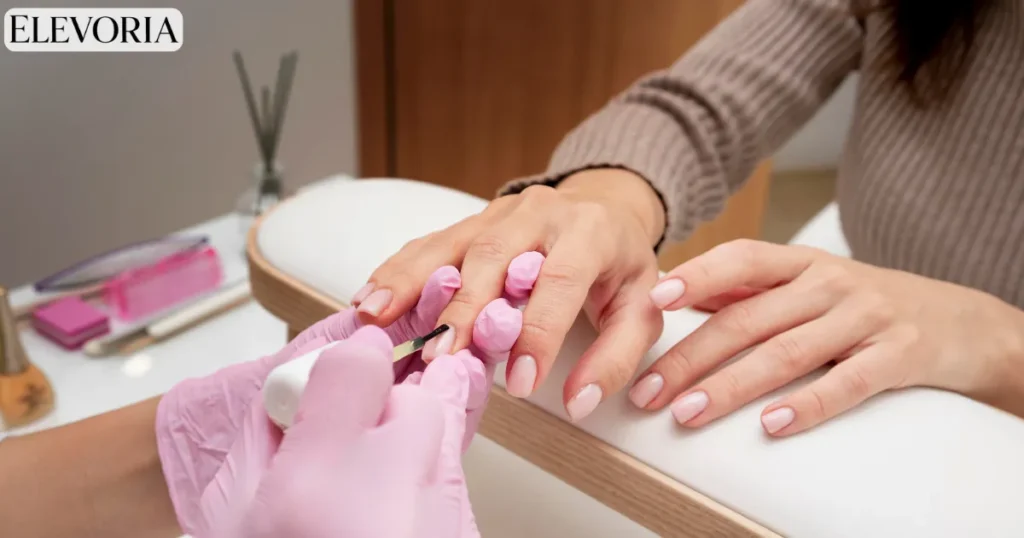
How to do French tips at home
- Prep your nails. Push back cuticles, gently buff the nail surface, and clean off any oils so polish adheres properly.
- Apply a base coat. This protects the natural nail and helps the color coats last longer.
- Apply the base color. Use a sheer pink, nude, or clear polish, or skip this step for a classic natural-nail look with only white tips.
- Create the tip line. Use nail tip guide stickers, striping tape, or a thin detail brush to paint a clean, even line across the free edge of the nail. Guides are generally more reliable for beginners than freehand painting.
- Apply a second coat of the tip color if needed. This helps create a fully opaque, solid white line rather than a streaky one.
- Remove guides carefully, if used, before the polish fully dries to avoid peeling the tip color along with the guide.
- Apply a top coat. This seals the design, adds shine, and significantly improves how long the manicure lasts before chipping.
- Allow full drying time or, for gel, cure under the appropriate UV or LED lamp according to the product’s instructions.
Common mistakes people make with French tips
- Painting freehand without a guide. This is the most common cause of uneven, shaky tip lines, especially for beginners. Nail guides or striping tape produce noticeably cleaner results.
- Using only one coat of tip color. A single thin coat of white polish often looks streaky or slightly translucent. A second coat generally creates a cleaner, more opaque line.
- Skipping the top coat. Without a top coat, French tips chip more quickly and lose their crisp, clean appearance faster than a fully sealed manicure.
- Choosing the wrong tip color for the nail bed. Stark white can look overly harsh against certain skin tones, and many people find a soft white or cream tone more universally flattering than a pure, bright white.
- Not accounting for nail shape. The classic French tip line is traditionally curved to match a squared or squoval nail shape. Applying that same curve to a very different nail shape, such as a pointed stiletto shape, can look mismatched without adjusting the tip line’s angle.
- Removing gel or acrylic French tips improperly. Peeling off gel polish or acrylic extensions instead of soaking or filing them off can damage the natural nail underneath.
How long do French tips last?
Durability depends heavily on the method used. Regular polish French tips generally last several days to about a week before chipping becomes noticeable, particularly at the tip line where the nail experiences the most contact and wear. Gel French tips typically last two to three weeks with proper application and a good top coat, while acrylic or gel extensions with a French design can last three to four weeks, though they require fill appointments as the natural nail grows out beneath them.
Activities involving frequent hand washing, cleaning products, or manual work can shorten the lifespan of any of these methods, regardless of which one is chosen.
Choosing the right French tip style for you
- For a classic, versatile look: stick with a traditional white tip over a sheer pink or nude base, which pairs well with nearly any outfit or occasion
- For a more subtle, everyday option: consider a micro French tip with a thinner line, which offers a more understated version of the style
- For a bold or trend-forward look: try a colored tip, colored base, or reverse French design
- For longer-lasting durability: gel polish or gel extensions generally outperform regular polish, particularly for people who use their hands frequently for work or daily tasks
- For nail health: if you are concerned about nail strength or frequent use of gel and acrylic, regular polish French tips allow for more frequent breaks between applications without the same removal process required for gel or acrylic
Actionable recommendations
- Use nail tip guides or striping tape rather than freehand painting for cleaner, more even tip lines, especially if you are new to the style.
- Apply two coats of your tip color for a fully opaque, professional-looking line.
- Always finish with a top coat to protect the design and extend how long it lasts before chipping.
- Match your tip line’s curve to your actual nail shape rather than using the same angle regardless of shape.
- Choose your method (regular polish, gel, or acrylic) based on how long you want the manicure to last and how much maintenance you are willing to commit to.
- If choosing white tips, consider a soft white or cream shade rather than a stark white if you want a slightly softer, more universally flattering look.
Frequently asked questions
What is the difference between French tips and a French manicure? The terms are often used interchangeably, but “French tips” more specifically refers to the visual design of a contrasting tip color, while “French manicure” refers to the full manicure service that produces that look.
How long do French tips last? Regular polish French tips generally last several days to about a week, gel versions last about two to three weeks, and acrylic or gel extensions with a French design can last three to four weeks with proper fills.
Can I do French tips at home? Yes. Using nail tip guides or striping tape, along with a base coat, tip color, and top coat, makes it possible to achieve a clean French tip look without a salon visit, though results can vary based on practice and steady hand application.
What nail shape works best with French tips? Squared and squoval shapes are the most traditional match for the classic French tip line, though the design can be adapted to other shapes, such as almond or coffin, by adjusting the angle and curve of the tip line.
Do French tips have to be white? No. While white is the classic and most recognized color, modern French tip variations commonly use colored tips, pastels, metallics, or even a reverse design with color placed near the cuticle instead of the tip.
Are French tips still in style? Yes. French tips have remained a consistently popular style for decades, with ongoing updates in tip color, thickness, and shape keeping the look current rather than dated.
What is a micro French tip? A micro French tip uses a much thinner line of color at the nail tip compared to the traditional thicker white band, offering a more subtle, modern take on the classic style.
Do French tips work on short nails? Yes. French tips can be applied to nails of any length, including short nails, though the tip line is often adjusted to be slightly thinner to suit a shorter nail bed.
The bottom line
French tips remain one of the most enduring and adaptable nail styles because the core idea, a contrasting tip color against a natural or nude base, works across countless variations in color, thickness, and application method. Whether you choose a classic white tip, a modern micro line, or a bold colored version, using tip guides, applying enough coats for full opacity, and finishing with a top coat are the details that consistently separate a clean, professional-looking result from a streaky or uneven one.
Read More: Chrome Nails: The Complete Guide to Getting the Mirror Finish Right

[…] Read More: French Tips: The Complete Guide to the Classic Nail Look […]