Introduction: Why Skin Boosters Are One of 2026’s Most-Searched Aesthetic Treatments
If you’ve spent any time scrolling through beauty content recently, chances are you’ve encountered the term skin boosters. Praised by aesthetic practitioners and beauty enthusiasts alike, these injectable hydration treatments have quietly moved from niche clinic procedure to one of the most in-demand skin treatments across the UK, Europe, and beyond.
But what exactly are skin boosters? Are they the same as fillers? And is a skin booster injection right for you?
This guide covers everything you need to know , from how skin boosters work and the key differences between leading products like the Seventy Hyal skin booster and Lumi Pro skin booster, to realistic expectations, potential side effects, and expert-informed guidance on getting the most from your treatment.
As always, this article is for informational purposes only. If you’re considering any injectable aesthetic treatment, consult a qualified, registered medical professional or aesthetic practitioner before proceeding.
What Are Skin Boosters? A Clear, Evidence-Informed Definition
Skin boosters are a category of injectable aesthetic treatments designed to deliver active hydrating and bioactive ingredients directly into the dermis , the deeper layer of the skin.
The most common active ingredient in skin boosters is hyaluronic acid (HA), a naturally occurring molecule in the body that plays a key role in retaining moisture. According to research referenced by dermatological bodies including the American Academy of Dermatology, hyaluronic acid can hold up to 1,000 times its weight in water, making it a popular choice in both topical skincare and injectable formulations.
Unlike traditional dermal fillers , which are typically thicker, structured gels designed to add facial volume or contour , skin boosters use softer, less cross-linked (or completely non-cross-linked) hyaluronic acid formulas. Rather than reshaping features, they aim to support overall skin quality: hydration, suppleness, radiance, and texture refinement.
In more recent years, newer categories of skin boosters have emerged. These include polynucleotide (PN) or PDRN-based boosters, which are derived from purified DNA fragments and are associated with supporting the skin’s natural regeneration pathways, and exosome-based boosters, which represent some of the latest emerging developments in aesthetic science.
Key distinction: Skin boosters are about skin quality , not volume or structural change.
How Do Skin Boosters Work?
Understanding the mechanism behind skin boosters helps set realistic expectations about what these treatments may and may not do.
Hyaluronic Acid Skin Boosters
When hyaluronic acid is injected into the mid-to-deep dermis, it creates a reservoir of hydration within the skin. The HA molecules attract and bind water molecules, which may contribute to a plumper, more supple appearance from within.
Some formulations , such as those using stabilised or high molecular weight HA , are associated with the ability to biostimulate the skin’s own HA-producing cells (fibroblasts), potentially supporting longer-lasting improvements in skin hydration and texture. Individual results vary.
Polynucleotide (PN/PDRN) Skin Boosters
Polynucleotide boosters work through a different mechanism. Rather than providing hydration directly, they are thought to interact with adenosine receptors in the skin, which may support tissue repair processes, encourage fibroblast activity, and contribute to collagen and elastin production over time.
Research into polynucleotides in aesthetic medicine is ongoing, and while some studies suggest benefits for skin texture and the appearance of aging, it’s important to note that results vary and long-term clinical evidence continues to evolve.
The Role of the Practitioner
How a skin booster is administered , the technique, depth of injection, number of entry points, and product selection , significantly influences how the treatment may feel and what outcomes you may experience. This is why choosing a qualified, experienced aesthetic practitioner is essential.
Types of Skin Boosters: Understanding Your Options
Skin boosters are not a one-size-fits-all category. Here’s a breakdown of the main types currently available:
1. Hyaluronic Acid (HA) Skin Boosters
The most widely used type of skin booster. These may come in varying molecular weights and levels of cross-linking, which can affect how long the product remains in the skin and how it interacts with surrounding tissue.
HA skin boosters are generally suitable for a range of skin concerns including dryness, dullness, fine lines associated with dehydration, and uneven texture. Suitability depends on individual skin assessment.
Examples include: Restylane Skin Boosters, Juvéderm Volite, Profhilo (a bioremodelling product using both high and low molecular weight HA), and the Seventy Hyal 2000.
2. Polynucleotide (PN / PDRN) Skin Boosters
Derived from purified salmon or trout DNA, polynucleotide boosters are gaining significant attention in aesthetic medicine as a regenerative approach to skin quality. They are typically used to support the appearance of skin firmness, texture, and overall health.
These are often considered for areas that may be more sensitive to standard HA injections, such as the under-eye area.
Examples include: Lumi Eyes (a polynucleotide-based eye-area booster), Nucleofill, and Plinest.
3. Exosome-Based Boosters
A newer and still-emerging category in aesthetic medicine. Exosomes are tiny extracellular vesicles derived from stem cells, which may carry signalling proteins and growth factors. While early-stage interest in this area is growing, comprehensive clinical evidence is still being established, and regulatory status varies by country. Anyone interested in this category should seek guidance from a specialist practitioner.
4. Collagen-Stimulating Biostimulators
While technically distinct from traditional skin boosters, products such as Sculptra (poly-L-lactic acid) and Radiesse (calcium hydroxylapatite) are sometimes grouped alongside skin boosters in discussion of skin quality treatments. These are designed to stimulate collagen production over time, rather than provide immediate hydration.
Seventy Hyal Skin Booster: What It Is and What to Know
The Seventy Hyal 2000 skin booster, developed by Revive Lab, has become one of the most widely discussed products in the UK aesthetic market in recent years. Its name refers to its formulation using high molecular weight hyaluronic acid (2000 kDa , kilodaltons), which distinguishes it from many other HA injectables.
What Makes Seventy Hyal Different?
The high molecular weight of the HA in Seventy Hyal 2000 is associated with a biostimulation approach: rather than simply filling space with hydration, the formulation is designed to interact with the skin’s own fibroblast cells, potentially encouraging the skin to produce its own hyaluronic acid over time.
Some practitioners describe Seventy Hyal as sitting at the intersection of a skin booster and a bioremodelling treatment , focusing on improving the skin’s natural capacity for hydration and resilience rather than simply adding volume.
What to Expect from Seventy Hyal Treatment
A typical Seventy Hyal treatment involves a series of micro-injections across the treatment area (commonly the face, neck, décolletage, or hands). Practitioners may use a needle or cannula technique depending on the area and individual assessment.
A course of treatments is generally recommended (rather than a single session), with individual response varying. Results may include improvements in skin hydration, texture, and a more radiant appearance. As with all skin boosters, individual results vary, and maintenance sessions may be recommended.
Important: Only a qualified and registered aesthetic practitioner or medical professional can assess whether Seventy Hyal , or any skin booster , is appropriate for you. This is not a DIY treatment.
Lumi Pro Skin Booster: An Overview
Lumi Pro is a skin booster product that has attracted interest across the UK and European aesthetic market. Like other products in the skin booster category, it is used as an injectable treatment designed to support skin hydration and quality.
Patients and practitioners considering the Lumi Pro skin booster should consult directly with an authorised aesthetic supplier or qualified practitioner for the most up-to-date formulation details, clinical guidelines, and treatment protocols. As the aesthetic market evolves rapidly, it’s always advisable to confirm product specifications with the treating clinician before any appointment.
What to Look for in Any Skin Booster Product
Whether you’re researching Lumi Pro, Seventy Hyal, or any other skin booster, here are the questions worth asking your practitioner:
What is the active ingredient and its molecular weight?
Is the product CE-marked (in the UK/EU) or approved by the relevant regulatory body in your country?
What is the recommended treatment protocol , how many sessions and how far apart?
What are the known side effects and contraindications?
What are the realistic expected outcomes for your skin type and concern?
What to Expect from a Skin Booster Injection: A Step-by-Step Overview
Understanding what happens during a skin booster treatment can help you feel more informed and prepared before your appointment.
Step 1: Consultation
Any reputable aesthetic practitioner will begin with a thorough consultation. This should include a review of your medical history, any medications you’re taking, previous aesthetic treatments, skin type assessment, and a discussion of your goals and expectations.
This step is non-negotiable. Do not proceed with any aesthetic treatment without a proper consultation.
Step 2: Preparation
The treatment area is typically cleansed thoroughly. A topical anaesthetic cream may be applied and left for a period (usually 20–30 minutes) to help manage any discomfort during injection. Some practitioners may also use ice to numb the area.
Step 3: The Injection
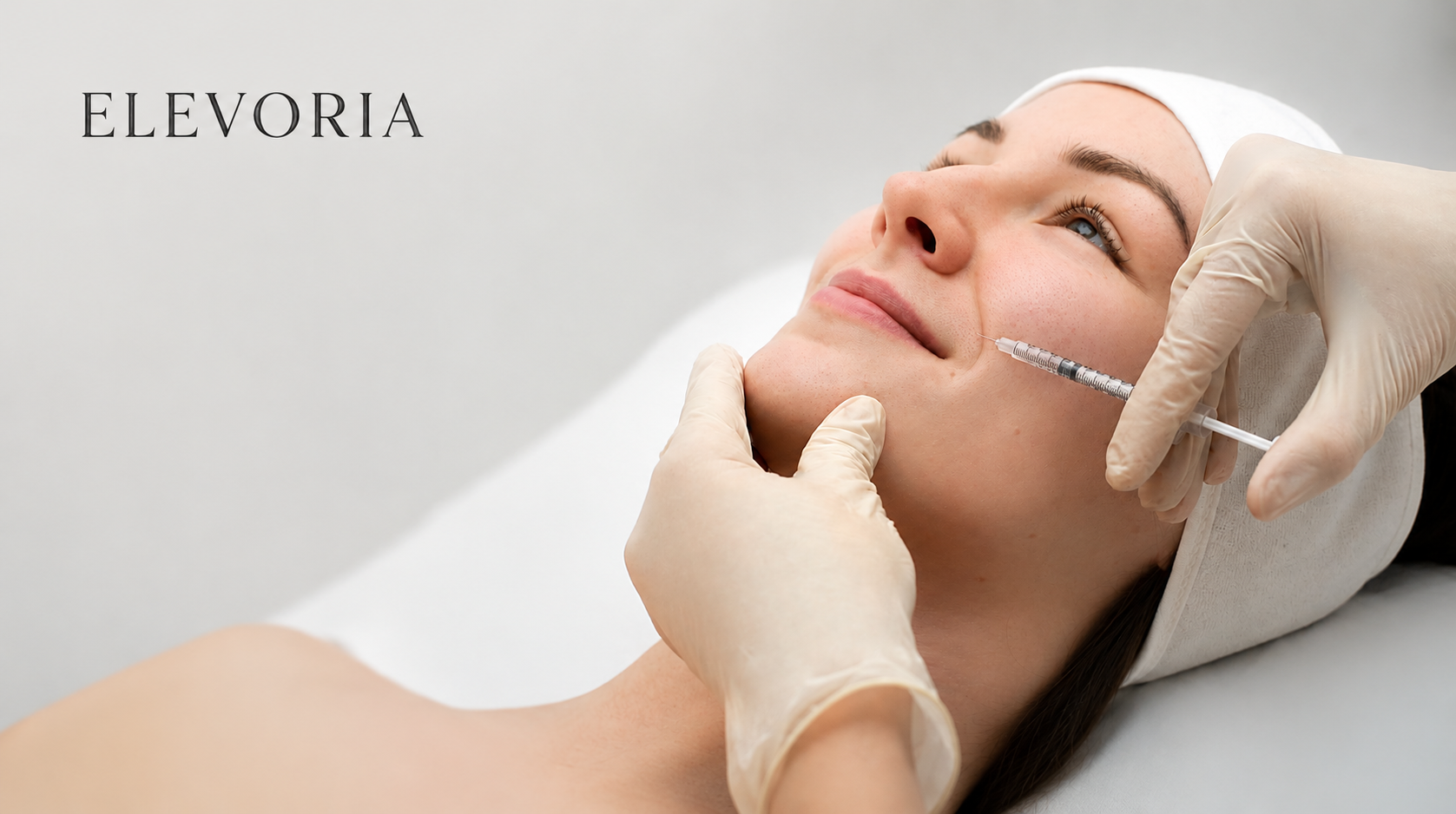
Using a fine needle or cannula, the practitioner administers the skin booster through a series of micro-injections at specific depths within the skin. The technique (linear threading, fanning, bolus) will vary based on the product, the area being treated, and the practitioner’s approach.
Most skin booster sessions take between 30 and 60 minutes depending on the treatment area and the product used.
Step 4: Immediate Post-Treatment
It’s normal to experience some redness, minor swelling, and small raised bumps at injection points immediately after treatment. These generally subside within a few hours to a couple of days. Individual healing response varies.
Step 5: The Days After Treatment
Most people are able to return to their normal daily activities shortly after a skin booster injection, making this a relatively low-downtime procedure for many individuals. That said, some temporary tenderness or bruising may occur, particularly in more sensitive areas.
Your practitioner should provide you with clear aftercare instructions, which typically include advice on sun protection, avoiding certain skincare actives for a short period, and not touching or manipulating the treated area.
Benefits of Skin Boosters: What the Evidence Suggests
When administered appropriately by a qualified practitioner, skin boosters are associated with a number of potential skin benefits. It’s important to approach these with realistic expectations , outcomes vary between individuals and depend on a range of factors including skin type, age, lifestyle, and the specific product used.
1. Deep Skin Hydration
The most frequently reported and well-documented benefit of HA-based skin boosters is improved skin hydration. Hyaluronic acid’s water-binding capacity means that when delivered into the dermis, it may contribute to a more hydrated, supple appearance of the skin.
2. Improved Skin Texture
Some users report improvements in overall skin texture following a course of skin booster treatments , skin may feel smoother and look more even. Texture improvements are often attributed to the combined effects of increased hydration and, in some formulations, biostimulatory activity on fibroblasts.
3. Enhanced Radiance and Glow
One of the most widely noted aesthetic outcomes associated with skin boosters is an improvement in skin luminosity. Dehydrated skin can appear dull; restoring deep hydration levels may support a more radiant, healthy-looking complexion.
4. Reduction in the Appearance of Fine Lines Associated with Dehydration
Dehydration can accentuate fine lines, particularly in areas like around the eyes and mouth. Skin boosters may help support a plumper, more hydrated appearance in these areas, potentially reducing the appearance of fine lines associated with skin dryness. They are generally not considered a primary treatment for deep static wrinkles.
5. Skin Quality Improvement Over Time (With Some Formulations)
Biostimulatory formulations , including high molecular weight HA products like Seventy Hyal and polynucleotide-based products , are associated with encouraging the skin’s own collagen and hyaluronic acid production. This may contribute to gradual improvements in overall skin quality with a course of treatments. Research in this area continues to evolve.
6. Versatility of Treatment Areas
Skin boosters can typically be used across a range of areas including the face, neck, décolletage, hands, and in some cases the under-eye area (depending on the specific product and practitioner assessment). This versatility makes them relevant to a broad range of skin concerns.
Reminder: Individual results vary. The benefits listed above reflect what is generally associated with skin booster treatments; they are not guaranteed outcomes for every individual.
Potential Side Effects and Risks: What to Be Aware Of
Like all injectable treatments, skin boosters carry potential risks and side effects. Being informed about these is an important part of making a considered decision.
Common (and Typically Temporary) Side Effects
Redness and swelling at injection sites , usually resolves within 24–48 hours
Small bumps or papules at injection points , typically resolve within a few days
Bruising , more common in certain individuals and areas; may persist for several days
Tenderness at the treatment site , usually mild and temporary
Temporary skin sensitivity
Less Common Side Effects
Prolonged swelling or redness beyond the expected timeframe
Infection at injection sites (risk is minimised with proper sterile technique)
Asymmetric results or uneven distribution of product
Allergic reaction , rare, but possible with any injectable product
Serious Complications (Rare but Important to Know About)
Vascular occlusion , where filler material inadvertently enters or compresses a blood vessel , is a rare but serious risk associated with any injectable treatment. This is why it is critical that skin booster treatments are only performed by qualified practitioners who have the training, experience, and emergency protocols to recognise and manage complications.
The British Association of Aesthetic Plastic Surgeons (BAAPS) and similar professional bodies in various countries publish guidance on the importance of practitioner qualifications for injectable treatments.
Contraindications to Be Discussed with Your Practitioner
Skin boosters may not be appropriate for everyone. Your practitioner should screen for contraindications including (but not limited to):
Pregnancy and breastfeeding
Active skin infections or inflammatory skin conditions in the treatment area
Known hypersensitivity to hyaluronic acid or other product ingredients
Certain autoimmune conditions
Current use of blood-thinning medications (which may increase bruising risk)
Who May Be a Good Candidate for Skin Boosters?
Skin boosters are generally considered suitable for adults who are looking to address concerns related to:
Skin dehydration and dryness
Dull or tired-looking skin
Early signs of skin aging related to loss of moisture
Uneven skin texture
Loss of skin radiance and luminosity
Skin boosters are not solely a treatment for older individuals , they may also be considered by younger adults who have naturally dehydrated skin or are looking to support their skin health proactively. However, suitability must always be determined on an individual basis by a qualified practitioner.
Skin Boosters Are Generally Not Recommended For:
Individuals under 18 years of age
Those who are pregnant or breastfeeding
People with known allergies to product components
Those with active skin infections in the treatment area
Anyone who has not had a proper consultation with a qualified practitioner
Skin Boosters vs. Dermal Fillers: Key Differences Explained
This is one of the most common questions in aesthetic consultations, and the distinction matters.
FeatureSkin BoostersDermal FillersPrimary GoalSkin quality, hydration, textureVolume, contour, structureHA FormulationSoft, lightly or non-cross-linkedFirm, highly cross-linked gelInjection DepthMid to deep dermisVaries , subcutaneous to periostealVisible Volume ChangeMinimal to noneTypically yesTarget ConcernsDryness, dullness, texture, fine linesFolds, hollows, lip volume, jawlineTreatment AreasFace, neck, décolletage, handsFace (specific structural areas)LongevityOften 3–6 months; varies by productVaries , typically 9–24 months
Both treatments may complement each other when used as part of a comprehensive aesthetic plan, but they serve different purposes. A qualified practitioner can advise on which approach , or combination , may be most appropriate for your individual goals.
How Long Do Skin Booster Results Last?
One of the most frequently asked questions about skin boosters is how long results may last. The honest answer: it depends.
Factors that may influence longevity include:
The specific product used , different formulations have different longevity profiles
Number of sessions completed , a full recommended course is generally associated with better and longer-lasting results than a single session
Individual metabolism and skin type , some individuals process HA more quickly than others
Lifestyle factors , sun exposure, smoking, hydration levels, and skincare routine can all influence how long skin improvements are maintained
The treatment area , more mobile areas may metabolise product more quickly
As a general guide, many practitioners suggest maintenance sessions every three to six months, though individual protocols vary. Your practitioner will be best placed to advise on a schedule appropriate for your skin.
Aftercare Tips: Getting the Most from Your Treatment
Aftercare plays an important role in your experience and may support optimal outcomes. Your practitioner should provide personalised aftercare advice, but the following general guidance is commonly recommended:
In the first 24–48 hours:
Avoid touching, pressing, or massaging the treated area unless advised by your practitioner
Keep the area clean and avoid heavy makeup on the treated area if possible
Avoid intense exercise, saunas, steam rooms, and activities that raise core body temperature significantly
Avoid alcohol immediately after treatment (which may increase swelling or bruising)
Avoid direct sun exposure and tanning beds
Ongoing:
Apply high-SPF sunscreen daily , sun protection is important for maintaining skin health and supporting the longevity of any aesthetic treatment
Maintain adequate daily hydration through water intake and a suitable topical skincare routine
Attend any recommended follow-up appointments
Skincare actives to potentially avoid immediately post-treatment (always confirm with your practitioner):
Retinoids
AHAs/BHAs
Vitamin C in high concentrations
Any product that may cause irritation
Common Mistakes People Make When Considering Skin Boosters
Knowing what to avoid can be as valuable as knowing what to do. Here are some of the most common pitfalls:
1. Choosing a practitioner based on price alone. The lowest price is rarely the safest choice for injectable treatments. Prioritise qualifications, experience, and a proper consultation process.
2. Expecting one session to deliver dramatic results. Most skin booster protocols involve a course of treatments. A single session may provide some initial hydration benefit, but the more significant improvements in skin quality are typically seen after a recommended course.
3. Skipping the consultation. A consultation is not optional , it’s where contraindications are identified, goals are discussed, and a safe, appropriate treatment plan is established.
4. Underestimating aftercare. Not following aftercare advice can compromise your results and increase the risk of complications.
5. Comparing your results to others. Individual results vary considerably. Your skin, your lifestyle, and your biology are unique.
6. Purchasing skin boosters for home use. Injectable aesthetic products are prescription medicines and medical devices regulated for use by qualified practitioners only. Home administration is unsafe and potentially dangerous.
Skin Boosters and Different Skin Types: A Brief Guide
While skin boosters can be beneficial across a range of skin types, there are some considerations worth knowing:
Dry and dehydrated skin: Often considered the skin type that may see the most noticeable hydration improvements from HA-based skin boosters.
Oily skin: Skin boosters address hydration at a deeper level and are not specifically designed to address oiliness. However, dehydrated oily skin (a common combination) may still benefit.
Sensitive skin: A thorough consultation is particularly important for those with sensitive or reactive skin. The practitioner should assess suitability and discuss the risk of any inflammatory response.
Darker skin tones: Post-inflammatory hyperpigmentation (PIH) is a consideration for individuals with deeper skin tones following any injectable procedure. Discussion with a practitioner experienced in treating diverse skin tones is advisable.
Mature skin: Skin boosters may be used to support skin hydration and quality in mature skin. They are not a substitute for treatments addressing significant volume loss or skin laxity, though they may be complementary.
Emerging Trends in Skin Boosters (2026)
The skin booster category continues to evolve rapidly. Some of the emerging directions attracting practitioner and industry attention include:
Polynucleotide Combinations
The combination of polynucleotide treatments with other skin booster modalities (such as HA) is being explored by practitioners seeking complementary approaches to skin rejuvenation. This is an area of active clinical interest.
Biorevitalisation Protocols
Tailored protocols that sequence different types of skin boosters , for example, an initial course of PN boosters to address regenerative needs followed by HA boosters for hydration , are gaining traction as practitioners develop more sophisticated approaches.
Exosome Technology
Exosome-based treatments remain an area of emerging research and commercial development. While interest is high, regulatory frameworks are still developing in many markets, and individuals should approach this area with appropriate caution and careful practitioner selection.
Growth Factor Formulations
Some newer products incorporate growth factors or peptides alongside hyaluronic acid. These are an area of ongoing aesthetic research and development.
As with all emerging treatments, those considering newer technologies should seek practitioners with specific training and experience in the relevant product or technique.
People Also Ask: Frequently Asked Questions About Skin Boosters
Q: What is a skin booster injection?
A skin booster injection is a minimally invasive aesthetic treatment where a hydrating or bioactive substance , most commonly hyaluronic acid or polynucleotides , is administered into the skin via a fine needle or cannula. The aim is to support skin hydration, texture, and overall skin quality, rather than to add volume or change facial contours.
Q: Are skin boosters the same as fillers?
No. While both involve injectable substances, they serve different purposes. Skin boosters use soft, hydrating formulations to improve skin quality and hydration. Dermal fillers use firmer, cross-linked gels to add volume or structural support to specific areas of the face.
Q: How long do skin boosters last?
The longevity of skin booster results varies depending on the product used, the number of sessions completed, and individual factors such as metabolism, lifestyle, and skin type. Many practitioners suggest maintenance sessions every three to six months, though this varies. Results from a full treatment course are generally longer-lasting than a single session.
Q: What is the Seventy Hyal skin booster?
Seventy Hyal 2000 is a skin booster product by Revive Lab, formulated with high molecular weight (2000 kDa) hyaluronic acid. It is used as an injectable skin booster, with its formulation associated with biostimulatory properties , potentially encouraging the skin’s own hyaluronic acid production over time. It is administered by aesthetic practitioners and is not available for home use.
Q: What is the Lumi Pro skin booster?
Lumi Pro is a skin booster product used in aesthetic practice. As with any skin booster, it is important to consult a qualified practitioner directly for the most current formulation details, treatment protocols, and to determine whether it is appropriate for your individual skin concerns and health history.
Q: Who is a good candidate for skin boosters?
Adults who are experiencing skin dehydration, dullness, uneven texture, or early signs of moisture-related aging may be considered suitable candidates for skin boosters. Suitability must always be assessed by a qualified medical or aesthetic professional, as individual circumstances, health history, and contraindications must be taken into account.
Q: Are skin boosters safe?
When administered by a qualified and experienced practitioner using regulated products, skin boosters have a well-established safety profile. Common side effects such as redness, swelling, and minor bruising are typically temporary. Serious complications are rare but can occur, which is why practitioner qualification and experience is essential. Skin boosters should only ever be administered by a trained professional , not self-administered.
Q: How many skin booster sessions do I need?
Most practitioners recommend an initial course of two to three sessions, typically spaced several weeks apart, followed by maintenance sessions. The exact protocol depends on the specific product, the individual’s skin, and the practitioner’s assessment.
Q: Do skin boosters hurt?
Discomfort levels vary between individuals. Most clinics apply a topical anaesthetic cream prior to treatment to minimise discomfort. The sensation during injection is often described as a mild pricking or pressure. Most people find the procedure manageable. Discuss any concerns about pain tolerance with your practitioner before your appointment.
Q: Can I have skin boosters on my neck and hands?
Yes , skin boosters are commonly used on the neck, décolletage, and hands, in addition to the face. These areas can show early signs of dehydration and aging and may benefit from skin booster treatment. Suitability and technique should be discussed with your practitioner.
Q: How much do skin boosters cost?
The cost of skin booster treatments varies significantly depending on the product used, the number of sessions, the treatment area, and the clinic or practitioner. Prices vary by location and market. It is advisable to obtain a full cost breakdown during your consultation, including the total recommended course rather than just a per-session price.
The Bottom Line: Are Skin Boosters Worth Considering?
Skin boosters represent a well-established and widely used category of aesthetic treatment, with a growing evidence base supporting their role in improving skin hydration, texture, and overall quality. For individuals experiencing skin dehydration, dullness, or early texture concerns, they may offer a meaningful option , when administered safely by a qualified practitioner.
They are not a replacement for a good daily skincare routine, sun protection, adequate hydration, and a balanced lifestyle. They work best as part of a holistic approach to skin health.
Key points to take away:
Skin boosters work by delivering hydrating or bioactive ingredients into the dermis, not by adding volume
Products like Seventy Hyal 2000 and Lumi Pro are designed for professional use only, never attempt injectable treatments at home
Choose your practitioner carefully, qualifications, experience, and a thorough consultation process are non-negotiable
Set realistic expectations, individual results vary and maintenance sessions are typically part of the picture
Always disclose your full health history and current medications during your consultation
If you’re considering a skin booster injection, the most important first step is booking a consultation with a qualified aesthetic practitioner or medical professional who can assess your individual needs and recommend an appropriate approach.
This article is for informational purposes only and does not constitute medical advice. Skin booster treatments are medical procedures that carry risks and should only be performed by qualified, registered practitioners. Always consult a qualified healthcare or aesthetic professional before undergoing any injectable treatment.
Stay on website: Elevoria