
Black Olives: What They Actually Are, Types, Nutrition, and How They’re Made
Quick answer
Black olives are olives that have either ripened naturally on the tree to a dark color, or been picked green and processed to achieve a uniform black color through curing and oxidation. Most canned “black olives” sold in supermarkets, often labeled California black ripe olives, are actually picked while still green and turned black through a lye-curing and oxidation process, finished with ferrous gluconate, an FDA-approved color fixative, rather than being naturally ripened. Naturally ripened black olives, like Kalamata or Niçoise varieties, are typically brine, salt, or dry-cured instead, producing a more complex flavor and less uniform color than canned varieties.
If you searched “olives black olives,” you are most likely trying to understand what black olives actually are, how canned varieties differ from naturally cured ones, which types to choose for a specific dish, or general nutrition information. This guide covers all of that clearly, including a detail about canned black olives that surprises a lot of people.
What makes an olive “black”?
Olives naturally start out green and gradually ripen to shades of purple, brown, or black if left on the tree long enough, similar to how many fruits change color as they ripen. However, “black olive” as a commercial product category does not always mean a naturally ripened olive, which is one of the more commonly misunderstood facts about this common pantry staple.
There are two distinct paths to a black olive:
- Naturally ripened black olives, picked later in the season once they have darkened on the tree, then cured using traditional methods like brine, salt, or dry curing
- Processed “black ripe” olives, most commonly the canned variety found in most grocery stores, made from olives picked green and artificially darkened through a specific industrial process
How canned black olives are actually made
This is worth explaining in detail, since it is genuinely surprising to many people and directly affects flavor, texture, and how the product is labeled.
Most canned black olives, often labeled “California black ripe olives,” start as green, underripe olives. They are treated with a dilute lye (sodium hydroxide) solution in repeated stages, with air bubbled through the solution during processing. This exposure to oxygen causes the olive flesh to oxidize and darken, similar to how a cut apple browns when exposed to air, rather than reflecting natural ripening on the tree.
After this oxidation stage, the olives are treated with ferrous gluconate, an iron compound approved by the FDA specifically as a color additive for fixing a consistent black color in processed olives. The olives are then canned and heat-processed to ensure safety, since the low-acid, sealed can environment requires proper sterilization. This entire process is a well-established, FDA-recognized method, but it does mean that most canned black olives owe their color to oxidation and a food-grade color additive rather than natural ripening.
Naturally cured black olives versus canned “black ripe” olives
| Factor | Naturally ripened, traditionally cured | Canned “black ripe” (California style) |
|---|---|---|
| Harvest stage | Picked once naturally darkened or fully ripe | Picked green, before natural ripening |
| Color process | Natural ripening on the tree | Lye treatment plus oxidation, then ferrous gluconate |
| Common curing method | Brine, salt, water, or dry curing | Lye curing followed by canning and heat processing |
| Flavor profile | More complex, varies by variety and curing method | Generally milder, softer texture |
| Color consistency | Naturally varies, mahogany to dark purple to black | Uniform, consistent black |
| Common examples | Kalamata, Niçoise, oil-cured olives | Standard canned sliced or whole “black olives” |
Neither version is unsafe or lower quality in a food safety sense, since ferrous gluconate is a recognized, approved food additive. The difference is primarily about flavor, texture, and how naturally the color was achieved, which matters more to some cooks and eaters than others.
Common naturally cured black olive varieties
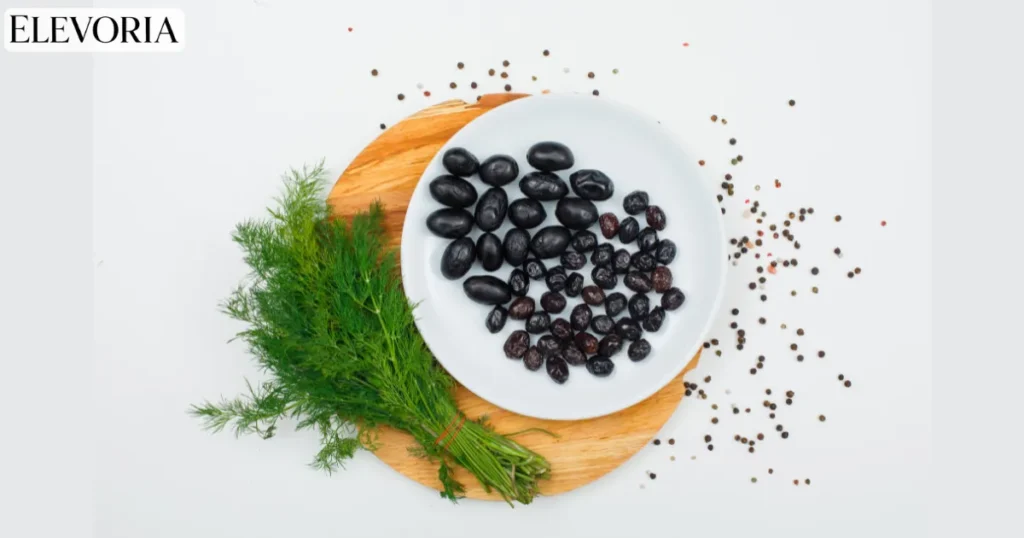
Kalamata
A Greek variety, almond-shaped and deep purple-black, typically brine-cured, known for a rich, fruity flavor and firmer texture than canned varieties.
Niçoise
A small, French variety traditionally used in salade Niçoise, brine-cured with a distinctive, slightly nutty flavor.
Oil-cured olives
Cured using salt and then finished in oil, producing a wrinkled appearance and an intensely concentrated, slightly bitter flavor compared to brine-cured varieties.
Gaeta
An Italian variety, mild and slightly sweet, often either brine-cured or oil-cured.
Nutrition considerations
Black olives, regardless of processing method, share a generally similar core nutritional profile: they are a source of healthy monounsaturated fat, along with vitamin E and various plant compounds. The main nutritional consideration across most cured olive varieties, canned or traditionally cured, is sodium content, since curing processes generally rely on salt or brine.
Naturally cured varieties like Kalamata often retain more of the natural polyphenol content associated with less-processed olives, though canned varieties still provide the same basic healthy fat profile. Rinsing olives before eating, particularly canned varieties, can help reduce sodium content somewhat if that is a specific dietary concern.
Choosing the right black olive for your dish
- For pizza and casual, mild dishes: canned sliced black olives are a common, budget-friendly, mild-flavored choice
- For salads, particularly Mediterranean-style dishes: Kalamata or Niçoise olives offer a more complex, traditional flavor
- For tapenade or concentrated flavor applications: oil-cured olives provide an intensely rich flavor well suited to spreads and sauces
- For roasting or high-heat cooking: firmer varieties like Kalamata generally hold their texture and shape better than softer canned varieties
- For a milder, kid-friendly option: canned black ripe olives are generally the mildest and softest option available
How to store black olives properly
- Keep opened olives submerged in their original brine or oil, since exposure to air can cause spoilage and flavor loss more quickly
- Store opened olives in a sealed glass or food-safe container in the refrigerator, transferring canned olives out of the metal can once opened
- Use refrigerated, opened olives within about one to two weeks for best quality and flavor
- Check unopened canned or jarred olives for their printed expiration or best-by date, and inspect for any can damage, bulging, or off odors before use, which are signs the product should not be consumed
Common mistakes and misconceptions about black olives
- Assuming canned black olives are naturally ripened. Most canned varieties are actually picked green and darkened through a lye and oxidation process, finished with ferrous gluconate, rather than through natural tree ripening.
- Assuming ferrous gluconate makes black olives unsafe. It is an FDA-approved color additive used specifically for this purpose, and its use in canned olive processing is a well-established, regulated practice.
- Storing opened olives without brine or oil. This significantly shortens how long olives stay fresh, since the liquid helps protect them from air exposure and spoilage.
- Assuming all black olives taste and behave the same in cooking. Canned, brine-cured, and oil-cured varieties differ significantly in flavor intensity, texture, and how well they hold up to heat, which matters for recipe selection.
- Overlooking sodium content. Since most black olive varieties rely on salt or brine curing, those monitoring sodium intake should factor this in, with rinsing offering a simple way to reduce it somewhat for canned varieties specifically.
Actionable recommendations
- Check the label if you specifically want naturally ripened, traditionally cured olives, since terms like “brine-cured,” “dry-cured,” or specific variety names (Kalamata, Niçoise) indicate a different process than standard canned “black ripe” olives.
- Match the olive variety to your dish, milder canned varieties for casual dishes like pizza, and more complex cured varieties like Kalamata for salads or Mediterranean-style cooking.
- Store opened olives submerged in their brine or oil in a sealed container in the refrigerator, and use them within one to two weeks for best quality.
- Rinse canned olives before eating if you are specifically trying to reduce sodium intake.
- Do not be concerned about ferrous gluconate specifically, since it is a recognized, FDA-approved food additive used deliberately and safely in standard olive processing.
Frequently asked questions
Are canned black olives naturally black? Usually not. Most canned black olives are picked green and turned black through a lye treatment and oxidation process, then finished with ferrous gluconate, an approved color additive, rather than through natural ripening on the tree.
Is ferrous gluconate in black olives safe to eat? Yes, it is recognized as safe by the FDA and approved specifically for use as a color additive in processed olives, within established usage guidelines.
What is the difference between Kalamata olives and regular canned black olives? Kalamata olives are a naturally ripened, brine-cured Greek variety with a richer, more complex flavor and firmer texture, while standard canned black olives are typically picked green and processed to achieve a uniform black color, resulting in a milder flavor and softer texture.
Why do canned black olives taste different from Kalamata or Niçoise olives? The difference comes primarily from the processing method rather than the olive variety alone. Canned olives generally undergo lye curing and oxidation, producing a milder, softer result compared to traditional brine or dry curing.
How should I store black olives after opening? Keep them submerged in their original brine or oil in a sealed container in the refrigerator, and use them within about one to two weeks for the best quality.
Are black olives healthy? Black olives provide healthy monounsaturated fat, vitamin E, and plant compounds, though most varieties are relatively high in sodium due to curing, which is worth considering for those monitoring salt intake.
Can I use canned black olives and Kalamata olives interchangeably in recipes? You can, but expect a noticeable flavor and texture difference, since canned varieties are generally milder and softer, while Kalamata olives offer a firmer texture and more pronounced flavor.
What does “California black ripe olives” mean on a label? It refers to the specific commercial process of picking green olives and processing them through lye curing, oxidation, and ferrous gluconate treatment to achieve a uniform black color, distinct from naturally ripened black olives.
The bottom line
Black olives are not a single uniform product, and understanding the difference between naturally ripened, traditionally cured varieties like Kalamata and Niçoise, and the more common canned “black ripe” olives made through lye curing, oxidation, and ferrous gluconate treatment, explains a lot about why these products taste and behave so differently in cooking. Choosing the right type for your specific dish, and storing opened olives properly in their brine or oil, will get you noticeably better results than treating all black olives as interchangeable.
Read More: Best Protein Powder for Women: How to Choose


[…] Read More: Black Olives: Types, Nutrition, and How They’re Made […]