Eyebrow Shapes: How to Find the Right One for Your Face
Quick answer
Eyebrow shape refers to the overall outline created by an eyebrow’s arch height, thickness, and angle, and choosing the right shape generally comes down to working with your natural brow growth pattern and face shape rather than forcing a trend-driven shape that fights your natural bone structure and hair growth. Common eyebrow shape categories include soft arch, high arch, flat or straight, s-shaped, and angular, each creating a different visual effect on the overall face. The most reliable approach is identifying your natural brow shape first, then making targeted adjustments rather than dramatically reshaping from scratch.
If you searched “eyebrow shapes,” you are most likely trying to figure out which shape suits your face, understand the difference between common shape categories, or get guidance on shaping your brows at home or with a professional. This guide covers all of that with practical, specific detail.
Why eyebrow shape matters so much for the overall face
Eyebrows frame the eyes and play a significant role in overall facial expression and perceived proportion, which is why even small changes in brow shape can noticeably affect how a face reads. An arch positioned too far forward or too far back, brows that are too thin or too thick relative to face size, or a shape that fights against natural hair growth can all throw off facial balance in ways that are often hard to pinpoint but easy to notice.
This is also why brow shaping is generally more effective as an enhancement of your natural shape and growth pattern rather than a complete reconstruction, since natural growth direction and existing bone structure provide a practical foundation that is harder to fight against than to work with.
Common eyebrow shape categories
Soft arch
A gentle, rounded arch positioned roughly above the outer edge of the iris, considered one of the most universally flattering and versatile shapes since it avoids the more dramatic angles of other shape categories.
High arch
A more pronounced, sharply lifted arch, creating a more dramatic, lifted appearance to the eye area, often associated with a more striking, editorial look.
Flat or straight brow
Minimal arch, running in a relatively straight line across the brow bone, associated with a softer, more youthful appearance and a currently popular natural styling trend.
S-shaped brow
A double curve, dipping slightly before rising into the arch, creating a distinctive, more sculptural shape.
Angular brow
A sharp, defined peak rather than a rounded arch, creating a more structured, striking look.
Rounded brow
A soft, curved shape without a distinct arch point, generally associated with a gentler, more approachable look.
How to find your natural eyebrow shape
- Avoid over-plucking or heavily filling in your brows before assessing them. Looking at your natural growth pattern, including any sparse areas, gives you the most accurate starting point.
- Identify where your natural arch, if any, currently sits. This is generally the highest point of your existing brow, even if it is subtle.
- Note your natural brow thickness and density, since working with your natural density is generally easier to maintain than a shape requiring you to fill in significant sparse areas daily.
- Look at your brow’s natural start and end points, since these are generally best kept close to your natural growth pattern for the most maintainable, natural-looking result.
Classic eyebrow mapping method
Professional brow shaping commonly uses a mapping technique to determine ideal brow start, arch, and end points relative to your specific facial features. While exact application varies by individual face shape and personal preference, the general method works as follows:
- Brow start point: generally aligned with the outer edge of your nostril, extended straight upward
- Arch point: generally aligned with the outer edge of your iris when looking straight ahead, extended upward at an angle
- Brow end point: generally aligned from the outer corner of your nostril through the outer corner of your eye, extended to where the brow should end
This mapping method provides a general guideline rather than a strict rule, and adjusting based on your natural growth pattern, face shape, and personal preference will generally produce a more flattering, wearable result than rigid adherence to any mapping formula alone.
Eyebrow shapes by face shape
| Face shape | Suggested brow shape tendency | Why it can help |
|---|---|---|
| Round | Higher, more angular arch | Adds visual length and structure to counterbalance the face’s natural roundness |
| Square | Soft, rounded arch | Softens strong jawline angles |
| Oval | Soft to medium arch | Generally flexible given balanced facial proportions |
| Heart-shaped | Soft, low-to-medium arch | Avoids adding extra height that could emphasize a narrower chin |
| Long | Flatter, straighter brow | Adding less vertical height helps avoid emphasizing overall face length |
| Diamond | Curved, soft arch | Softens the face’s naturally angular cheekbone prominence |
These are general tendencies rather than fixed rules, and personal preference, natural growth pattern, and individual features all play a meaningful role alongside general face shape guidance.
How to shape your eyebrows at home
- Brush brows upward and outward first to see your natural shape and growth pattern clearly before removing any hair.
- Identify stray hairs outside your natural shape, focusing on hairs clearly outside the general brow area rather than attempting significant reshaping without professional guidance.
- Use tweezers for precision, removing hairs one at a time in the direction of growth to minimize breakage.
- Avoid over-plucking the top of the brow, since this area generally should be trimmed rather than plucked if length is the concern, to avoid permanently altering your natural arch position.
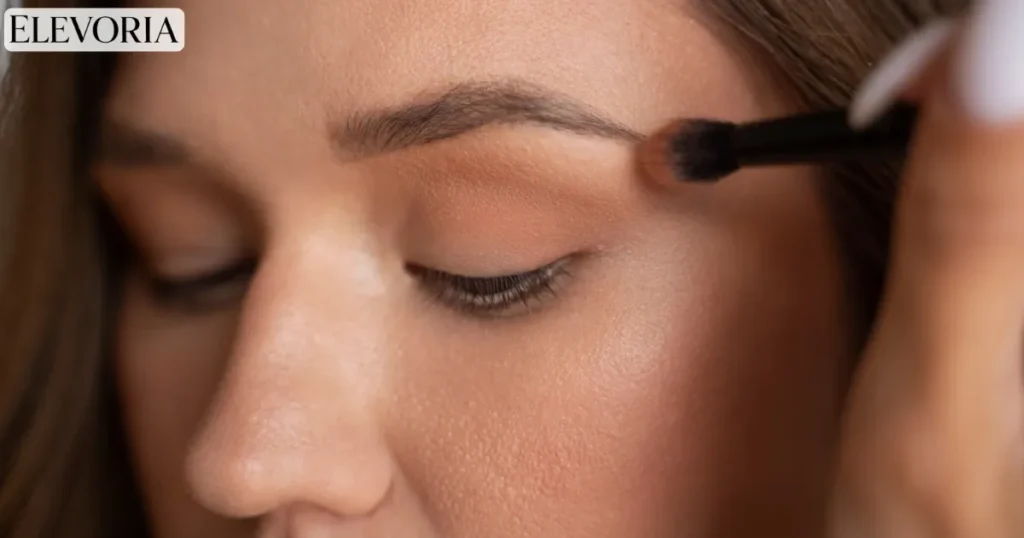
- Fill in sparse areas with a brow pencil or powder, using short, hair-like strokes that follow your natural growth direction rather than a single solid line.
- Set with a brow gel to keep hairs in place and maintain your desired shape throughout the day.
Professional eyebrow shaping options
- Threading: uses a twisted cotton thread to remove multiple hairs at once from the root, generally precise and well suited to creating clean, defined lines
- Waxing: removes hair from the root using warm or cold wax, generally faster for larger areas but requires more caution around the delicate eye area
- Tweezing: removes individual hairs one at a time, offering the most precision but requiring more time, generally used by professionals for detail work and touch-ups
- Brow tinting: adds color to existing brow hair, enhancing shape definition without removing any hair
- Microblading and similar semi-permanent techniques: create the appearance of individual hair strokes using a specialized tool and pigment, offering a longer-lasting solution for sparse or asymmetrical brows, generally performed by a licensed, experienced technician given the semi-permanent nature of the procedure
Common mistakes people make with eyebrow shaping
- Over-plucking, particularly at the top of the brow. This is one of the most common and hardest mistakes to reverse, since hair growth can slow or stop entirely in areas that are repeatedly over-plucked over time.
- Forcing a trend-driven shape that fights natural growth pattern. A shape that does not follow your natural growth direction generally requires significantly more daily maintenance and can look less natural overall.
- Not accounting for brow asymmetry. Most people have naturally asymmetrical brows to some degree, and trying to force both sides into perfectly identical shapes can result in over-plucking one side to match the other.
- Choosing an arch position based on trends rather than your own bone structure and natural growth. What looks flattering varies significantly by individual face, and blindly following a specific trending shape without considering your own features often produces a less flattering result than working with your natural tendencies.
- Using the wrong hair removal method for your pain tolerance and skin sensitivity. Waxing and threading both carry some risk of irritation, particularly for sensitive skin, making it worth considering these factors before choosing a method, especially for a first-time professional shaping appointment.
- Filling in brows with a single harsh line rather than hair-like strokes. This tends to look less natural than short, feathered strokes that mimic individual brow hairs.
Actionable recommendations
- Assess your natural brow shape and growth pattern before making significant changes, rather than starting from a trend-driven shape template.
- Use the classic brow mapping method as a general guideline, adjusting based on your natural features rather than following it rigidly.
- Avoid over-plucking, particularly at the top of the brow, since this area is more prone to permanent thinning with repeated over-plucking.
- Choose a professional shaping method (threading, waxing, or tweezing) based on your pain tolerance, skin sensitivity, and desired precision level.
- Fill in sparse areas with hair-like strokes rather than a single solid line, for a more natural-looking result.
- Consider semi-permanent options like microblading only through a licensed, experienced technician, given the longer-lasting nature of the procedure.
Frequently asked questions
What is the most flattering eyebrow shape? There is no single universally flattering shape, since this depends on individual face shape, natural brow growth pattern, and personal preference. A soft arch is often cited as broadly versatile, but working with your natural shape generally produces the most flattering, sustainable result.
How do I find my natural eyebrow shape? Avoid over-plucking or filling in your brows heavily, then assess your natural growth pattern, arch position, and thickness as your starting point before making any significant changes.
What eyebrow shape suits a round face? A higher, slightly more angular arch is commonly suggested for round faces, since it can add visual length and structure to help balance the face’s natural roundness.
Does eyebrow shape actually depend on face shape? Face shape is one factor among several, including natural brow growth pattern, bone structure, and personal preference, that together influence which shape looks most flattering on a specific individual.
Is threading or waxing better for eyebrow shaping? Both are effective, but they suit different preferences. Threading generally offers more precision for defined lines, while waxing is typically faster for larger areas but may carry slightly more risk of irritation around the sensitive eye area for some people.
Can over-plucked eyebrows grow back? Often yes, though regrowth can be slow, and in cases of significant or repeated over-plucking over a long period, hair growth in that area can become permanently thinner or stop entirely.
What is eyebrow mapping? It is a technique using facial landmarks like the nostril, iris, and outer eye corner to determine general guidelines for brow start, arch, and end points, used as a starting reference rather than a strict formula.
Should my eyebrows be symmetrical? Most people have naturally asymmetrical brows to some degree, and aiming for balanced rather than perfectly identical shapes generally produces a better result than forcing artificial symmetry through over-plucking.
The bottom line
Eyebrow shape has an outsized effect on overall facial balance and expression, which is why working with your natural growth pattern and bone structure, rather than forcing a trend-driven shape, generally produces the most flattering and sustainable result. Using brow mapping as a general guideline, choosing a hair removal method suited to your sensitivity and precision needs, and avoiding over-plucking, particularly at the top of the brow, are what most reliably separate well-shaped brows from a look that requires constant correction.
Read More: How to Remove Hair Dye from Skin: Methods That Work