
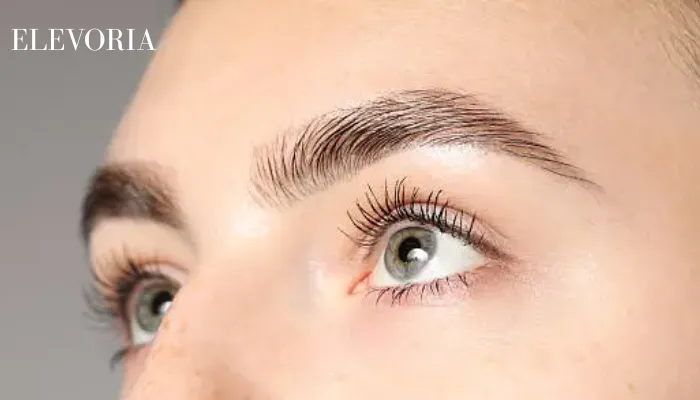
Eyebrows: A Complete Guide to Shaping and Care
Your eyebrows frame your eyes and play a role in facial expression. They also help protect your eyes from sweat and moisture. Shaping them is a personal choice. The most flattering look is usually one that works with your natural growth pattern rather than against it.
Why Eyebrows Matter
The eyebrow is more than a cosmetic feature. Research published in the Journal of Drugs in Dermatology explains that eyebrow hair serves important biologic and aesthetic functions, including protecting the eyes from sweat and moisture. The brow also contributes to facial expression and helps frame the eyes.
The position of the eyebrow reflects emotional status and provides non-verbal information, according to research on brow anatomy. This is why brow shape can change how your whole face reads, even before you apply any makeup.
Shaping Brows for Your Face Shape
There is no single correct brow shape. The goal is balance. A brow shape that suits an oval face may not work as well on a round or square face. Many professional brow artists use a simple principle: use the brow to balance the proportions of your face.
For a round face, a higher arch can add vertical length and make the face appear less circular. For a square face, a softer, diffused arch can help soften a strong jawline. For a long face, a flatter, more horizontal brow can draw the eye across the face and reduce the appearance of length. For an oval face, minimal restructuring is usually best because the proportions are already balanced.
The three-point rule is a common method for mapping brow shape. It uses the inner corner, the outer corner and the highest point of the arch as reference points. You can use a brow pencil to mark these points before shaping.
Shaping methods include tweezing, waxing, threading and trimming. Tweezing gives the most control and is good for touch-ups. Waxing removes hair from the root and can be quicker for larger areas. Threading is precise and is often used for shaping the brow outline. Trimming shortens long hairs but does not remove them from the root.
Brow Product Types and How to Use Them
Brow products fall into a few categories. Pencils are best for defining the shape and filling sparse areas with precise strokes. Powders give a softer, more diffused finish and are good for filling larger gaps. Gels, both clear and tinted, hold hairs in place and add colour. Pomades are highly pigmented creams that build structure and last well. Brow mascara adds colour and volume to the hairs themselves.
| Product | Best for | Finish |
|---|---|---|
| Pencil | Precise definition, sparse areas | Natural to defined |
| Powder | Soft filling, larger gaps | Diffused |
| Gel | Hold and setting | Natural |
| Pomade | Structure, long wear | Defined |
| Brow mascara | Adding colour to hairs | Natural |
Choose a shade close to your natural brow colour. For a more natural look, use a lighter shade than your hair colour. For a more defined look, match your hair colour. Always use a light hand and build up gradually. It is easier to add product than to take it away.
Tinting, Threading, Waxing and Aftercare
Brow tinting adds colour to the brow hairs and sometimes the skin beneath. A patch test is commonly advised at least 48 hours before tinting. This checks for allergy to the tint. If you have had a reaction to hair dye or brow tint before, do not proceed without medical advice.
After waxing or threading, the skin can be red and sensitive for a few hours. Avoid applying heavy makeup to the area for 24 hours. Avoid sunbeds and direct sunlight for 48 hours. Avoid hot showers, saunas and steam for at least 24 hours. Do not touch or rub the area, and keep your hands clean if you need to touch it.
Do not pluck or tweeze stray hairs while the area is healing from tinting, waxing or threading. Let the skin settle before doing any further grooming.
Safety and Hygiene
Eyebrow treatments that break the skin or use shared tools carry a risk of infection. Threading can raise the risk of staph infections and other contagious skin conditions if the thread is not clean or if the same thread is used on multiple clients. A reputable practitioner uses a fresh thread for each client, wears gloves and follows hygiene procedures.
Microblading and other semi-permanent brow treatments carry a risk of transmitting infectious diseases such as HIV and hepatitis B and C if equipment is not sterile. Proper hand washing and glove use help protect both the operator and the client.
In the UK, local councils set hygiene requirements for beauty salons that offer eyebrow tinting, threading, waxing and lamination. A patch test is advised for tinting and lash lifting. Practitioners should hold relevant qualifications and insurance. If you have a skin infection, eye infection or active breakout around the brow area, wait until it has cleared before having any brow treatment.
This is general educational content, not medical advice, and was not reviewed by a medical professional. Patch test any new product first. Results vary by person, skin type and sensitivity. If you are pregnant, breastfeeding or living with a diagnosed skin, allergy or eye condition, check with a doctor, pharmacist or dermatologist before starting a new active ingredient. See a licensed provider for a persistent, severe or worsening reaction. Avoid sharing eye and lip products, follow storage and period-after-opening guidance, and be careful with counterfeit makeup.


[…] Read More: Eyebrows: A Complete Guide to Shaping and Care […]