
Quick answer
“Korean treatment for skin,” often called K-beauty, is a skincare philosophy built around prevention, gentle layering, and consistent daily habits rather than harsh, one-time fixes. The core method involves double cleansing, applying multiple thin layers of hydrating and treatment products from lightest to heaviest, and finishing every morning with sunscreen. The well-known “10-step routine” is the most recognized version of this approach, but most dermatologists and experienced users now recommend a simplified 4 to 5 step version for most people.
If you are looking into Korean skin treatments, you are probably trying to understand one of a few things: what the routine actually involves, which products matter most, whether it is worth the time and cost, or how to adapt it safely to your own skin. This guide covers all of that in a straightforward way, without the exaggerated claims that show up on a lot of K-beauty blogs.
What is Korean skincare, exactly?
Korean skincare is not a single product or treatment. It is an approach to daily skin care that treats maintenance as the main event, rather than something you only think about when a problem appears. The idea is that consistent hydration, gentle ingredients, and daily sun protection prevent many common skin issues before they start.
Dermatologists who have studied the trend point out that this approach fills a real gap. Traditional Western skincare has often focused on treating problems after they show up, using stronger, more irritating actives to force quick results. Korean routines lean toward gentler formulations, lower fragrance, and ingredient choices that work across a wider range of skin tones and concerns, which is part of why the approach translated so well outside Korea.
The core idea behind the routine: layering
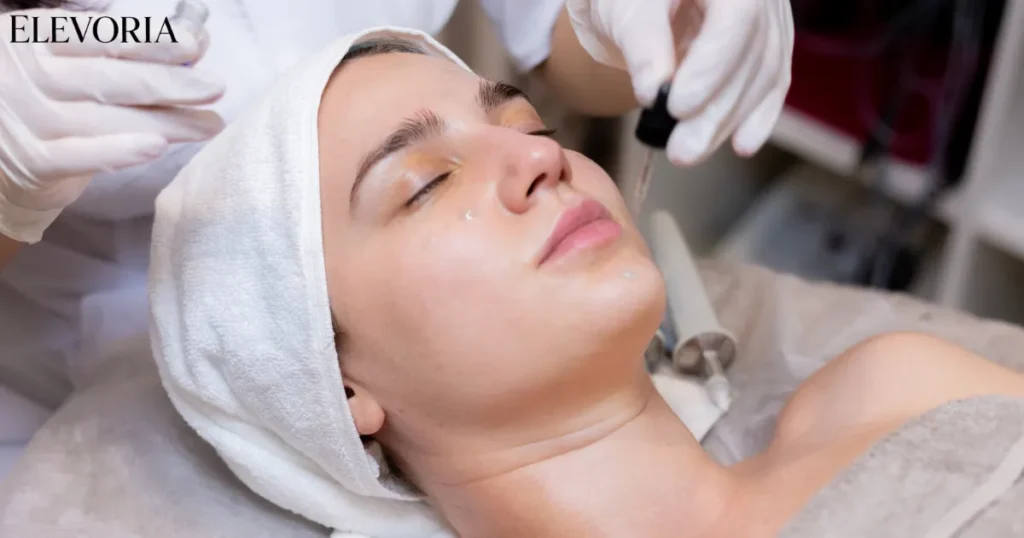
The defining technique in Korean skincare is layering products from thinnest to thickest consistency. A typical order moves from cleanser, to watery toner or essence, to thicker serum or ampoule, and finally to cream and, in the morning, sunscreen.
The logic is simple. Thin, watery layers absorb quickly and let the next product penetrate more effectively, whereas applying one heavy cream first can block lighter treatment products from reaching the skin at all. This layering habit is the single biggest structural difference between a Korean-style routine and a typical three-step Western routine of cleanser, moisturizer, and sunscreen.
The classic 10-step routine, explained
The famous 10-step routine is the most complete version of the method. Not everyone needs all ten steps, but understanding them helps you decide which ones matter for your skin.
- Oil-based cleanser. Dissolves sunscreen, makeup, and oil-based impurities. Used mainly at night, or in the morning if you wear heavy products overnight.
- Water-based cleanser. Follows the oil cleanser to remove sweat, dirt, and any residue the first cleanse missed. Together these two steps are known as double cleansing.
- Exfoliant. Used one to three times a week, not daily, to remove dead skin cells and help other products absorb better.
- Toner. A lightweight, mostly water-based product that rebalances the skin’s pH after cleansing and preps it for the next layers.
- Essence. A hybrid between toner and serum, generally containing a low to moderate concentration of active ingredients such as fermented extracts or niacinamide, aimed at hydration and repair.
- Serum or ampoule. More concentrated treatment products targeted at a specific concern, such as brightening, redness, or fine lines. Ampoules are typically the most concentrated version.
- Sheet mask or jelly mask. A soaking treatment used a few times a week rather than daily, meant to deliver a concentrated dose of hydrating or soothing ingredients in a short amount of time.
- Eye cream. A lighter, targeted formula for the thinner skin around the eyes.
- Moisturizer. Locks in the previous layers and reinforces the skin barrier.
- Sunscreen (morning only). The final and most important step of any morning routine, applied generously as the last layer.
A full nightly routine using most of these steps commonly takes twenty to thirty minutes for people who follow it closely, though this varies a lot by individual habits and product choice.
Do you actually need all 10 steps?
No, and most skincare professionals do not recommend it for everyone. The 10-step routine is a complete framework, not a mandatory checklist. Many dermatologists and experienced K-beauty users now recommend a simplified version for daily use, reserving the full routine for a few times a week.
A practical simplified routine looks like this:
- Double cleanse (in the evening)
- Toner or essence, at least one of the two
- A targeted serum for your main skin concern
- Moisturizer, morning and night
- Sunscreen, every single morning
You can then add exfoliation two to three times a week and a mask once or twice a week as extra steps, rather than daily non-negotiables.
Key ingredients in Korean skincare, and what they actually do
| Ingredient | Common use | What it is good for |
|---|---|---|
| Centella asiatica (cica) | Soothing serums and creams | Calming redness, irritation, and reactive or acne-prone skin |
| Niacinamide | Serums and essences | Supporting the skin barrier, evening out tone, minimizing the look of pores |
| Fermented ingredients (galactomyces, bifida ferment) | Essences | Fermentation breaks ingredients into smaller molecules, which may improve absorption and support skin repair |
| Snail mucin (snail secretion filtrate) | Essences and creams | Hydration and skin barrier support; popular for its texture and moisturizing feel |
| Ceramides | Moisturizers | Reinforcing the skin’s natural barrier, especially useful for dry or sensitive skin |
| Vitamin C | Morning serums | Brightening and helping with uneven tone, though it can be irritating for sensitive skin if introduced too quickly |
| Retinol or bakuchiol (a gentler plant-based alternative) | Night serums | Supporting skin renewal and addressing fine lines, generally introduced slowly |
These ingredients are common across many Korean products, but concentration and formulation vary widely by brand. The ingredient name alone does not guarantee a specific result. Always check the position of an ingredient on the label, since ingredients are listed in descending order of concentration.
At-home routine versus in-clinic treatments
Korean skin treatments are not limited to what you do at home. South Korea also has a large dermatology and cosmetic clinic industry offering professional treatments such as laser toning, chemical peels, microneedling, and LED therapy.
| Factor | At-home routine | In-clinic treatment |
|---|---|---|
| Cost | Lower per use, ongoing product cost | Higher per session, often a course of several visits |
| Speed of results | Gradual, builds over weeks to months | Can produce faster, more visible change per session |
| Risk level | Generally low with gentle products | Higher, requires a qualified professional and proper aftercare |
| Best suited for | General maintenance, hydration, prevention | Specific concerns like deep pigmentation, acne scarring, or textural issues |
| Who should be involved | Can be self-directed with patience | Should be performed or supervised by a licensed dermatologist or clinician |
If you are dealing with a persistent skin condition, such as ongoing acne, unexplained rashes, or significant pigmentation changes, a home routine is not a substitute for seeing a dermatologist. Over-the-counter products can support healthy skin, but they are not designed to diagnose or treat underlying medical skin conditions.
Common mistakes people make with Korean skincare
- Adding too many new products at once. This makes it hard to know what is working and increases the risk of irritation. Introduce one new product at a time and wait a week or two before adding another.
- Skipping sunscreen. Many people invest in serums and masks but skip daily SPF, which undermines almost everything else in the routine. Sun exposure is widely regarded by dermatologists as one of the biggest contributors to visible skin aging.
- Using strong actives together without spacing them out. Combining exfoliating acids, retinol, and vitamin C in the same routine without care can irritate the skin barrier rather than help it.
- Expecting overnight results. Most active ingredients need a full skin cell turnover cycle, generally around four to six weeks, before you can fairly judge whether a product is working.
- Applying too little sunscreen. Many people apply far less than the amount used in official SPF testing, which means they get less protection than the labeled SPF number suggests. A commonly cited guideline is about a quarter teaspoon for the face alone.
- Choosing products based on trends instead of skin type. A product that works well for someone else’s skin type or concern is not automatically right for yours.
Actionable recommendations
- Start with a simplified 4 to 5 step routine rather than jumping straight into all 10 steps.
- Always apply sunscreen every morning, regardless of weather, and reapply through the day if you are outdoors for extended periods.
- Introduce new active ingredients one at a time, and patch test on a small area of skin before applying a new product to your full face.
- Match ingredients to your actual skin concern rather than to what is trending. Centella asiatica for irritation, niacinamide for tone and barrier support, ceramides for dryness.
- Give any new routine at least four to six weeks before deciding whether it is working.
- If you have a persistent or worsening skin issue, see a dermatologist rather than trying to solve it entirely with over-the-counter products.
- Keep fragrance and irritation potential in mind if you have sensitive or reactive skin, since even gentle-marketed products can still cause a reaction.
Frequently asked questions
What is the Korean 10-step skincare routine? It is a layered skincare method that includes oil cleanser, water-based cleanser, exfoliant, toner, essence, serum or ampoule, mask, eye cream, moisturizer, and sunscreen, applied from the lightest to the heaviest product.
Do I really need 10 steps every day? No. Most dermatologists and experienced users recommend a simplified daily routine of cleansing, toner or essence, a targeted serum, moisturizer, and sunscreen, with masks and exfoliation added a few times a week.
What makes Korean skincare different from Western skincare? Korean skincare generally emphasizes prevention through daily hydration and sun protection, gentler formulations with fewer harsh actives, and a layering technique that applies several thin, absorbable layers instead of one heavy product.
What is an essence, and do I need one? An essence is a lightweight, watery product with a moderate concentration of active ingredients, positioned between a toner and a serum. It is considered one of the more distinctive steps in Korean skincare and is useful for hydration and gentle treatment, though it is not strictly required if your routine already includes a suitable serum and moisturizer.
Is Korean skincare good for acne-prone or sensitive skin? Many Korean products are formulated to be gentle and low in fragrance, and ingredients like centella asiatica are specifically used for calming irritation, which can suit sensitive or acne-prone skin. However, individual reactions vary, so patch testing and, for ongoing acne, a dermatologist’s guidance are still recommended.
What is glass skin? Glass skin refers to a smooth, evenly toned, luminous complexion, achieved primarily through consistent hydration, gentle exfoliation, and sun protection rather than a single product or treatment.
How long does it take to see results from a Korean skincare routine? Most active ingredients need a full skin cell turnover cycle to show visible effects, generally around four to six weeks of consistent use, so short-term trials are usually not long enough to judge a product fairly.
Are Korean skin treatments only about at-home products? No. Korea also has an extensive network of dermatology and cosmetic clinics offering treatments such as laser toning, peels, and microneedling, in addition to the well-known at-home routine.
Do I need a dermatologist for Korean skincare? Not for general maintenance and prevention, but you should consult a dermatologist for persistent skin conditions, unexplained changes in your skin, or before starting stronger clinical treatments.
The bottom line
Korean skin treatment is best understood as a philosophy of prevention and consistency rather than a rigid checklist. The 10-step routine is a useful full framework to understand, but a simplified version built around cleansing, hydration, a targeted treatment product, moisturizer, and daily sunscreen covers most people’s actual needs. The biggest factors in getting real results are consistency, matching ingredients to your specific skin concern, and giving products enough time to work, not the number of steps in your routine.
This article is for general informational purposes and is not a substitute for professional medical advice. If you have a persistent skin condition or are considering starting new active ingredients such as retinol or strong acids, consult a dermatologist or qualified skincare professional first.
Read More: Chrome Nails: The Complete Guide to Getting the Mirror Finish Right


[…] Read More: Korean Skin Treatment: The Complete Guide to K-Beauty Routines and What Actually Works […]
[…] Read More: Korean Skin Treatment: The Complete Guide to K-Beauty Routines and What Actually Works […]