
Quick answer
A black tie wedding calls for formal evening wear: a tuxedo for men, and a floor-length or elegant cocktail-length gown for women, in elevated fabrics like satin, silk, or velvet. As a guest, the most important rule beyond formality itself is color: avoid white, ivory, or any shade that could be mistaken for a bridal color, regardless of how the rest of your outfit fits the dress code. Renting formalwear, checking the invitation wording carefully, and confirming details like season and venue are the practical steps that make dressing for this specific dress code easier than it first appears.
If you searched “black tie wedding guest dress,” you are most likely trying to figure out exactly what is appropriate to wear as a guest, how strict the dress code actually is, what colors or styles to avoid, and how to handle practical concerns like rentals or budget. This guide focuses specifically on the guest experience, rather than general black tie rules, since being a guest comes with its own specific etiquette considerations.
What does black tie mean for a wedding guest specifically?
Black tie is one of the most formal dress codes commonly used for weddings, sitting below white tie but above cocktail attire or semi-formal. For guests, it means dressing in full formal evening wear, not simply “your nicest outfit,” and not the same as a business formal suit or a work-appropriate cocktail dress.
Because black tie weddings are less common than semi-formal or cocktail attire weddings, many guests encounter this specific dress code only occasionally, which is part of why it causes more confusion and last-minute shopping stress than more familiar dress codes.
What men should wear as a black tie wedding guest
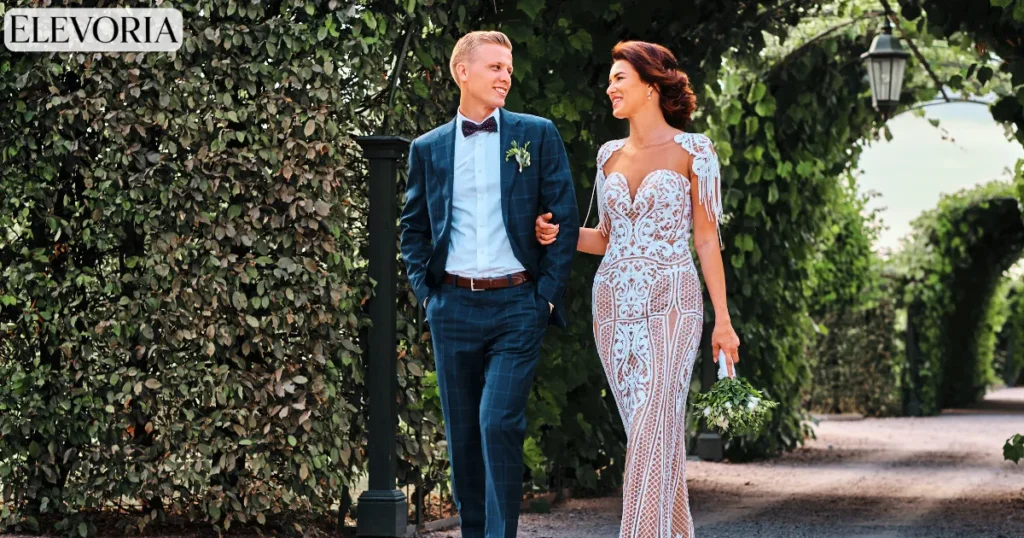
- Tuxedo jacket: black or midnight blue, with satin or grosgrain lapels
- Matching trousers: with a satin side stripe, no cuffs
- Formal white dress shirt: typically with a pleated or pique front, designed to be worn with a bow tie
- Black bow tie: self-tied is traditionally preferred, though a well-made pre-tied option is a reasonable alternative if needed
- Cummerbund or waistcoat: covering the waistband where the shirt meets the trousers
- Black patent leather shoes: oxfords or formal opera pumps, with black dress socks
- Simple formal accessories: cufflinks and shirt studs in a understated finish, such as black onyx or silver tones
A standard business suit, even in black, does not fulfill a black tie dress code. The satin lapels, bow tie, and formal shirt details are what distinguish the two, and showing up in a regular suit at a strictly black tie wedding will generally read as underdressed.
What women should wear as a black tie wedding guest
- Gown or formal dress: traditionally floor-length, though a well-tailored, elegant midi or cocktail-length dress in a formal fabric is increasingly accepted at many black tie weddings
- Fabric: silk, satin, velvet, or fine crepe are common choices, generally more elevated than everyday cocktail dress fabric
- Shoes: formal heels are traditional, though elegant flats are a reasonable and increasingly common alternative, particularly for outdoor or longer-duration events
- Jewelry and accessories: a small clutch and refined jewelry, avoiding overly casual accessories like a large tote or everyday handbag
- Outerwear: a wrap, shawl, or formal coat for transitions between indoor and outdoor spaces, particularly for evening events
The most important rule: what colors to avoid
This is the etiquette point most guests already sense but sometimes second-guess, and it deserves direct confirmation: avoid wearing white, ivory, or any pale, easily mistaken bridal shade to someone else’s wedding, regardless of how formally appropriate the actual garment style is.
This rule exists specifically to avoid confusion with or drawing attention away from the bride, and it applies at black tie weddings just as much as more casual ones. A stunning white gown might technically satisfy the formality requirement of black tie, but it still breaks this separate and important color-based expectation for wedding guests specifically.
| Color category | Guest appropriateness |
|---|---|
| Black | Always safe and traditional for black tie |
| Jewel tones (emerald, sapphire, burgundy) | Excellent choice, reads as formal and celebratory |
| Metallics (gold, silver, bronze) | Appropriate, particularly for evening events |
| Deep neutrals (navy, charcoal) | Safe and versatile |
| White or ivory | Avoid, regardless of formality level |
| Very pale pastels that could resemble bridal shades | Generally avoid or check with the couple if uncertain |
Common misconceptions about black tie wedding guest dress
Misconception: A very formal outfit is automatically appropriate regardless of color. Formality and color etiquette are two separate expectations. A guest can meet the formality requirement of black tie while still breaking wedding guest color etiquette by wearing white or ivory.
Misconception: “Black tie optional” and “black tie” mean the same level of strictness. Standard black tie generally expects a tuxedo for men and a formal gown or elevated dress for women. “Black tie optional” allows a dark, formal suit as an alternative for men, though women’s expectations typically remain closer to standard black tie formality.
Misconception: A cocktail dress is always an acceptable substitute. A typical cocktail dress, while dressy, is generally less formal than what a strict black tie dress code calls for. A more elevated, longer, or more luxurious fabric option is usually the safer choice unless the invitation specifically signals more flexibility.
Misconception: Renting formalwear is a lesser or less polished option. Rental tuxedos and, increasingly, rental designer gowns are a common and practical solution for black tie weddings, particularly for guests who do not regularly attend events at this formality level.
How to handle a black tie wedding on a budget
Black tie formalwear can be one of the more expensive dress codes to shop for, but a few practical approaches help manage cost without compromising appropriateness.
- Rent rather than buy, particularly for tuxedos or gowns you are unlikely to wear again soon. Formalwear rental services have become significantly more accessible and higher quality in recent years.
- Reuse a formal piece from a past event, especially for women’s formalwear, where a well-chosen gown or elevated dress can be worn to multiple black tie events over time, particularly if accessorized differently each time.
- Prioritize fit over brand. A well-fitted, simpler formal outfit reads as more polished than an expensive piece that does not fit properly.
- Shop sample sales or off-season formalwear sales, which can offer significant savings on both tuxedos and gowns outside of peak wedding season.
- Split costs with a partner or group when appropriate, such as sharing alteration costs for a rented tuxedo among a group attending the same wedding.
Seasonal considerations for black tie wedding guest attire
- Summer black tie weddings: lighter-weight formal fabrics, such as lightweight wool for tuxedos or breathable silk for gowns, help with comfort without sacrificing formality
- Winter black tie weddings: velvet, heavier silk, or wool-blend formalwear works well, and a formal coat or wrap becomes a practical necessity rather than just a styling choice
- Outdoor black tie weddings: consider footwear carefully, since formal heels can be impractical on grass or uneven outdoor surfaces, making a slightly lower heel or elegant flat a reasonable adjustment
- Destination black tie weddings: pack formalwear carefully to avoid excessive wrinkling, and consider whether local alteration or pressing services will be available before the event if needed
Common mistakes black tie wedding guests make
- Wearing white or ivory, even unintentionally through a very pale shade that reads as bridal in photos or in person.
- Substituting a standard suit for a tuxedo, assuming a very sharp business suit is an adequate substitute for full black tie formality.
- Choosing a long necktie instead of a bow tie, one of the most common and easily avoidable menswear mistakes for this dress code.
- Underestimating shoe formality, wearing casual leather shoes or brown dress shoes rather than proper black formal footwear.
- Assuming a cocktail dress meets the formality bar, when a more elevated, formal gown-style option is generally more appropriate for strict black tie.
- Not accounting for the venue and season, such as choosing delicate formal heels for an outdoor grass venue, or a heavy velvet gown for a summer event.
- Ignoring invitation wording nuances, treating “black tie,” “black tie optional,” and “black tie preferred” as interchangeable when they carry different expectations.
Actionable recommendations
- Confirm the exact wording on the invitation (black tie, black tie optional, black tie preferred) before shopping, since each carries slightly different expectations.
- Avoid white, ivory, and very pale bridal-adjacent shades entirely, regardless of how formal the specific garment is.
- Consider renting formalwear, especially for a one-time or infrequent black tie event, rather than purchasing an expensive piece you may not wear again soon.
- Choose fabric weight based on the wedding’s season and setting, particularly for outdoor or destination weddings.
- Prioritize fit and proper formal details, like a bow tie rather than a long tie, or a formal gown fabric rather than a standard cocktail dress fabric, over spending more on brand alone.
- If genuinely uncertain about the dress code’s strictness for a specific wedding, it is reasonable to ask the couple or a member of the wedding party directly rather than guessing.
Frequently asked questions
What should I wear to a black tie wedding as a guest? Men should wear a tuxedo with a black bow tie, and women should wear a floor-length or elegant cocktail-length formal gown in an elevated fabric like silk, satin, or velvet.
Can I wear a suit instead of a tuxedo to a black tie wedding? For a strictly black tie wedding, a tuxedo is expected rather than a standard suit. A dark, formal suit is generally only appropriate if the invitation specifies “black tie optional” or a similar flexible variation.
Is it ever okay to wear white to a black tie wedding as a guest? No. Guests should avoid white, ivory, or any shade that could be mistaken for a bridal color, regardless of how formally appropriate the garment otherwise is.
What is the difference between black tie and black tie optional for wedding guests? Standard black tie expects a tuxedo for men and a formal gown for women. Black tie optional allows men to wear a dark, formal suit instead of a tuxedo, while women’s expectations generally remain closer to standard black tie formality.
Can I wear a cocktail dress to a black tie wedding? A typical cocktail dress is usually less formal than what strict black tie calls for. A more elevated, longer, or more luxurious fabric option is generally the safer and more appropriate choice.
Should I rent or buy formalwear for a black tie wedding? This depends on how often you expect to attend similarly formal events. Renting is a practical, cost-effective option for a one-time or infrequent black tie occasion, while buying may make more sense if you anticipate needing formalwear again soon.
What shoes should I wear to a black tie wedding? Men should wear black patent leather formal shoes, and women typically wear formal heels, though elegant flats are an increasingly accepted alternative, particularly for outdoor venues.
How formal does a black tie wedding actually need to be? Very formal. This is one of the more strict dress codes commonly used for weddings, generally more formal than cocktail attire or semi-formal, and guests should treat it as a full formal evening wear occasion rather than simply their nicest regular outfit.
The bottom line
Dressing for a black tie wedding as a guest comes down to two separate expectations working together: genuine formal evening wear, meaning a tuxedo or a formal gown rather than a business suit or cocktail dress, and strict color etiquette that rules out white and ivory regardless of formality. Renting formalwear, paying attention to the exact invitation wording, and adjusting for season and venue are the practical details that make navigating this dress code far less stressful than it initially seems.
Read More: Vintage Bride Dress: A Complete Guide to Buying and Wearing a Vintage Wedding Dress

[…] Read More: Black Tie Wedding Guest Dress: What to Wear and What to Avoid […]