Oval Engagement Rings: The Complete Buying Guide
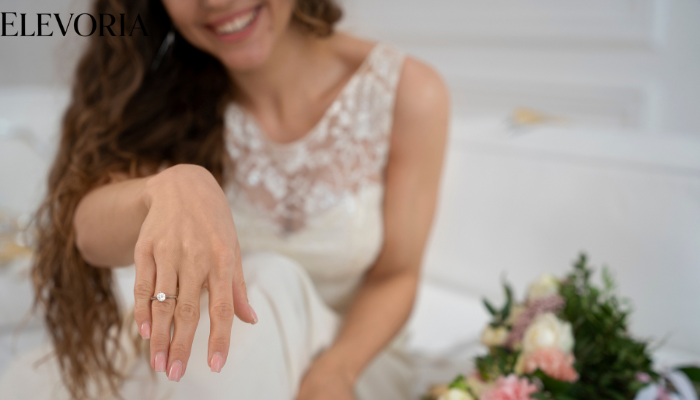
Oval engagement rings have become one of the most requested styles in modern jewelry, and for good reason. The elongated brilliant cut delivers nearly the same sparkle as a round diamond while looking noticeably larger and giving the wearer’s finger a longer, more slender appearance.
But shopping for an oval engagement ring is not quite as simple as shopping for a round one. Because oval diamonds are a fancy shape, they are graded differently, they vary much more in proportion from stone to stone, and a poorly cut oval can show problems that a well cut one never will. This guide walks through everything you need to know before you buy, from how to judge an oval diamond’s quality to which settings protect it best.
By the end, you will understand the proportions that matter, the pricing patterns specific to this shape, the setting styles that suit it, and the mistakes that catch first-time buyers off guard.
What Is an Oval Engagement Ring?
An oval engagement ring features a diamond or gemstone cut into an elongated, rounded shape with no points or corners, set into a ring mounting. The modern oval brilliant cut uses the same light-maximizing facet arrangement as a round diamond, typically with 56 to 58 facets, but stretched into an oval outline.
The shape was developed in 1957 by diamond cutter Lazare Kaplan, who adapted the round brilliant’s facet pattern to an elongated form. It combines the sparkle of a round diamond with a distinctive, elegant silhouette that has made it one of the most popular fancy shapes for engagement rings today.
Why Oval Engagement Rings Have Become So Popular
A few practical and aesthetic reasons explain the oval’s rise in popularity over the past decade.
- They look larger than their carat weight suggests. Because the shape spreads surface area across a longer outline, an oval diamond face-up appears bigger than a round diamond of the same weight. A well cut one carat oval typically measures around 7.7mm by 5.5mm, compared to roughly 6.4mm by 6.4mm for a round diamond of equal weight.
- They elongate the finger. The lengthwise shape draws the eye up the finger, a flattering effect that works well on most hand shapes.
- They are generally priced lower per carat than round diamonds. Because more usable material can be cut from a rough diamond crystal in an oval shape, ovals typically sell for somewhere between 10 and 30 percent less than a round diamond of comparable color and clarity, depending on the specific stones being compared.
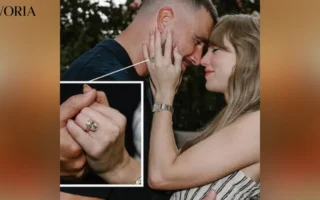
- They have strong celebrity visibility. High-profile engagements, including those of Blake Lively, Hailey Bieber, Kourtney Kardashian, and Ariana Grande, have kept the shape in the public eye for more than a decade and introduced many shoppers to the style for the first time.
How Oval Diamonds Are Graded: What Makes Them Different
This is the part most buyers get wrong, so it is worth explaining clearly.
The Gemological Institute of America (GIA) only issues an overall cut grade for round brilliant diamonds. Oval diamonds, like other fancy shapes, do not receive an overall cut grade on a GIA report because their facet patterns and proportions vary too widely to apply a single standardized scale. GIA still reports on an oval’s polish and symmetry, along with its color, clarity, carat weight, and measurements, but it will not tell you whether the stone’s overall cut quality is excellent or poor.
This matters because two oval diamonds with identical color and clarity grades can look completely different in person. One might sparkle evenly across the entire stone, while another shows dead, glassy zones or a distracting dark shadow down the center. The only reliable way to judge this is to look at high-resolution video of the actual stone, not just the numbers on the certificate.
One note on certification: the International Gemological Institute (IGI), unlike GIA, does assign cut grades such as Ideal and Excellent to fancy shapes including ovals. If cut grade matters to you, an IGI report will give you more direct guidance than a GIA report will for this particular shape.
The Bow-Tie Effect
Every oval diamond shows some degree of what the trade calls the “bow-tie effect,” a darker, bow-tie-shaped shadow that crosses the center of the stone. It happens because of the way light travels through an elongated brilliant cut, and it cannot be fully eliminated, only minimized through good proportions and faceting.
A subtle, evenly balanced bow-tie is generally considered a normal and even attractive part of an oval’s character. A heavy, dark, off-center bow-tie that dominates the stone’s appearance is a sign of a poorly cut diamond and is the kind of flaw a certificate alone will not reveal.
Length-to-Width Ratio
The length-to-width ratio is the single most important number for judging an oval’s shape, and it is simply the length divided by the width. Industry guides generally place the most popular range between about 1.35 and 1.50, though acceptable ovals can run anywhere from roughly 1.30 up to 1.70.
| Ratio | Appearance |
|---|---|
| 1.30 to 1.33 | Rounder, shorter oval, closer to a soft rectangle |
| 1.34 to 1.42 | Classic, well-balanced oval shape; most common range |
| 1.43 to 1.50 | Elongated oval with a slimming, elegant look |
| Above 1.50 | Very narrow, dramatically elongated oval |
There is no single correct ratio. It comes down to personal taste, and the only way to know what you prefer is to view photos or videos of several ratios side by side before choosing.
The 4Cs for Oval Diamonds
The same four factors that apply to every diamond, color, clarity, cut, and carat weight, still apply to ovals, but a few of them behave differently because of the shape.
Color
Oval diamonds tend to show more visible color than round diamonds of the same official grade, especially at the pointed ends of the stone. This happens because the elongated shape and shallower cutting style let more body color show through. For this reason, many jewelers recommend staying in the G to H range on GIA’s D-to-Z color scale if you want a stone that reads as colorless to the eye, rather than going by color grade alone the way you might for a round diamond.
Clarity
Oval diamonds, because they use the same brilliant faceting style as round diamonds, tend to mask small inclusions reasonably well. A clarity grade of VS2 or SI1 is often the practical sweet spot: at these grades inclusions are typically too small to see without magnification, while the price is noticeably lower than for VVS or flawless stones.
Cut
As covered above, cut is judged through polish, symmetry, and proportions rather than a single overall grade. This is the factor that has the biggest impact on how lively and bright the stone looks, and it deserves more attention than color or clarity for this particular shape.
Carat Weight
Because ovals look larger than their actual weight, many buyers find they can choose a smaller carat weight than they originally planned and still get the visual size they wanted, freeing up budget for a better cut, color, or setting.
Oval vs Round Diamonds: A Quick Comparison
| Factor | Oval | Round |
|---|---|---|
| GIA cut grade | Not assigned; judged by polish, symmetry, and proportions | Assigned (Excellent to Poor) |
| Apparent size for the same carat weight | Larger, due to elongated shape | Smaller relative to ovals |
| Price per carat | Generally 10 to 30 percent lower | Generally higher |
| Finger-flattering effect | Strong elongating effect | Minimal elongating effect |
| Bow-tie effect risk | Present in all stones to some degree | Not applicable |
| Visible color at edges | More noticeable | Less noticeable |
Best Engagement Ring Settings for Oval Diamonds
The right setting affects both how the diamond looks and how well it survives daily wear, which matters more for an oval than for many other shapes.
- Solitaire. A single stone held by four or six prongs, with no accent diamonds. This is the most classic option and lets the oval’s shape speak for itself.
- Halo. A ring of small diamonds surrounds the center stone, increasing apparent size and overall sparkle. This is a popular choice for buyers who want maximum visual impact for the budget.
- Hidden halo. Small diamonds are set beneath the center stone rather than around it, visible mainly from the side profile rather than from a straight-on view. It adds extra brilliance without changing the clean look of the stone from above.
- Bezel and half-bezel. A metal rim wraps around all or part of the diamond’s edge. This is the most protective setting available and a strong choice for anyone who works with their hands often, since it shields the vulnerable pointed ends of the oval from impact.
- Pavé band. Small diamonds are set closely along the band itself, adding sparkle without competing with the center stone.
- Three-stone. A center oval is flanked by two smaller stones, often trapezoids, baguettes, or smaller ovals, for a more elaborate look.
- East-west setting. The oval is set horizontally rather than vertically, a modern styling choice that has grown more popular in recent years.
Setting and Durability: What to Know About Prong Placement
Oval diamonds, like other elongated shapes, have two points along their length where stress concentrates more than elsewhere on the stone. These points benefit from extra protection.
Look for a setting with prongs specifically placed at or near these two ends, sometimes called V-tip or double-prong protection, rather than evenly spaced prongs that leave the tips unguarded. A half-bezel or full bezel setting removes this concern almost entirely, since the metal itself shields the vulnerable areas. If you want maximum sparkle with a classic prong setting, ask your jeweler specifically how the ends of the stone are protected before you buy.
Choosing a Metal for Your Oval Engagement Ring
Metal choice affects both the durability of the ring and how the diamond’s color reads to the eye.
- Platinum is naturally white, highly durable, and does not require replating over time, making it a strong choice if you want the whitest possible backdrop for a colorless oval diamond.
- White gold offers a similar bright white look at a lower price point than platinum but typically needs occasional rhodium replating to maintain its color.
- Yellow gold has become especially popular for oval solitaires in recent years, partly because warm metal tones can make a diamond’s faint body color far less noticeable, which is useful given how oval diamonds show color at the tips.
- Rose gold offers a similar warming effect to yellow gold with a distinct pink-toned finish, and pairs especially well with pink or champagne colored diamonds.
If you are buying a diamond in the lower color range, such as I or J, choosing yellow or rose gold rather than platinum or white gold is a practical way to make any warmth in the stone work in your favor rather than stand out.
Lab-Grown vs Natural Oval Diamonds
Lab-grown diamonds share the same chemical composition, hardness, and optical properties as natural diamonds, and the GIA grades both using the same 4Cs criteria. The primary practical difference for buyers is price: lab-grown diamonds generally sell for substantially less than natural diamonds of the same size and quality, which has made larger oval center stones far more attainable for buyers working with a fixed budget.
The trade-off is resale value. Natural diamonds tend to hold a meaningfully higher percentage of their original price if resold later, while lab-grown diamonds generally do not. For most buyers, this is a minor consideration since the large majority of engagement rings are never resold, but it is worth knowing before you decide.
Famous Oval Engagement Rings
A look at real-world examples can help you visualize how different settings and ratios actually appear once worn.
- Hailey Bieber received an oval diamond solitaire on a thin yellow gold band from Justin Bieber in 2018, widely credited with popularizing the simple oval-on-yellow-gold look. A second, larger oval ring followed during a vow renewal in 2024.
- Blake Lively’s ring from Ryan Reynolds features a fancy pink oval diamond in a rose gold setting with pavé diamond accents, and is often cited as the ring that first brought oval cuts back into mainstream popularity around 2012.
- Ariana Grande’s ring from her engagement to Dalton Gomez paired an oval diamond set at an angle with a single pearl in a toi et moi design, a style that pairs two different center stones side by side.
- Kourtney Kardashian’s ring from Travis Barker features a large oval diamond on a platinum pavé band.
- It is worth noting that one of the most famous oval gemstone rings in the world, worn by Catherine, Princess of Wales, and originally belonging to Diana, Princess of Wales, is actually a sapphire surrounded by diamonds, not a diamond solitaire, a useful reminder that oval cuts work beautifully with colored gemstones as well as diamonds.
Expert Insight: What Actually Separates a Great Oval From an Average One
After the basics of color, clarity, and ratio, the detail that separates a genuinely beautiful oval from an average one is even, balanced light return across the entire face of the stone, not just at the center. Two ovals can carry identical paperwork and look completely different the moment you tilt them under light.
This is why working with a jeweler who can show you a real video of the actual stone, ideally alongside a light-performance image such as an ASET or Idealscope image, matters more for ovals than it does for round diamonds. A grading report tells you what the diamond is made of. It does not fully tell you what the diamond will look like on a hand in daylight.
Common Mistakes When Buying an Oval Engagement Ring
Mistake: Choosing based on certificate numbers alone. Because GIA does not assign an overall cut grade to ovals, two stones with the same color and clarity grade can look very different. Always view actual video or in-person images before buying, not just the report.
Mistake: Ignoring the length-to-width ratio. Buyers sometimes focus entirely on carat weight and clarity and end up with a stone that looks stubby and short, or unexpectedly narrow, because they never compared ratios beforehand.
Mistake: Choosing a high color grade unnecessarily. Because color shows more at the tips of an oval, some buyers overspend on a D or E color grade when a well-chosen G or H, paired with the right metal, would look just as colorless to the eye for considerably less money.
Mistake: Picking a setting without considering durability. A classic four-prong solitaire looks elegant, but if it is not designed with the points of the oval in mind, the diamond is more exposed to chipping at those two ends than buyers often realize.
Mistake: Assuming a higher clarity grade always means a better-looking stone. A well-cut SI1 oval can look just as clean to the naked eye as a far more expensive VVS stone, since the brilliant facet pattern does a good job of hiding small inclusions.
Actionable Recommendations: A Step-by-Step Buying Checklist
- Decide on your preferred length-to-width ratio first by comparing photos or videos, before you start looking at specific stones.
- Set a carat weight range, but stay open to going slightly smaller than planned, since ovals look larger than their actual weight.
- Prioritize cut quality and proportions over color and clarity grades, since cut has the greatest effect on how the diamond actually looks.
- Aim for G to H color unless budget allows for higher, and consider yellow or rose gold if you go lower than that.
- Target VS2 to SI1 clarity for the best balance of price and eye-clean appearance.
- Ask specifically how the setting protects the two pointed ends of the stone, and consider a half-bezel if you have an active lifestyle.
- Request a real video of the specific stone, not a stock photo, before making a final decision.
- Get the ring insured separately from your homeowner’s or renter’s policy, and have the setting checked by a jeweler annually to catch loose prongs early.
Conclusion
An oval engagement ring offers a rare combination: the brilliance of a round diamond, a shape that reads larger than its actual carat weight, and a distinctive silhouette that still feels timeless rather than trendy. The trade-off is that shopping for one takes a little more care, since the absence of a GIA cut grade means the numbers on a certificate only tell part of the story.
Focus on proportions and real video evidence of how a specific stone performs, choose a setting that protects the pointed ends of the diamond, and you will end up with a ring that looks as good in ten years as it does on the day it is given.
Frequently Asked Questions
What is a good length-to-width ratio for an oval engagement ring? Most buyers prefer a ratio between 1.35 and 1.50, which produces a balanced, classic oval shape. Ratios below 1.35 look rounder and shorter, while ratios above 1.50 look noticeably more elongated and narrow.
Why don’t oval diamonds get a GIA cut grade? GIA only issues an overall cut grade for round brilliant diamonds because their proportions and light behavior are standardized enough to model precisely. Oval diamonds, like other fancy shapes, vary too widely in proportion and faceting style for a single grading scale to apply, so GIA reports polish and symmetry for them instead.
What is the bow-tie effect on an oval diamond? The bow-tie effect is a darker, bow-tie-shaped shadow that appears across the center of an oval, pear, or marquise diamond due to the way light travels through the elongated shape. A subtle, even bow-tie is normal and often considered attractive, while a heavy, dark, off-center one signals a poorly cut stone.
Are oval diamonds cheaper than round diamonds? Yes, generally. Oval diamonds typically cost somewhere between 10 and 30 percent less per carat than a round diamond of comparable color and clarity, largely because more usable material can be cut from the rough crystal.
What color grade should I choose for an oval diamond? Many jewelers recommend G to H color for oval diamonds, since the shape shows more visible color at the pointed ends than a round diamond does. If budget is a priority, an I or J color stone can still look attractive when set in yellow or rose gold.
What is the best setting for an oval engagement ring? Solitaire, halo, hidden halo, and bezel settings all work well with oval diamonds. For active lifestyles or extra protection, a half-bezel or a setting with prongs specifically placed at the pointed ends offers the most security against chipping.
Do oval diamonds look bigger than round diamonds of the same carat weight? Yes. Because the elongated shape spreads surface area over a longer outline, a well cut oval diamond appears larger face-up than a round diamond of identical carat weight.
Is an oval diamond a good choice for an engagement ring? Yes, for most buyers. Oval diamonds offer strong brilliance, an elongating effect on the finger, lower price per carat than round diamonds, and a shape that has remained consistently popular for over a decade without feeling overly trend-driven.
Should I buy a lab-grown or natural oval diamond? Both are real diamonds with identical chemical and optical properties. Lab-grown diamonds cost considerably less, allowing for a larger center stone on the same budget, while natural diamonds generally retain more resale value if that is a priority for you.
Read more Skin Boosters: Benefits, Types & What to Expect in 2026