Understanding Diamond Quality: The 4Cs
Diamond quality is generally evaluated using four main factors, commonly known as the 4Cs, a grading framework developed and popularized by the Gemological Institute of America. Understanding these factors helps explain why two diamonds of a similar size can vary significantly in price and appearance.
- Carat refers to the diamond’s weight, not its physical size alone, since cut quality also affects how large a diamond appears.
- Cut refers to how well the diamond has been shaped and faceted, which directly affects how much it sparkles and reflects light. A well-cut diamond generally appears brighter and more brilliant than a poorly cut diamond of the same carat weight.
- Color refers to the presence or absence of a yellow or brown tint, graded on a scale where more colorless diamonds are generally considered higher quality, though color preferences vary by individual taste.
- Clarity refers to the presence of internal or external imperfections, known as inclusions and blemishes, with fewer and less visible imperfections generally indicating higher clarity.
For necklaces specifically, cut quality often matters more than it does for less visible jewelry, since the diamond is typically viewed at conversational distance and its sparkle is a key part of the overall visual impact.
Types of Diamond Necklace Settings and Styles
| Style | Description | Best Suited For |
|---|---|---|
| Solitaire pendant | A single diamond set on a simple chain | Everyday wear, minimalist style |
| Halo pendant | A center diamond surrounded by smaller diamonds | Added sparkle without a larger center stone |
| Diamond tennis necklace | A continuous line of diamonds set along the chain | Statement pieces, special occasions |
| Diamond station necklace | Diamonds spaced at intervals along a chain | Subtle, versatile everyday wear |
| Cluster pendant | Multiple diamonds grouped together in one setting | A fuller look without a single large stone |
Each style offers a different balance of visual impact, cost, and everyday wearability, so matching the style to how frequently the necklace will be worn is a practical starting point.
How to Choose the Right Chain Length
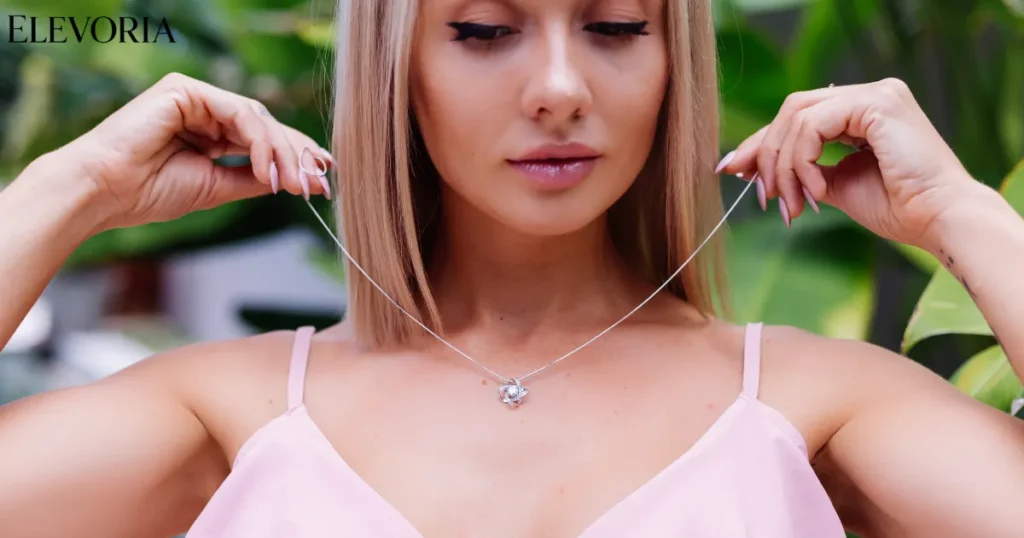
Chain length affects how the pendant sits relative to the neckline and can change the overall look significantly, even with the same pendant.
- 16 inches (choker length) sits at the base of the neck and works well with crew necks or higher necklines.
- 18 inches (princess length) is the most common length and sits at or slightly below the collarbone, working well with most necklines.
- 20 to 24 inches (matinee length) sits closer to the chest and pairs well with higher necklines or business attire.
- Longer lengths beyond 24 inches are typically used for layering or more dramatic statement pieces rather than a single focal pendant.
Mined Diamonds vs Lab Grown Diamonds for Necklaces
Lab grown diamonds are chemically, physically, and optically identical to mined diamonds, since they are created using processes that replicate the natural diamond formation process rather than being a different material altogether. The primary differences lie in origin and, generally, price, with lab grown diamonds often available at a lower cost for a comparable size and quality grade compared to mined diamonds.
For a necklace, where the diamond may be more prominently visible than in smaller jewelry pieces, this cost difference can allow buyers to choose a larger stone or higher quality grade within the same budget. Both options can carry independent grading certification, so the choice between mined and lab grown often comes down to personal preference and budget priorities rather than a quality difference.
Understanding Diamond Certification
A diamond certification, sometimes called a grading report, is issued by an independent gemological laboratory and documents the diamond’s specific 4C characteristics along with other identifying details. Reputable, independent laboratories provide this service separately from the retailer selling the diamond, which helps confirm that the diamond’s stated quality matches its actual characteristics.
Certification is generally considered a reasonable expectation for diamonds above a certain size, though smaller diamonds used in necklace settings may not always come individually certified, particularly in pieces using multiple small stones such as tennis or station necklaces. When purchasing a necklace with a larger center diamond, requesting or confirming certification from a recognized independent laboratory is a reasonable step to verify the stated quality.
What Metal to Choose for a Diamond Necklace
The metal setting affects both appearance and durability, and it is worth considering alongside the diamond itself.
- White gold and platinum both provide a bright, neutral backdrop that complements diamond sparkle, with platinum generally being more durable and hypoallergenic but also typically more expensive.
- Yellow gold offers a warmer tone that some buyers prefer for a classic or vintage-inspired look, and it can create a visual contrast with the diamond’s brilliance.
- Rose gold has become a popular contemporary option, offering a warm pink tone that pairs well with both classic and modern necklace designs.
How to Care for a Diamond Necklace
Diamonds are among the hardest natural materials, but the metal setting and chain still require regular care to maintain their appearance and structural integrity.
- Clean the necklace periodically using a soft brush and a mild solution designed for jewelry, or warm water with a small amount of mild dish soap, to remove oils and buildup that can dull the diamond’s sparkle.
- Avoid exposing the necklace to harsh chemicals, such as chlorine or strong cleaning products, which can damage certain metal settings over time.
- Have the setting inspected periodically by a jeweler to check that prongs or clasps remain secure, since a loose setting increases the risk of losing a stone.
- Store the necklace separately from other jewelry to avoid scratching, ideally in a soft pouch or lined jewelry box.
Common Mistakes to Avoid
Prioritizing carat weight over cut quality. A larger diamond with a poor cut can appear less brilliant than a smaller, well-cut diamond, so cut quality should not be overlooked in favor of size alone.
Skipping certification on a significant purchase. Buying a diamond necklace without independent certification, particularly for a larger center stone, increases the risk of paying for quality that does not match the diamond’s actual characteristics.
Choosing chain length without considering how it will be worn. A chain length that does not suit the intended necklines or occasions can result in a necklace that looks out of proportion or is worn less often than expected.
Assuming lab grown diamonds are lower quality than mined diamonds. Lab grown diamonds share the same physical and optical properties as mined diamonds and can carry the same certification standards, so the distinction is about origin and typically price, not inherent quality.
Neglecting regular maintenance and inspection. Skipping periodic cleaning and setting inspections can lead to a loose stone or a duller appearance over time, which is preventable with basic ongoing care.
Expert Insights
Jewelry appraisers frequently note that cut quality has an outsized effect on a diamond’s visual appeal compared to the other three Cs, particularly for necklace pendants that are viewed at a moderate distance rather than up close. A diamond with excellent cut quality can appear more brilliant and eye-catching than a larger diamond with a lower cut grade, even though the larger stone has a higher carat weight.
It is also worth noting that a well-chosen diamond necklace tends to be judged holistically, meaning the overall balance of diamond quality, setting, chain length, and metal choice matters more to how the piece is perceived day to day than any single specification viewed in isolation. This is a useful reminder for buyers who may otherwise focus disproportionately on carat weight without considering how the full piece will actually look and wear.
Actionable Recommendations
- Prioritize cut quality when balancing the 4Cs, particularly for necklace pendants that are viewed at a moderate distance.
- Choose a chain length based on the necklines and occasions where you plan to wear the necklace most often.
- Request independent certification for larger center diamonds to confirm the diamond’s stated quality.
- Consider lab grown diamonds as a way to access a larger stone or higher quality grade within a set budget.
- Choose a metal setting that suits both your skin tone preferences and durability needs, particularly for daily wear pieces.
- Establish a routine of periodic cleaning and setting inspection to maintain the necklace’s appearance and security over time.
Conclusion
Choosing the right diamond necklace comes down to understanding how the 4Cs affect both appearance and price, matching style and chain length to how the piece will actually be worn, and verifying quality through independent certification when appropriate. Considering metal choice and long-term care alongside the diamond itself rounds out a purchase decision that balances appearance, durability, and value, rather than focusing on any single factor like carat weight in isolation.
Frequently Asked Questions
What is the difference between carat, cut, color, and clarity? Carat measures the diamond’s weight, cut measures how well it has been shaped to reflect light, color measures the presence or absence of a yellow or brown tint, and clarity measures the presence of internal or external imperfections. Together these four factors, known as the 4Cs, determine a diamond’s overall quality and price.
What chain length is best for a diamond necklace? Eighteen inches, known as princess length, is the most common and versatile choice, sitting at or slightly below the collarbone and working well with most necklines, though shorter or longer lengths suit specific necklines or styling preferences.
How much should a diamond necklace cost? Cost varies widely based on carat weight, cut quality, color, clarity, metal choice, and setting style, so there is no single fixed price. Comparing certified diamonds of similar quality specifications across retailers is the most reliable way to gauge fair pricing for a specific piece.
Is it better to buy a diamond necklace with a certification? Yes, particularly for larger center diamonds, since independent certification from a recognized gemological laboratory confirms that the diamond’s stated quality matches its actual characteristics, reducing the risk of overpaying for misrepresented quality.
How do you clean and care for a diamond necklace? Regular cleaning with a soft brush and mild jewelry solution, avoiding harsh chemicals, periodic professional inspection of the setting, and separate storage to prevent scratching all help maintain a diamond necklace’s appearance and security over time.
Are lab grown diamonds a good choice for a necklace? Yes, lab grown diamonds are chemically and optically identical to mined diamonds and can carry the same certification standards, often at a lower price point, making them a practical option for buyers wanting a larger stone or higher quality grade within a set budget.
What is the difference between a diamond pendant and a diamond necklace? A diamond pendant refers specifically to the diamond charm or setting, while a diamond necklace refers to the complete piece, including the chain. In practice, the terms are often used interchangeably to describe the full piece worn around the neck.
What metal is best for a diamond necklace? White gold and platinum provide a bright, neutral backdrop that complements diamond sparkle, with platinum being more durable and hypoallergenic, while yellow gold and rose gold offer warmer tones suited to different style preferences.
How often should a diamond necklace be professionally inspected? There is no single universal timeline, but periodic inspection, such as during regular jewelry cleaning visits, helps catch loose prongs or clasps before they result in a lost stone.
Does a bigger diamond always mean a better necklace? Not necessarily. A larger diamond with a lower cut quality can appear less brilliant than a smaller, well-cut diamond, so balancing carat weight with cut quality generally produces a more visually appealing result than prioritizing size alone.
Read More: Marquise Diamond Guide: Shape, Quality & Buying Tips