

Baggy Jeans: A Complete Guide to Fit, Style, and Buying the Right Pair
Baggy jeans have moved well past being a passing trend and back into everyday wardrobes for good reason. They are comfortable, versatile across genders, and easier to style than most people expect once you understand a few basic fit rules. This guide covers how baggy jeans differ from other fits, how to style them well, and what to look for when buying a pair.
What Are Baggy Jeans, Exactly
Baggy jeans are a loose-fitting denim style with extra room through the hip, thigh, and leg, sitting away from the body rather than close to it. Unlike skinny or straight jeans, baggy jeans do not taper closely at the ankle and often have a relaxed or wide leg opening.
The defining feature is the amount of fabric and room throughout the leg, not just at the waist. This is what separates baggy jeans from styles like straight-leg or bootcut, which may be relaxed at the top but still narrow toward the bottom.
Baggy Jeans vs Other Denim Fits
Understanding how baggy jeans compare to other fits helps clarify what to expect before buying.
| Fit Type | Leg Room | Ankle Opening | Overall Silhouette |
|---|---|---|---|
| Skinny | Minimal | Very narrow | Close to the body throughout |
| Straight | Moderate | Straight, moderate width | Even width from hip to ankle |
| Bootcut | Moderate | Flares slightly at ankle | Fitted through thigh, wider at hem |
| Relaxed | Generous | Wider than straight | Loose but not exaggerated |
| Baggy | Very generous | Wide | Loose throughout, pools slightly at the shoe |
| Wide-leg | Generous | Very wide, often straight cut | Loose and dramatic from hip down |
Baggy and wide-leg jeans are often confused, but baggy jeans typically have more looseness through the thigh and hip specifically, while wide-leg jeans focus on width from the knee down.
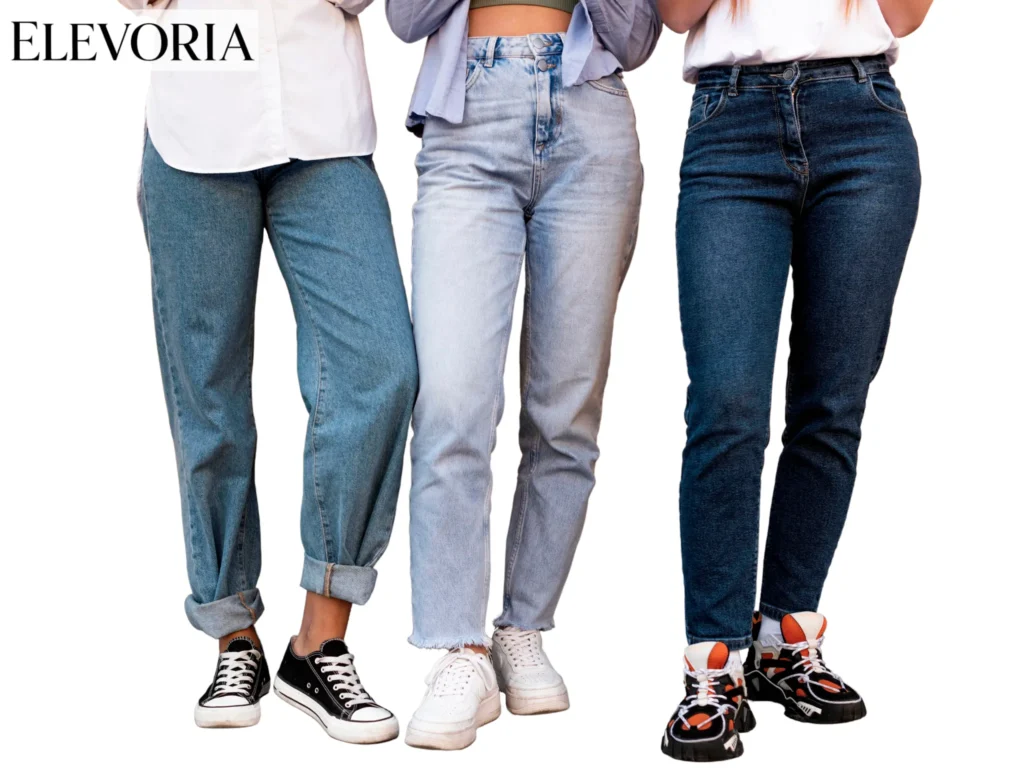
Why Baggy Jeans Have Stayed Popular
Baggy jeans originated in workwear and were later adopted heavily by skate and hip-hop culture in the 1990s, where the loose fit allowed for freedom of movement. That practical origin is part of why the style has endured: it was never purely aesthetic, it also served a function.
More recently, baggy jeans have moved into mainstream fashion again, partly as a reaction to the skinny jeans that dominated the 2010s. Beyond trend cycles, many people simply find looser denim more comfortable for everyday wear, which supports its staying power beyond any single fashion moment.
How to Style Baggy Jeans Without Looking Sloppy
The most common concern people have with baggy jeans is looking unintentionally messy rather than intentionally relaxed. A few styling principles solve this consistently.
Balance Volume With a Fitted Top
Since baggy jeans already add volume to the lower half, pairing them with a fitted or slightly cropped top creates proportion. A boxy top on top of baggy jeans can look shapeless overall, while a fitted top or one tucked in creates a clearer silhouette.
Pay Attention to Length
Baggy jeans that are too long and pool excessively at the shoe can look unfinished rather than stylish. A slight break at the shoe is generally the most flattering length, though a small controlled pool is part of the intended look for some styles like skater jeans.
Choose the Right Footwear
Chunky sneakers, boots, and platform shoes tend to balance the volume of baggy jeans better than thin-soled or delicate shoes, which can look mismatched against a wide leg opening.
Consider the Waist
A visible waistband, a belt, or a slightly cropped top can help define the waist area, which prevents the overall look from appearing shapeless from top to bottom.
Baggy Jeans for Different Occasions
Casual Everyday Wear
A plain t-shirt, hoodie, or oversized shirt with baggy jeans and sneakers is the most common and reliable combination. This works because the overall proportions stay loose and consistent rather than mixing fitted and oversized pieces awkwardly.
Smart Casual Looks
A more tailored version of baggy jeans, sometimes called a relaxed straight fit, can work with a button-down shirt or a blazer for a smart casual look. This requires choosing a cleaner, less distressed wash and pairing with more polished footwear like loafers or clean sneakers.
Layered Outfits
Baggy jeans work well with layering since the loose leg balances bulkier jackets or hoodies without the overall outfit feeling top-heavy. This is one reason the style is common in colder weather looks.
Common Mistakes People Make With Baggy Jeans
Pairing them with an equally oversized top. Too much volume on both halves of the body removes any shape from the outfit. Balancing at least one fitted element usually looks more intentional.
Ignoring length and hem. Jeans that drag excessively under the shoe can look unkempt rather than relaxed, especially in non-distressed, cleaner denim styles.
Choosing the wrong rise for body proportions. A low-rise baggy jean sits differently than a high-rise version, and the wrong choice for someone’s torso length can affect how balanced the outfit looks overall.
Assuming all baggy jeans are the same fit. Brands vary significantly in how they cut baggy jeans, and trying a size based on a previous brand’s baggy fit can lead to a poor fit in a different brand.
What to Look for When Buying Baggy Jeans
Denim weight. Heavier denim holds its shape better and drapes more predictably, while lighter denim can look thin or overly soft in a loose cut.
Rise. High-rise baggy jeans tend to be more flattering for most body types since they avoid excess fabric bunching at the waist that can happen with low-rise loose fits.
Stretch content. Some baggy jeans include a small amount of stretch for comfort, while others are rigid denim that gradually molds to the body. This affects both comfort and how the jean breaks in over time.
Hem finish. Raw hems, cuffed hems, and clean finished hems all change the overall look, and this detail matters more in baggy styles since the hem is often more visible due to the wider leg opening.
Expert Insight: Fit Testing Matters More Than Size Labels
One detail often missed in generic buying guides is that baggy jean sizing varies significantly across brands, even within the same numerical size. A size 32 baggy jean from one brand can fit noticeably differently from a size 32 in another, since baggy fits are less standardized than fitted styles like skinny jeans.
Because of this, trying a pair in person or checking a brand’s specific size chart and fit notes is more reliable than assuming a familiar size will translate directly. Reviews mentioning true-to-size or oversized fit are also more useful for baggy styles than for close-fitting denim, since the margin for fit variation is larger.
Actionable Recommendations
- Choose a rise (high, mid, or low) based on your torso proportions rather than trend alone.
- Balance the loose leg with at least one fitted element in the outfit, whether that is a top, a tucked shirt, or a belt.
- Pay attention to hem length before buying, since baggy jeans are more prone to looking unfinished if too long.
- Check brand-specific fit notes rather than relying on a size that worked in a different brand’s baggy style.
- Choose footwear with enough visual weight, like chunky sneakers or boots, to balance the wide leg opening.
Conclusion
Baggy jeans offer comfort and versatility that fitted denim styles cannot always match, but they do require a bit more thought to style well. Paying attention to proportion, length, and rise makes the difference between an outfit that looks intentional and one that looks accidentally oversized. With the right fit and a few styling basics, baggy jeans work across casual, smart casual, and layered outfits alike.
FAQ
What is the difference between baggy jeans and wide-leg jeans?
Baggy jeans are loose through the hip and thigh specifically, while wide-leg jeans focus more on width from the knee down to the hem. The two styles are often confused but have different proportions.
Are baggy jeans still in style?
Yes, baggy jeans have remained popular in recent years, partly as a shift away from the skinny jeans that dominated the previous decade, and partly due to genuine comfort preference.
How should baggy jeans fit?
Baggy jeans should sit loosely through the hip and thigh without being tight anywhere, with a leg opening wide enough to break gently at the shoe rather than dragging excessively.
Can baggy jeans be worn for smart casual outfits?
Yes, a cleaner, less distressed baggy or relaxed straight fit can work for smart casual looks when paired with a button-down shirt or blazer and more polished footwear.
What shoes go best with baggy jeans?
Chunky sneakers, boots, and platform shoes generally balance the volume of baggy jeans better than thin-soled or delicate footwear.
Do baggy jeans work for all body types?
Yes, though the right rise and length matter more for baggy fits than for fitted denim. Choosing a rise suited to torso length helps avoid a shapeless look.
Why do baggy jeans fit differently between brands?
Baggy fits are less standardized across brands than fitted styles like skinny jeans, so the same size label can vary noticeably in how much room it provides.
Should baggy jeans have stretch?
Some do and some do not. Stretch adds comfort, while rigid denim without stretch tends to hold its shape longer and molds to the body over time.
Read More: Red Sneakers: How to Style and Choose the Right Pair


[…] Read More: Baggy Jeans: Complete Fit and Style Guide […]