
Marquise Cut: A Complete Guide to This Diamond and Gemstone Shape
The marquise cut is one of the most recognizable diamond shapes, known for its elongated, pointed silhouette that looks like a narrow eye or a boat hull. It has a long history in jewelry design and remains a popular choice for engagement rings today, largely because of how it visually elongates the finger and appears larger than its actual carat weight. This guide covers what a marquise cut is, how it compares to other shapes, and what to consider before choosing one.
What Is a Marquise Cut
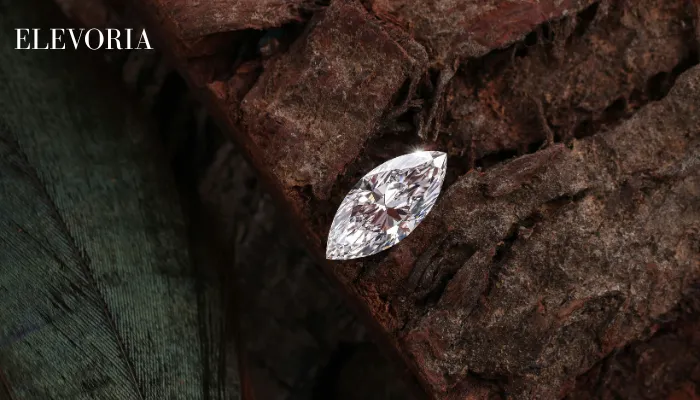
A marquise cut is a diamond or gemstone shape featuring two pointed ends and curved sides, creating a long, narrow, eye-like or boat-shaped outline. It belongs to the family of fancy diamond cuts, meaning any shape other than the traditional round brilliant cut.
The shape is defined by its length-to-width ratio, typically ranging from about 1.75 to 2.25, which determines how narrow and elongated the stone appears. A well-proportioned marquise cut has symmetrical points on both ends and an even curve along both sides.
The History Behind the Marquise Cut
The marquise cut is often associated with 18th century French royal history, reportedly commissioned to resemble the shape of a smile that caught the eye of King Louis XV. While the exact origin story varies across retellings, the shape has been documented in jewelry design for centuries and has remained a recognized fancy cut ever since.
Its name comes from the French title “marquise,” referring to the wife of a marquis, tying the shape’s naming convention to European nobility rather than any technical cutting process.
Marquise Cut vs Other Diamond Shapes
Understanding how the marquise cut compares to other popular shapes helps clarify what makes it distinct.
| Shape | Outline | Visual Effect | Common Use |
|---|---|---|---|
| Round | Circular | Maximizes brilliance, classic | Most popular for engagement rings |
| Oval | Elongated, rounded ends | Elongates finger, larger look | Popular alternative to round |
| Marquise | Elongated, pointed ends | Most elongating effect, boat-shaped | Statement engagement rings |
| Pear | Teardrop, one point one round end | Elongating with a distinct silhouette | Engagement rings, pendants |
| Emerald | Rectangular, step cut | Clean lines, less brilliance | Vintage and art deco styles |
| Princess | Square, brilliant facets | High brilliance, sharp lines | Modern engagement rings |
Among elongated shapes, the marquise cut tends to create the most pronounced finger-lengthening effect due to its narrow width relative to its length, more so than oval or pear shapes.
Why the Marquise Cut Appears Larger Than Its Carat Weight
One of the most practical advantages of the marquise cut is its surface area. Because the shape is long and narrow rather than compact, a marquise cut diamond typically has more visible surface area per carat than a round or princess cut diamond of the same weight.
This means a marquise cut stone often looks larger when viewed from above compared to a rounder shape of identical carat weight, which is a common reason people choose it when trying to maximize visual size within a certain budget.
Choosing a Marquise Cut Diamond: What to Look For
Length-to-Width Ratio
This ratio determines how narrow or wide the marquise appears. A ratio closer to 2:1 is generally considered the classic, most balanced marquise silhouette, though personal preference varies.
Symmetry
Because the marquise cut relies on two matching points and even curves, symmetry is more noticeable in this shape than in rounder cuts. Points that are uneven or curves that do not match on both sides are more visually obvious than in a round diamond.
Bow-Tie Effect
Elongated cuts, including the marquise, are prone to a visual effect sometimes called a bow-tie, where a shadow appears across the center of the stone due to light not reflecting evenly. A well-cut marquise minimizes this effect, though it cannot always be eliminated entirely, and it is worth examining a stone in person or under multiple lighting conditions before purchasing.
Pointed Tips and Durability
The pointed ends of a marquise cut are more vulnerable to chipping than rounded shapes, since these tips are thinner and more exposed. Prong settings that protect the points, such as V-shaped prongs designed specifically for pointed cuts, are commonly used to reduce this risk.
Setting Styles That Work Well With Marquise Cuts
Solitaire settings. A classic choice that lets the elongated shape stand fully visible without competing design elements.
East-west settings. Positions the stone horizontally rather than vertically, which has become a popular modern take on the traditional marquise orientation.
Halo settings. A ring of smaller stones around the marquise can enhance perceived size and add additional brilliance around the center stone.
Three-stone settings. Often paired with smaller round or trapezoid side stones to balance the elongated center shape.
Common Mistakes People Make When Choosing a Marquise Cut
Ignoring the length-to-width ratio. Not checking this ratio can result in a stone that looks either too narrow and blade-like or too short and less elongated than expected.
Overlooking the bow-tie effect. Skipping an in-person or well-lit examination can lead to an unexpected shadow effect that is not obvious in photos alone.
Choosing a setting without protected points. Pointed tips left unprotected in a poorly designed setting are more prone to chipping over time, especially with daily wear.
Assuming carat weight alone indicates size. Since marquise cuts have more surface area per carat, comparing carat weight alone across shapes can be misleading when trying to estimate visual size.
Not considering finger shape and length. While the marquise cut generally elongates the finger, very narrow or very wide versions can look different depending on individual hand and finger proportions.
Expert Insight: Symmetry Matters More Here Than in Most Other Cuts
Because the marquise cut depends on two matching points and mirrored curves, even small asymmetries are more visible to the eye than they would be in a round or cushion cut, where imperfections are easier to disguise within the overall shape. This makes examining a marquise cut stone in person, from multiple angles, more valuable than relying solely on a certificate or online photos, particularly for buyers who are especially sensitive to symmetry issues.
Marquise Cut Gemstones Beyond Diamonds
While the marquise cut is most commonly associated with diamonds, it is also used for colored gemstones such as sapphires, emeralds, and rubies. The same shape principles apply, though colored gemstones can sometimes hide symmetry imperfections more easily than a colorless diamond due to the added visual complexity of color and inclusions.
Actionable Recommendations
- Check the length-to-width ratio before purchasing, and aim for a ratio close to 2:1 if a classic marquise silhouette is the goal.
- Examine the stone in person under different lighting to check for a noticeable bow-tie effect.
- Choose a setting with protective prongs at the points to reduce the risk of chipping over time.
- Compare visual size rather than relying on carat weight alone when comparing a marquise cut to other shapes.
- Ask to see the stone from multiple angles to evaluate symmetry, which matters more in this cut than in rounder shapes.
Conclusion
The marquise cut remains a distinctive and elegant choice among diamond and gemstone shapes, valued for its elongating effect and its ability to appear larger than its actual carat weight. Choosing the right marquise cut comes down to a few key factors: length-to-width ratio, symmetry, the bow-tie effect, and a setting that protects its pointed tips. With those details in mind, a well-chosen marquise cut can be both a striking and a durable choice for an engagement ring or fine jewelry piece.
FAQ
What is a marquise cut diamond?
A marquise cut is an elongated diamond shape with two pointed ends and curved sides, resembling a narrow eye or boat outline. It belongs to the category of fancy diamond cuts.
Why does a marquise cut look bigger than its carat weight?
Marquise cuts have more surface area per carat than rounder shapes like round or princess cuts, which makes them appear larger from above at the same carat weight.
What is the bow-tie effect in a marquise cut?
The bow-tie effect is a shadow that can appear across the center of elongated cuts, including marquise, pear, and oval shapes, due to uneven light reflection. A well-cut stone minimizes but does not always fully eliminate this effect.
Is a marquise cut diamond more likely to chip?
The pointed tips of a marquise cut are more vulnerable to chipping than rounded shapes, which is why protective prong settings are commonly recommended.
What is the ideal length-to-width ratio for a marquise cut?
A ratio close to 2:1 is generally considered the classic, balanced marquise silhouette, though this can vary based on personal preference.
Where does the marquise cut get its name?
The name comes from the French title “marquise,” historically linked to 18th century French royal history and the shape’s resemblance to a smile.
Can marquise cuts be used for gemstones other than diamonds?
Yes, the marquise cut is also commonly used for colored gemstones such as sapphires, emeralds, and rubies.
What ring setting works best for a marquise cut?
Solitaire, east-west, halo, and three-stone settings are all popular choices, with protected point prongs recommended regardless of the overall setting style.
Read More: How to Measure Ring Size at Home: Full Guide
[…] Read More: Marquise Cut Diamonds: Complete Buying Guide […]