Keratin Hair Treatment: The Complete Guide to How It Works, Costs, and What to Expect
A keratin hair treatment is one of the most requested salon services for anyone dealing with frizz, unmanageable texture, or long blow-dry times. It promises smoother, shinier hair for months at a time, but there is a lot of confusing and sometimes conflicting information online about how it actually works, how safe it is, and how it differs from a straightening service. This guide breaks down what a keratin treatment really does, what to expect during and after the process, and what to consider before booking one.
What Is a Keratin Hair Treatment
A keratin hair treatment is a salon or at-home process that applies a keratin-based formula to the hair, then seals it in using heat, typically from a flat iron. The treatment coats and penetrates the hair shaft to smooth the outer layer, called the cuticle, which reduces frizz and makes hair easier to manage.
Keratin itself is a fibrous structural protein that hair, skin, and nails are naturally made of. A keratin treatment works by temporarily replenishing this protein on the hair surface and within the outer layers of the strand, which is why the treatment is often described as smoothing and strengthening rather than chemically altering the hair’s natural structure.
How a Keratin Treatment Differs From Other Smoothing Services
People often confuse keratin treatments with chemical relaxers or Brazilian blowouts, but these services work differently and produce different results.
| Service | What It Does | Effect on Curl Pattern | Duration |
|---|---|---|---|
| Keratin treatment | Coats and smooths hair with protein formula, sealed with heat | Softens waves and curls, reduces frizz, does not fully straighten | 3 to 6 months |
| Chemical relaxer | Permanently breaks down hair’s natural bonds | Permanently straightens hair | Permanent until regrowth |
| Brazilian blowout | Similar smoothing formula, often marketed under this name specifically | Significantly smooths and can appear straighter than a standard keratin treatment | 3 to 4 months |
| Japanese straightening (thermal reconditioning) | Chemically restructures hair bonds | Permanently straightens hair | Permanent until regrowth |
A key distinction is that keratin treatments are generally not permanent and do not chemically restructure the hair the way a relaxer does. They smooth and reduce frizz while allowing some natural wave or curl movement to remain, depending on the specific formula and hair type.
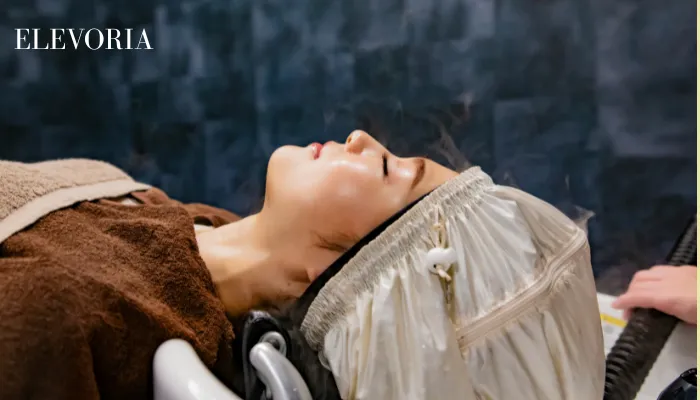
How the Keratin Treatment Process Works
- Consultation and hair assessment. A stylist typically evaluates hair type, thickness, and current condition to determine formula strength and processing time.
- Washing. Hair is washed, usually with a clarifying shampoo, to remove product buildup and open the hair cuticle for better formula absorption.
- Application. The keratin solution is applied section by section and combed through to ensure even distribution along the length of the hair.
- Processing time. The formula is left on the hair for a set period, often around 30 to 90 minutes depending on the product and hair thickness, allowing it to penetrate the strand.
- Blow-drying. Hair is blow-dried straight, which helps prepare it for the heat-sealing step.
- Heat sealing. A flat iron, often set to a high temperature, is passed over small sections of hair multiple times to seal the keratin formula into the cuticle layer.
- Aftercare instructions. Clients are typically told not to wash, tie up, or clip their hair for a specific window afterward, often around 24 to 72 hours, to allow the treatment to fully set.
How Long Does a Keratin Treatment Last
Most keratin treatments last between three and six months, depending on the specific formula used, hair type, and how well the aftercare instructions are followed. Because the treatment coats the hair rather than permanently altering its structure, it gradually fades as hair grows out and goes through normal washing cycles.
There is no visible root line or demarcation the way there is with hair color, since the treatment wears off gradually rather than growing out from a fixed point. This makes keratin treatments a lower-commitment option compared to permanent straightening services.
Who Is a Good Candidate for a Keratin Treatment
Keratin treatments tend to work best on hair that is frizzy, wavy, curly, or difficult to manage, particularly in humid climates where frizz is a persistent issue. They are also commonly used on color-treated or chemically processed hair to improve manageability and add shine, as long as the specific formula is compatible with previously treated hair.
Keratin treatments are generally not recommended for very fine or limp hair, since the added weight and smoothing effect can leave already thin hair looking flatter and less voluminous. Hair that is already significantly damaged or overly porous may also require a consultation to determine whether the treatment is appropriate, since some formulas can be too intense for compromised hair.
Formaldehyde Concerns and Formula Types
One of the most searched concerns around keratin treatments relates to formaldehyde, a chemical historically used in some keratin formulas because it helps bond the protein to the hair during the heat-sealing process. Formaldehyde exposure through hair straightening products has been a documented health and safety concern, and government health agencies have issued guidance and warnings regarding certain hair straightening products containing formaldehyde or formaldehyde-releasing ingredients.
Because of these concerns, many salons now offer formaldehyde-free keratin treatments, which use alternative bonding ingredients. These formulas are generally marketed as producing a similar smoothing effect with a reduced risk profile, though results and longevity can vary compared to formulas that use formaldehyde or formaldehyde-releasing chemicals. Anyone considering a keratin treatment, particularly at a salon, should ask directly what type of formula is being used and review the product’s ingredient list or safety documentation if health concerns are a priority.
Cost of a Keratin Treatment
Keratin treatment pricing varies significantly based on hair length, thickness, salon location, and the specific formula used. Treatments commonly range from around 150 to 400 dollars or more at professional salons, with longer, thicker, or more heavily textured hair generally costing more due to increased product use and processing time.
At-home keratin treatment kits are also available at a lower price point, though results, application difficulty, and safety of self-application vary compared to a professional service performed by a trained stylist.
Aftercare: How to Make a Keratin Treatment Last
Avoid washing hair immediately after treatment. Most treatments require waiting 24 to 72 hours before the first wash to allow the keratin to fully bond to the hair.
Use sulfate-free shampoo and conditioner. Sulfates can strip the treatment prematurely, shortening how long the smoothing effect lasts.
Avoid tying hair up or using clips right after treatment. Creasing or bending the hair before the treatment fully sets can create unwanted kinks or waves in those areas.
Limit exposure to chlorine and saltwater. Both can affect the treatment’s longevity and should generally be avoided or minimized, particularly in the days following the appointment.
Space out heat styling. While the treatment reduces the need for daily heat styling, minimizing additional heat exposure helps preserve results and hair health over time.
Common Mistakes People Make With Keratin Treatments
Washing hair too soon after the treatment. This is one of the most common mistakes and can significantly shorten how long the treatment lasts, since the formula has not had time to fully bond to the hair.
Choosing a keratin treatment for very fine or limp hair without a proper consultation. This can result in flatter, weighed-down hair rather than the intended smoothing effect.
Not asking about formaldehyde content beforehand. Skipping this question can be a concern for anyone sensitive to the chemical or with specific health considerations.
Expecting permanent straightening. Keratin treatments smooth and reduce frizz but generally do not produce the same permanently straight result as a chemical relaxer or thermal reconditioning service.
Using sulfate-heavy shampoo shortly after treatment. This accelerates the fading process and reduces how long the smoothing effect lasts.
Getting the treatment on already over-processed hair without evaluation. Layering a keratin treatment onto significantly damaged or over-processed hair without a proper consultation can lead to uneven results or further stress on the hair.
Expert Insight: Why Processing Time Should Match Hair Type
One detail often glossed over in general keratin treatment guides is that processing time and formula strength should be adjusted based on hair thickness and porosity, not applied uniformly to every client. Thicker or more resistant hair often requires a longer processing time to allow the keratin formula to fully penetrate, while finer or more porous hair may need a shorter processing time to avoid over-processing.
This is part of why results can vary so much between salons and even between different stylists at the same salon. A rushed or generalized application, rather than one tailored to the individual’s hair type, is a common reason some people experience underwhelming or uneven results from a treatment that should otherwise be effective for their hair type.
Keratin Treatments and Hair Health: Separating Fact From Marketing
Keratin treatments are often marketed as repairing or strengthening hair, and there is some truth to this in terms of surface-level smoothing and reduced breakage from easier detangling. However, it is worth understanding that the treatment does not repair structural damage at a cellular level the way marketing language sometimes implies.
The protein coating primarily improves manageability, shine, and frizz control rather than reversing existing damage such as split ends, which still need to be trimmed rather than treated. Setting realistic expectations about what the treatment can and cannot do helps avoid disappointment, particularly for hair that is already significantly damaged.
Actionable Recommendations
- Ask your stylist directly whether the formula being used contains formaldehyde or formaldehyde-releasing ingredients before booking.
- Choose a formula and processing time suited to your specific hair type rather than assuming a one-size-fits-all approach will work well.
- Avoid washing, tying up, or clipping your hair for the full aftercare window recommended by your stylist, typically 24 to 72 hours.
- Switch to sulfate-free shampoo and conditioner to extend the life of the treatment.
- Consult with a stylist before getting a keratin treatment on very fine, limp, or already heavily processed hair.
- Keep expectations realistic: the treatment smooths and reduces frizz but is not a permanent straightening solution and does not repair structural hair damage like split ends.
Conclusion
A keratin hair treatment can be an effective way to reduce frizz, cut down on styling time, and add shine for several months, but understanding how it actually works helps set the right expectations. It smooths rather than permanently straightens, fades gradually rather than growing out with a visible line, and its safety and results depend heavily on the specific formula used and how well aftercare instructions are followed. Asking the right questions beforehand, particularly about formaldehyde content and suitability for your hair type, makes the difference between a treatment that delivers consistent, healthy-looking results and one that leads to disappointment.
FAQ
What does a keratin hair treatment actually do?
It applies a keratin-based formula to the hair, sealed in with heat, which smooths the hair cuticle, reduces frizz, and makes hair more manageable for several months.
How long does a keratin treatment last?
Most keratin treatments last between three and six months, depending on the formula used, hair type, and aftercare routine.
Does a keratin treatment permanently straighten hair?
No, keratin treatments smooth and reduce frizz but generally do not produce permanently straight hair the way a chemical relaxer or thermal reconditioning service does.
Is a keratin treatment safe?
Many formulas are considered safe, particularly formaldehyde-free options, though some traditional keratin formulas contain formaldehyde or formaldehyde-releasing ingredients, which have raised health and safety concerns documented by government health agencies. Asking about the specific formula before treatment is recommended.
How much does a keratin treatment cost?
Professional keratin treatments commonly range from about 150 to 400 dollars or more, depending on hair length, thickness, and salon location.
Can I wash my hair right after a keratin treatment?
No, most treatments require waiting 24 to 72 hours before the first wash to allow the formula to fully bond to the hair.
Is a keratin treatment good for fine hair?
It depends. Fine or limp hair can end up weighed down by the treatment, so a consultation is recommended before proceeding with fine hair types.
What is the difference between a keratin treatment and a Brazilian blowout?
Both use similar smoothing formulas sealed with heat, though Brazilian blowout is often a specific branded version of the treatment, and results can vary slightly in smoothness and duration between the two.
Read More: Hush Cut: The Soft Layered Haircut Trend Explained