Beach Wedding Dresses: The Complete Guide to Choosing the Right Gown
Choosing a wedding dress for a beach ceremony comes with a different set of priorities than a traditional indoor wedding. Heat, humidity, sand, wind, and movement all affect what actually works, not just what looks good in a photo. This guide covers how to choose a beach wedding dress that photographs beautifully and holds up through the practical realities of getting married on sand.
Why Beach Weddings Need a Different Approach to Dress Shopping
A traditional ballroom-style wedding gown, with heavy fabric, a long train, and multiple structured layers, is rarely practical for a beach ceremony. Heat and humidity make heavy fabrics uncomfortable, sand and wind create movement and mobility challenges a structured gown is not designed to handle, and many outdoor beach venues do not offer the climate control of an indoor venue.
This means beach wedding dress shopping should start with practicality alongside style, rather than choosing a traditional gown first and later realizing it does not suit the setting. Fabric weight, dress length, and structure all deserve early consideration specifically because of the environment, not just personal taste.
Best Fabrics for Beach Wedding Dresses
Fabric choice affects comfort, movement, and how a dress holds up in heat, humidity, and occasional wind or light sand exposure.
- Chiffon: Lightweight and flowy, one of the most popular fabrics for beach weddings due to its breathability and soft movement in ocean breeze.
- Crepe: A slightly more structured but still lightweight option, offering a clean drape without excessive clinging in humidity.
- Cotton and cotton blends: Breathable and practical, often used for more casual beach wedding dresses.
- Silk charmeuse: Lightweight with a subtle sheen, though it can wrinkle and show sweat marks more easily than crepe or chiffon in high heat.
- Linen: Breathable and casual, though prone to wrinkling, making it better suited to more relaxed beach ceremonies than formal ones.
Fabrics to generally avoid for beach weddings include heavy satin, tulle in large volume, and dresses with extensive structured boning, all of which trap heat and can feel restrictive in humid, high-movement conditions.
Best Dress Lengths and Silhouettes for Beach Weddings
Flowy A-Line and Empire Waist Gowns
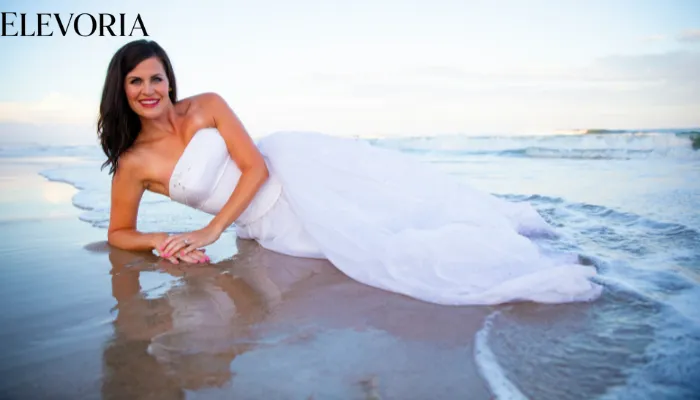
These silhouettes allow airflow and ease of movement across sand, without the weight or structure of a fuller ball gown silhouette. They tend to photograph well in wind, since the loose fabric moves naturally rather than fighting against the breeze.
Tea-Length or Midi Dresses
Shorter hemlines that fall between the knee and ankle avoid dragging through sand and are easier to manage while walking on an uneven beach surface. This length has become increasingly popular for both formal and casual beach ceremonies.
Minimal Train or No Train
A long train, while dramatic, is genuinely impractical on sand, since it collects sand and debris and requires significant assistance to manage during the ceremony and photos. A minimal train or no train at all tends to work better for the realities of a beach setting.
Two-Piece and Separates
Bridal separates, such as a fitted top paired with a flowing skirt, have grown in popularity for beach weddings, offering a modern silhouette while allowing more breathability through mix-and-match fabric choices.
Neckline and Sleeve Considerations for Beach Weddings
Necklines and sleeve styles affect both comfort in heat and how a dress photographs against an open, bright beach background.
| Style | Why It Works for Beach Weddings |
|---|---|
| V-neck | Elongating and breathable, works well with warm weather |
| Off-shoulder | Romantic look, popular for beach aesthetics, keeps arms cool |
| Halter neck | Secure fit for movement, keeps hair and neckline breathable |
| Illusion lace sleeves | Adds detail without the heat of full fabric sleeves |
| Strapless | Classic and cool, though may require more attention to support in wind |
Strapless dresses in particular should be evaluated carefully for beach settings, since consistent wind can make a strapless bodice shift more than it would indoors, which is worth testing during a fitting that simulates movement.
Practical Considerations Unique to Beach Weddings
Sand and Hem Management
Even a shorter dress can pick up sand at the hem during the ceremony and photos. Choosing a fabric that shakes out easily, like chiffon, rather than one that traps sand in texture or embellishment, makes cleanup significantly easier afterward.
Wind and Movement
Since beach venues are rarely fully sheltered from wind, dresses with a lot of loose, flowing fabric should be tested for how they move, not just how they look standing still. A dress that looks elegant in a fitting room can behave very differently in open wind.
Heat and Humidity
Structured fabrics and heavy layering can become uncomfortable quickly in beach heat, particularly for ceremonies held in the middle of the day. Considering ceremony timing alongside dress fabric can help avoid unnecessary discomfort.
Footwear and Dress Length Coordination
Since many brides choose to go barefoot or wear sandals for a beach ceremony, dress length should be measured and hemmed with the actual planned footwear, or lack of footwear, in mind, rather than assuming standard heel height calculations used for indoor weddings.
Beach Wedding Dress Color Options
White and ivory remain the most traditional choices, but beach weddings have also become associated with a slightly wider acceptance of soft, non-traditional colors, particularly pastels, blush tones, and light neutrals, especially for more casual or destination-style beach ceremonies.
There is no formal rule requiring a specific color for a beach wedding, and the more relaxed, destination-oriented nature of many beach weddings has generally allowed brides more flexibility in color choice compared to traditional formal ceremonies.
Common Mistakes Brides Make When Choosing a Beach Wedding Dress
Choosing a heavy, structured gown without testing it in similar conditions. A dress that feels fine in an air-conditioned bridal shop can feel significantly different in outdoor heat and humidity.
Not accounting for wind when choosing a strapless or very loose silhouette. Dresses with a lot of loose fabric or minimal structural support should be tested for movement, not just appearance while standing still.
Choosing a long train without considering sand and mobility. A dramatic train can look stunning in still photos but often creates real mobility and cleanup challenges during an actual beach ceremony.
Overlooking undergarments suited for heat and movement. Standard structured undergarments designed for indoor formal wear can feel uncomfortable in beach heat and humidity, and choosing lighter, breathable options is often more practical.
Not considering how fabric responds to being packed or traveled with. Many beach weddings are also destination weddings, meaning the dress may need to travel by suitcase, which affects fabric choice and wrinkle resistance.
Expert Insight: Why a Trial Run in Similar Conditions Matters
One detail often missed in general beach wedding dress guides is the value of testing the dress, even informally, in conditions similar to the actual wedding day, such as outdoors in warm weather with some wind. This helps reveal practical issues, like how a skirt behaves in a breeze or how a fabric feels against skin in heat and humidity, that a single fitting room try-on in climate-controlled conditions cannot fully replicate.
This is particularly relevant for destination beach weddings, where the bride may not have the opportunity to test the actual venue conditions until arrival, making it worth simulating similar heat and movement conditions during an earlier fitting whenever possible.
Actionable Recommendations
- Prioritize lightweight, breathable fabrics like chiffon or crepe over heavier, structured fabrics like satin or tulle.
- Choose a shorter hemline or minimal train to reduce sand and mobility issues during the ceremony.
- Test strapless or loosely structured dresses for movement in wind, not just appearance while standing still.
- Coordinate dress length with actual planned footwear, including the option of going barefoot.
- Choose breathable, lightweight undergarments suited to heat rather than standard structured formal undergarments.
- If traveling for a destination beach wedding, factor in wrinkle resistance and how the dress will pack for travel.
Conclusion
Choosing the right beach wedding dress comes down to balancing the romantic, relaxed aesthetic associated with beach ceremonies with the practical realities of heat, wind, sand, and movement. Lightweight fabrics, manageable hem lengths, and thoughtful consideration of neckline and structure all contribute to a dress that looks beautiful in photos and remains comfortable and practical throughout the actual event. With the right fabric and silhouette choices made early in the shopping process, a beach wedding dress can deliver both the visual romance of the setting and the comfort needed to fully enjoy the day.
FAQ
What fabric is best for a beach wedding dress?
Lightweight, breathable fabrics like chiffon and crepe are among the most popular choices for beach weddings due to their comfort in heat and natural movement in ocean breeze.
What length dress is best for a beach wedding?
Tea-length, midi, or shorter A-line dresses are generally more practical than floor-length gowns with long trains, since they reduce sand contact and improve mobility on uneven sand.
Can I wear a strapless dress to a beach wedding?
Yes, though strapless dresses should be tested for how they hold up in wind, since consistent beach breeze can cause more movement than an indoor setting would.
Do beach wedding dresses have to be white?
No, while white and ivory remain traditional choices, beach weddings have generally allowed more flexibility for pastel and soft neutral tones, particularly for casual or destination ceremonies.
Is a long train practical for a beach wedding?
Generally no, since a long train collects sand and creates mobility challenges. A minimal train or no train is usually more practical for beach ceremonies.
What should I wear under a beach wedding dress?
Lightweight, breathable undergarments suited to heat and humidity are generally more comfortable than standard structured formal undergarments used for indoor weddings.
Should I test my dress in similar conditions before the wedding?
Yes, testing the dress outdoors in warm weather with some wind, even informally, can reveal practical issues that a single fitting room try-on cannot fully show.
How do I keep a beach wedding dress from wrinkling during travel?
Choosing a wrinkle-resistant fabric like crepe and packing the dress carefully, ideally hung or with tissue paper between folds, helps reduce wrinkling for destination beach weddings.
Read More: Courthouse Wedding Dress: What to Wear Guide