
Fashion and Style Trends 2026: The Definitive Guide to What’s Shaping Style This Year
Introduction
If the past few seasons were defined by restraint, 2026 has arrived with a different energy altogether. Across the runways of Paris, Milan, London, and New York, designers have made one thing clear: ultra-safe dressing is giving way to something far more expressive. The fashion and style trends of 2026 are defined by sculpted silhouettes, emotional colour, tactile textures, and a renewed emphasis on personal expression over uniform minimalism.
This shift is not just about aesthetics. It reflects broader cultural changes. Consumers are moving away from micro-trend chasing toward sharper, more intentional personal style. They are choosing clarity over clutter, repeating silhouettes that work, and curating wardrobes that feel authentic rather than reactive. At the same time, major global moments like the World Cup and the U.S. 250th anniversary are drawing people back into public life, creating new reasons to dress with presence and belonging.
This guide covers the defining fashion and style trends of 2026. It draws on runway reports, trend forecasts from WGSN and Pinterest, and insights from industry leaders including the Council of Fashion Designers of America (CFDA). Whether you are looking to refresh your wardrobe or simply understand where fashion is heading, this article provides a practical, evidence-based overview.
The Big Picture: Why 2026 Feels Different
The most significant change in 2026 is the rejection of aesthetic apathy. As three CFDA-winning designers recently put it, the year is about “loving things unapologetically” and moving past passive dressing. Designer Christopher John Rogers suggests asking yourself a simple question when getting dressed: “Are you excited to show up?”
This inward focus marks a departure from dressing for external validation. The goal is no longer just to look a certain way but to feel something. “It’s not about gaze. It’s about a feeling,” Rogers explains. This philosophy underpins many of the trends that have emerged this year.
WGSN, the global trend forecasting agency, has characterised 2026 as an “unserious” year for fashion. This does not mean frivolous. It means playful, experimental, and willing to break the rules. Designers are embracing bold gold jewellery, colour blocking, and exaggerated proportions as a form of creative liberation.
The Depop 2026 Trends Report, titled “The Edited Self,” captures a parallel movement. Consumers are responding to decision fatigue, economic pressure, and digital saturation by gravitating toward dependable silhouettes and repeatable staples. Neutral palettes, sharp tailoring, and crisp button-downs anchor wardrobes with ease. This is not about boredom but about dressing with conviction and signalling taste through repetition rather than reinvention.
Key Fashion and Style Trends for 2026
Sculpted Power Dressing
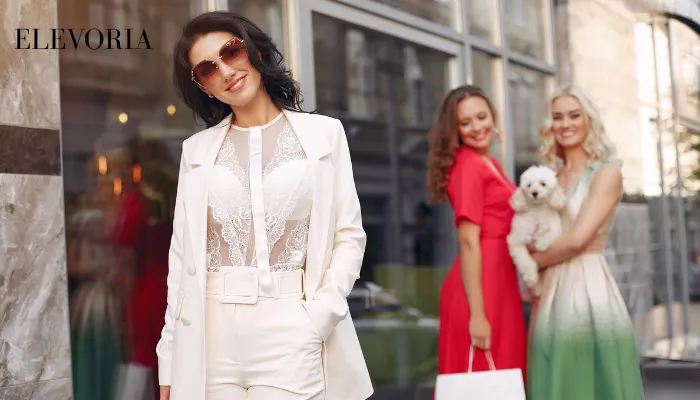
Tailoring in 2026 has moved beyond corporate formality into something more architectural. At houses like Saint Laurent and Alexander McQueen, blazers feature sharply structured shoulders and defined waists, creating an hourglass silhouette that moves with the body rather than restricting it.
This is power dressing without the armour. The emphasis is on presence, not stiffness. Milan labels like Bottega Veneta have layered texture into their tailoring, while Miu Miu continues to explore off-kilter femininity with pencil skirts styled alongside unexpected knitwear and relaxed proportions.
The Council of Fashion Designers of America (CFDA) has also been instrumental in shaping the industry’s direction. In December 2025, the CFDA announced that as of the September 2026 season, animal fur will no longer be permitted in collections on the official New York Fashion Week schedule. This landmark decision, developed in collaboration with Humane World for Animals and Collective Fashion Justice, reflects a broader industry shift toward ethical material innovation.
The Return of Bold, Emotional Colour
Neutral fatigue is real, and designers have responded decisively. Across Spring/Summer 2026 collections in Paris and Milan, saturated reds, cobalt blues, butter yellows, and high-impact pinks dominated.
Rather than safe monochrome dressing, runways embraced contrast. Red appeared alongside blush. Blue was paired with acid green. This is not maximalism for shock value. It feels optimistic, almost defiant.
Pantone named “Cloud Dancer,” a soft grey-hued white, as the 2026 Colour of the Year. However, midway through the year, it is clear that bolder shades are capturing the most attention. During New York Fashion Week in February, Pantone observed off-the-beaten-path shades like Festive Fuchsia and Green Envy among the top 10 standout colours.
Cobalt blue has emerged as a particularly significant shade. According to Pinterest Predicts, it is one of the defining fashion colours of 2026. Bold without being shouty, modern without feeling try-hard, cobalt appears across blazers, trousers, dresses, and scarves. On the Spring/Summer 2026 catwalks, designers like Edeline Lee and Loewe used it for confident, architectural suiting, while Roksanda and Lanvin showed its more romantic side in draped gowns.
Texture Over Logos
If the last few seasons were about quiet luxury, 2026 is about tactile luxury. Fringe, lace, sheer overlays, hand embroidery, and surface detailing have taken centre stage. The emphasis has shifted from visible branding to craftsmanship.
The conversation has moved from “Who are you wearing?” to “How was this made?” This aligns with a renewed interest in handloom, handwork, and artisanal techniques. At Paris Haute Couture Week, designers like Rahul Mishra showcased intricate hand embroidery inspired by elemental storytelling, while Gaurav Gupta presented sculptural drapes that blurred the lines between fashion and art.
This trend also reflects a broader move toward sustainable fashion practices. The shift toward bio-based, recycled, and circular materials is becoming mainstream rather than niche. Consumers are increasingly valuing longer-lasting garments and eco-friendly materials. As the textile industry moves away from disposable, fast-fashion products, durability, repairability, and circular design are becoming central priorities.
Playful Proportions
The Fall/Winter 2026 runways showcased a sense of whimsy through bold proportions. Oversized designs, cropped styles, and exaggerated silhouettes dominated. Cocoon-like tailoring, dramatic hemlines, and billowy pants and dresses created an expressive, eye-catching approach to fashion.
This trend challenges traditional notions of what is considered flattering. Designers like Duran Lantink, Collina Strada, and Zoe Gustavia Anna Whalen have embraced volume in places that fashion has long told us to avoid: thighs, midsections, shoulders, and arms. As one fashion editor put it, this feels like permission to use fashion as it is intended: for expression and art rather than an omnipresent tool of minimisation.
From heritage brands like Calvin Klein to emerging labels like Lii, suiting has become oversize and structured, sitting away from the body. Even skirts over pants have returned, a far cry from the skinny-jeans era.
Sport-Couture Fusion
Sportswear continues to evolve beyond performance into a new form of playful, soft-edged athleticism. Tennis whites, vintage jerseys, bike shorts, and ski layers are being styled with silk, tailoring, and ballet flats to create looks that balance comfort with aspiration.
In a World Cup year, athletic references carry added cultural meaning. Interest in vintage sportswear, upcycled jerseys, and ski-inspired pieces has risen significantly. This trend represents a blending of elegance and ease that feels distinctly contemporary.
The Updated Lady Archetype
One of the defining archetypes of Fall/Winter 2026 is the “Updated Lady”. Houses like Chanel, Givenchy, and Balenciaga are reimagining power dressing through a contemporary lens. Rather than rigid corporate suiting, the season favours softened structures, gently sloping waists, and sculpted jackets that balance strength with ease.
This is sophisticated dressing that feels current and approachable. It is about presence without pretension.
Art Deco Evening
Designers are looking back to the 1920s for inspiration. From Khaite to Colleen Allen, collections have embraced the era’s geometric patterns, glamorous shapes, fringe, gloves, velvet, and opulent evening bags. This trend brings a sense of occasion and luxury to evening wear, with richly detailed texture and overt opulence.
Neo Nostalgia
Rather than recreating a single era, Gen Z and young Millennials are blending fragments of the 70s, 90s, and early 2000s. This is nostalgia as a grounding mechanism in uncertain times. Era mixing, archival pieces, and expressive layering drive this trend. Search data shows rising interest in bandage dresses, JNCO jorts, and medieval-inspired silhouettes.
Everyday Ceremony
People are dressing with more purpose. Everyday activities have become opportunities for small rituals and self-expression. Tailored coats, draped skirts, metallic fabrics, and bold accessories elevate even the simplest routines. Search behaviour shows strong gains across structured blazers, kitten heels, and statement jewellery. Confidence and emotional comfort fuel this trend, with people dressing up as a way to feel more present in their daily lives.
Colour Trends to Watch
Beyond cobalt blue, several other colours are defining 2026:
- Transformative Teal: Described as the “modern expensive colour,” teal brings sophistication and depth.
- Butter Yellow: A soft-sunshine holdover from 2025 that continues to charm.
- Powder Pink: A grown-up romantic shade that feels soft without being saccharine.
- Festive Fuchsia and Green Envy: Observed by Pantone as standout colours during New York Fashion Week.
- Eggplant Purple: A moodier shade that has entered the conversation for fall 2026, showing range across brands like Zankov, Chloé, and Loewe.
Accessories Defining 2026
Accessories are playing a central role in the 2026 fashion landscape.
Brooches have made a notable return. At the Spring/Summer shows, Chanel featured corsage-style brooches, while Mugler and Tory Burch embraced heirloom luxe. These are not subtle pieces. Think glinting gold, chunky embellishments, and architectural shapes.
Gold jewellery is experiencing a renaissance. According to WGSN, bold gold pieces are expected to add high-octane glamour to even the most casual looks. Layering in a touch of lamé via scarves, bags, and footwear will update multiple outfits.
Skinny belts have returned, cinching waists and adding definition to sculpted silhouettes. Sculptural bangles are taking centre stage, while layered necklaces add depth and dimension to any look.
Sustainability and Ethical Fashion
Sustainability is no longer a niche concern in fashion. It has moved to the centre of industry conversations.
In 2026, circular fashion has become a central focus for brands, policymakers, and supply chains globally. Businesses are exploring new ways to reuse, repair, recycle, and redesign clothing so that materials stay in circulation longer.
The shift toward durable, repairable, recyclable, and circular design reflects a broader industry push away from disposable, fast-fashion products. Bio-based, recycled, and circular materials are becoming mainstream.
The CFDA’s fur ban, effective September 2026, is a significant milestone. It applies to animals killed specifically for their pelts, with a vital exemption for fur obtained by Indigenous communities through traditional subsistence hunting practices. To support the industry through this evolution, the CFDA has hosted conversations exploring how bio-based and innovative materials can offer compelling, creative alternatives without compromise.
Consumers are increasingly intentional about their purchases. They value sustainability and timelessness, but also crave cultural connection. The growing awareness of sustainable fashion is driving a shift toward thrift culture, with consumers becoming more conscious of their environmental impact.
Common Mistakes and Misconceptions
Mistake 1: Assuming you need a complete wardrobe overhaul
The trends of 2026 are remarkably easy to work into existing wardrobes. A cobalt blue scarf, a brooch, or a tailored jacket with a little extra room can update your look without a full purge.
Mistake 2: Confusing colour with chaos
Bold colour in 2026 is about intention, not randomness. Designers are using colour to express optimism and confidence, not just for shock value.
Mistake 3: Believing sustainability means sacrificing style
Sustainable fashion in 2026 is about craftsmanship, durability, and innovation. It is not about compromise. The CFDA’s fur ban and the rise of bio-based materials show that ethics and aesthetics can coexist.
Mistake 4: Treating trends as rules
The most significant trend of 2026 is individuality. As CFDA-winning designers have emphasised, the goal is to dress in a way that feels authentic to you.
Actionable Recommendations
- Start with one bold piece: A cobalt blue blazer, a statement brooch, or a pair of sculptural bangles can instantly update your wardrobe without a complete overhaul.
- Experiment with proportion: Try an oversized blazer or a billowy pant. Volume can be liberating and expressive.
- Layer with intention: The power of styling lies in seeing familiar pieces in a new light. Layer cardigans over workwear jackets. Combine unexpected textures.
- Prioritise craftsmanship: Look for pieces with hand embroidery, interesting texture, or artisanal details. These items tell a story and often last longer.
- Embrace colour confidently: Start with accessories in a bold shade like cobalt blue or teal. Gradually work up to colour-blocking.
- Consider sustainability: When shopping, ask about materials and production methods. Look for durable, repairable items that will last beyond a single season.
Expert Insights
Industry analysts are observing a clear shift toward individualism. As Frida Tordhag, analyst at trend forecasting platform Heuritech, notes: “Individuality, self-expression and personal style will continue to grow. Outside of fashion, there’s a lot of conversation around self-worth and setting boundaries, and this individualism is affecting how people are dressing”.
Kim Cupido, senior strategist at WGSN, adds that in challenging times, people seek escapism and whimsy from fashion. This is galvanising hyper-feminine items like blouses, bows, and babydoll dresses. Blouse arrivals in stores are already up 28 per cent compared to the previous season.
The Victoria and Albert Museum has long documented how fashion reflects cultural shifts. The current movement toward expressive, individual style mirrors historical moments when society has sought joy and self-expression in dress during periods of uncertainty.
Frequently Asked Questions
What are the biggest fashion trends in 2026?
The biggest trends include sculpted power dressing, bold emotional colours like cobalt blue, texture-focused craftsmanship, playful proportions, and sport-couture fusion. The overall mood is expressive, individual, and optimistic.
Is quiet luxury over in 2026?
Quiet luxury is not over, but it is evolving. The emphasis has shifted from visible branding to tactile luxury, craftsmanship, and texture. The “Updated Lady” archetype combines sophistication with approachability.
What colours are trending in 2026?
Cobalt blue, transformative teal, butter yellow, powder pink, Festive Fuchsia, Green Envy, and eggplant purple are among the key colours. Pantone named “Cloud Dancer” as the Colour of the Year, but bolder shades are dominating runways and street style.
How can I update my wardrobe for 2026 without spending a lot?
Start with accessories. A brooch, a gold piece of jewellery, or a cobalt blue scarf can instantly modernise your look. Layering familiar pieces in new ways is another cost-effective strategy.
Is sustainability still important in fashion?
Yes, sustainability has moved from a niche concern to a central focus. The CFDA’s fur ban, the rise of circular fashion, and increasing consumer demand for durable, repairable clothing all point to sustainability as a lasting priority.
What does “sculpted power dressing” mean?
It refers to tailoring that is architectural rather than corporate. Blazers feature strong shoulders and defined waists, creating an hourglass silhouette that moves with the body. It is about presence without stiffness.
Are oversized silhouettes really in?
Yes. Playful proportions are a major trend for 2026, with oversized designs, cropped styles, and exaggerated silhouettes appearing across major runways. Designers are embracing volume in places that fashion has traditionally avoided.
What is the “Updated Lady” trend?
The Updated Lady is a Fall/Winter 2026 archetype that reimagines power dressing through softened structures, gently sloping waists, and sculpted jackets. It is sophisticated, current, and approachable.
How are Gen Z and Millennials shaping 2026 trends?
Younger consumers are driving trends like Neo Nostalgia, which blends fragments of the 70s, 90s, and 2000s. They are also leading the shift toward intentional personal style, choosing quality over quantity and authenticity over micro-trend chasing.
What accessories are must-haves for 2026?
Brooches, bold gold jewellery, sculptural bangles, layered necklaces, and skinny belts are all key accessories for 2026.
Conclusion
Fashion and style in 2026 are defined by a single overriding theme: intentionality. Whether through sculpted tailoring, bold colour, tactile texture, or playful proportions, the trends of this year encourage personal expression over passive consumption.
The shift away from quiet luxury and minimalist restraint is not about rejecting elegance. It is about expanding the definition of what elegance can be. It can be colourful. It can be voluminous. It can be playful. And it can be sustainable.
As the CFDA’s fur ban takes effect and consumers increasingly prioritise craftsmanship and durability, the industry is moving toward a more responsible and expressive future. The trends of 2026 offer something for everyone, whether you are drawn to the sophistication of the Updated Lady, the whimsy of playful proportions, or the optimism of bold colour.
The most important takeaway is this: fashion in 2026 is about dressing for yourself. It is about feeling excited to show up. And that is a trend worth embracing.
Read More: Outfit Ideas 2026: Complete Style Guide for Every Occasion
[…] most important takeaway is this: fashion in 2026 is about dressing for yourself. It is about feeling excited to show up. And that is a trend worth […]