Groom’s Tuxedo Package: What’s Included, What It Costs, and How to Choose the Right One
Planning a wedding outfit is easy to underestimate until you’re standing in a formalwear shop, staring at a wall of jacket styles and a price sheet that doesn’t quite make sense. If you searched “groom’s tuxedo package,” you’re probably trying to answer a simple but important question: what am I actually paying for, and how do I make sure it fits both my wedding and my budget?
This guide breaks down exactly what a groom’s tuxedo package usually includes, how it differs from a groomsmen package, what it typically costs, and how to choose the right one without overspending or ending up with an outfit that doesn’t match your wedding’s tone.
What Is a Groom’s Tuxedo Package?
A groom’s tuxedo package is a bundled set of formalwear items sold or rented together specifically for the groom, rather than purchased as separate pieces. Instead of buying a jacket, then trousers, then a shirt, then accessories one at a time, the package groups everything into a single order, often at a discounted combined price.
The exact contents vary by retailer, but the core idea is the same everywhere: one coordinated outfit, one transaction, and (in many rental programs) one price that’s lower than buying each piece individually.
Some formalwear companies also use “package” to describe a group deal, where the groom’s outfit is discounted or provided free when a certain number of groomsmen rent from the same store. This is a separate meaning worth understanding before you shop, and we’ll cover it below.
What’s Typically Included in a Groom’s Tuxedo Package
Packages differ between retailers, but most groom’s tuxedo packages include some combination of the following:
- Tuxedo jacket (notch lapel, peak lapel, or shawl collar)
- Matching trousers
- Dress shirt (usually a wing collar or spread collar style)
- Bow tie or necktie, depending on the formality level
- Vest or cummerbund
- Cufflinks and studs
- Pocket square
- Suspenders, in some packages
What’s often not included, even in a “complete” package, is footwear. Dress shoes are usually a separate rental or purchase, so it’s worth asking directly rather than assuming they’re bundled in.
A useful way to think about it: the package covers the visible formalwear system, but small finishing details, like shoes, cologne, or a boutonniere, are typically handled separately by the couple.
Groom’s Package vs. Groomsmen Package: The Key Difference
This is one of the more confusing parts of tuxedo shopping, so it’s worth being direct about it.
A groomsmen package is the standard rental or purchase bundle offered to each groomsman in the wedding party. It usually matches the groom’s outfit closely but may use simpler details, such as a standard vest instead of a custom one, or a plain tie instead of a bow tie with matching pocket square.
A groom’s package is often positioned as the “upgraded” version. The groom may get a slightly different lapel style, a higher-end fabric, or added accessories to visually distinguish him from the rest of the wedding party, which is a common styling choice in modern weddings.
Many formalwear retailers also offer a promotion where the groom’s package is free or heavily discounted once a minimum number of groomsmen (commonly five or six) rent their outfits from the same store. This isn’t universal, so it’s worth asking specifically about group rental incentives when you request a quote.
Rent or Buy: Which Makes More Sense?
This decision affects both cost and long-term value, so it deserves a clear comparison.
| Factor | Renting | Buying |
|---|---|---|
| Upfront cost | Lower | Higher |
| Ownership after the wedding | No | Yes |
| Fit customization | Limited to available sizes | Fully tailored |
| Best for | One-time formal event | Frequent formal events, or wanting full control over fit |
| Long-term cost if worn again | Repeated rental fees each time | One-time cost, reused indefinitely |
| Style selection | Limited to in-stock inventory | Wider range of fabrics and cuts |
Renting makes sense if you don’t expect to attend many black-tie events after the wedding, or if you want the flexibility of a fresh style without storage or upkeep.
Buying makes more financial sense if you already attend formal events a few times a year, or if you want a tuxedo tailored precisely to your body rather than adjusted from a rental inventory size.
A practical rule many formalwear consultants use: if you’d wear a tuxedo again within two to three years, buying tends to pay for itself. If this is a one-time event, renting is usually the more efficient choice.
How Much Does a Groom’s Tuxedo Package Typically Cost?
Pricing varies significantly by region, retailer, and fabric quality, so treat these as general ranges rather than fixed figures.
- Rental packages: Typically range from budget-friendly options at national chains to higher-end designer rental programs. Group discounts and free-groom promotions can significantly lower or eliminate the groom’s cost.
- Purchased packages: Cost considerably more upfront since you’re buying, not borrowing, the full outfit, but there’s no recurring rental fee if worn again.
- Alterations: Often billed separately from the base package price, even when the retailer describes the package as “complete.” Ask whether basic alterations are included or charged extra.
The biggest cost variable isn’t usually the jacket itself. It’s the combination of fabric quality, whether shoes are bundled, and whether alterations are included in the quoted price or added afterward.
How to Choose the Right Groom’s Tuxedo Package
1. Match the Formality of Your Venue and Time of Day
A black-tie evening wedding calls for a different tuxedo than a daytime garden ceremony. Peak lapel jackets and bow ties read more formal, while notch lapels and long ties feel slightly more relaxed. Choose the package style that matches your invitation’s dress code, not just personal preference.
2. Consider the Season
Wool-blend tuxedos work well for fall and winter weddings, while lighter fabrics like tropical wool or linen blends are more comfortable for spring and summer ceremonies. If your package offers a fabric choice, factor in the season before locking in a selection.
3. Check What’s Actually Included Before Comparing Prices
Two packages priced differently might include different components. One “complete” package might bundle shoes and alterations, while a cheaper-looking package charges those separately. Always ask for an itemized list before comparing costs across retailers.
4. Coordinate With the Groomsmen Package Early
If you’re ordering through a group rental program, the groom’s package pricing and any free-groom promotion usually depend on the groomsmen’s orders being finalized. Get everyone’s sizes and commitments locked in early so the group discount isn’t lost to a late deadline.
5. Confirm the Alteration and Fitting Timeline
Even rental tuxedos may need adjustment. Ask the retailer directly what their fitting and alteration window looks like, and build that into your wedding planning timeline rather than assuming it will happen automatically close to the date.
Step-by-Step: How to Order a Groom’s Tuxedo Package
- Decide on rent vs. buy based on how often you’ll wear formalwear after the wedding.
- Set the formality level based on your venue, time of day, and wedding dress code.
- Get an itemized quote, not just a package price, so you know exactly what’s included.
- Coordinate sizes and commitments with groomsmen if you’re using a group rental program.
- Book the fitting appointment several weeks ahead of the wedding, not the week before.
- Confirm the pickup or delivery date for rentals, and the final alteration date for purchases.
- Do a final fitting check close to the wedding date to catch any last-minute sizing issues.
Most formalwear consultants recommend starting this process eight to twelve weeks before the wedding for rentals, and even earlier for purchased tuxedos that require custom tailoring.
Expert Insights
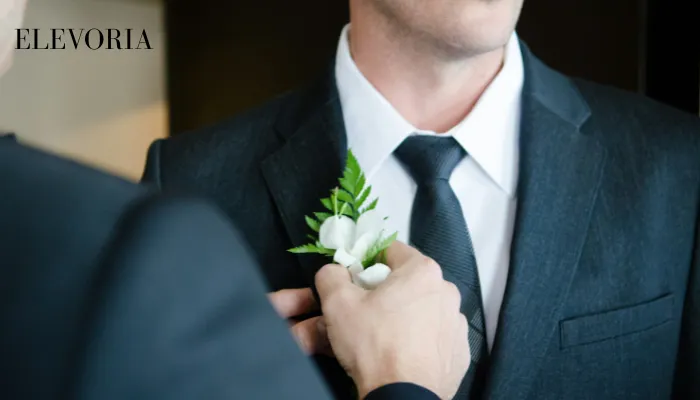
A pattern worth noting: the groom’s outfit doesn’t need to be dramatically different from the groomsmen’s to look intentional. A single distinguishing detail, a different lapel style, a unique boutonniere, or a slightly different tie color, is usually enough to visually separate the groom without creating a mismatched overall look in wedding photos.
Another practical observation: alteration quality matters more than brand name for how a tuxedo actually looks in photographs. A mid-range tuxedo that’s properly tailored to the shoulders and sleeve length will photograph better than an expensive one that fits poorly.
Common Mistakes to Avoid
- Assuming the groom’s outfit is automatically free. This depends entirely on the retailer’s group promotion and the number of groomsmen ordering, so confirm it directly rather than assuming.
- Booking the fitting too close to the wedding date. This leaves no time to fix sizing issues or reorder a missing piece.
- Ignoring shoes and accessories until the last minute. These are frequently excluded from the “package” and need separate planning.
- Choosing a style that doesn’t match the venue’s formality. A peak-lapel black-tie tuxedo can look out of place at a casual outdoor ceremony, and vice versa.
- Not asking whether alterations are included in the quoted price. This is one of the most common sources of unexpected cost.
Actionable Recommendations
- Request an itemized breakdown of every package you’re comparing, not just the final price.
- Decide on rent vs. buy before shopping, since it narrows your options and prevents decision fatigue.
- Lock in groomsmen sizes and commitments at least two to three months before the wedding if you want a group discount.
- Schedule the final fitting close enough to the wedding to catch issues, but early enough to fix them.
- Confirm the return policy and late-fee terms in writing if you’re renting.
Conclusion
A groom’s tuxedo package is meant to simplify wedding formalwear by bundling the core pieces into a single order, but the exact contents, pricing, and group discounts vary enough between retailers that it pays to ask direct questions before booking. Decide early whether renting or buying fits your situation, confirm exactly what’s included, and give yourself enough time for fittings and alterations. Getting these details right early means one less thing to worry about as the wedding date approaches.
Frequently Asked Questions
What is included in a groom’s tuxedo package? Most packages include a jacket, trousers, dress shirt, tie or bow tie, vest or cummerbund, and accessories like cufflinks and a pocket square. Shoes are often excluded and sold or rented separately.
Is the groom’s tuxedo free? Not automatically. Many formalwear retailers offer the groom’s package free or discounted when a minimum number of groomsmen rent from the same store, but this varies by retailer and should be confirmed directly.
Should I rent or buy a tuxedo for my wedding? Renting usually makes more financial sense for a one-time event, while buying is more cost-effective if you expect to wear a tuxedo again within a few years.
How far in advance should I order my tuxedo? Most formalwear consultants recommend starting eight to twelve weeks before the wedding for rentals, and earlier for custom-tailored purchases.
What’s the difference between a groom’s package and a groomsmen package? The groom’s package is often styled slightly differently to distinguish him visually, sometimes with a different lapel, tie style, or added accessories, while groomsmen packages are typically more uniform across the wedding party.
Do tuxedo packages include shoes? Usually not. Shoes are commonly excluded from the base package and need to be rented or purchased separately, so confirm this before assuming your outfit is complete.
What fabric is best for a wedding tuxedo? Wool-blend fabrics work well for cooler-weather weddings, while lighter fabrics such as tropical wool suit warmer seasons more comfortably.
Can alterations be included in a tuxedo package? Some retailers include basic alterations in the package price, while others charge separately. Always ask for this detail before comparing prices between stores.
Read More: Wedding Flowers: Complete Planning and Budget Guide