

Quick answer
The best winter running gear follows a layering system built around three parts: a moisture-wicking base layer to manage sweat, an insulating mid layer for warmth, and a wind or water-resistant outer layer for protection from the elements. Beyond clothing, key gear includes insulated running shoes or traction devices for icy surfaces, gloves, a hat or headband that covers the ears, and reflective or lighted accessories for shorter daylight hours. The right combination depends more on temperature, wind, and precipitation than on any single “best” product.
If you searched “best winter running gear,” you are most likely trying to figure out what you actually need to run comfortably and safely in cold weather, how to layer correctly, and which specific categories of gear matter most. This guide focuses on the categories and features that make winter running gear effective, so you can make informed choices regardless of which specific brands are available to you.
Why winter running gear matters
Running in cold weather creates a specific set of challenges that summer gear does not address: heat loss through sweat-soaked fabric, reduced visibility during darker mornings and evenings, and slippery or uneven footing from ice and snow. The right gear addresses each of these directly, while the wrong gear, most commonly cotton clothing or non-breathable outer layers, can make cold runs feel far more uncomfortable and even mildly risky.
Layering is the foundation of good winter running gear because your body generates significant heat once you start moving, meaning you typically need less insulation than you would think while standing still in the same temperature.
The layering system, explained
Base layer
The base layer sits against your skin and its main job is moisture management, not warmth. Moisture-wicking synthetic fabrics or merino wool pull sweat away from your skin, which helps prevent the chilling effect that happens when damp fabric sits against your body in cold air. Cotton is generally avoided for this layer, since it absorbs moisture and stays wet rather than wicking it away.
Mid layer
The mid layer provides insulation. Fleece, wool, or synthetic insulated fabrics trap warm air close to the body. The thickness of this layer should scale with the temperature: a lightweight fleece or long-sleeve thermal top is often enough for milder cold, while a heavier insulated layer suits more extreme conditions.
Outer layer
The outer layer protects against wind, rain, or snow. A wind-resistant or water-resistant running jacket is the most common choice, ideally one that is also breathable, since a fully waterproof, non-breathable shell can trap sweat and moisture just as effectively as a cotton base layer. In milder or dry cold conditions, some runners skip a dedicated outer layer entirely and rely on the mid layer alone.
Choosing gear by temperature range
| Approximate temperature | Recommended layering | Notes |
|---|---|---|
| Above 40°F (4°C) | Long-sleeve base layer, light gloves, optional headband | Often too warm for a full outer shell during moderate-paced running |
| 25°F to 40°F (-4°C to 4°C) | Base layer, light mid layer, wind-resistant jacket, gloves, hat | The most common range for standard three-layer winter running kits |
| 10°F to 25°F (-12°C to -4°C) | Heavier base layer, insulated mid layer, wind and water-resistant outer layer, insulated gloves, face coverage | Consider limiting exposed skin and reducing pace expectations |
| Below 10°F (-12°C) | Maximum insulation, minimal exposed skin, consider treadmill alternative in extreme wind chill | Frostbite risk increases significantly with wind chill in this range |
These ranges are general guidelines rather than strict rules, since individual cold tolerance, wind conditions, and running intensity all affect how a given temperature actually feels.
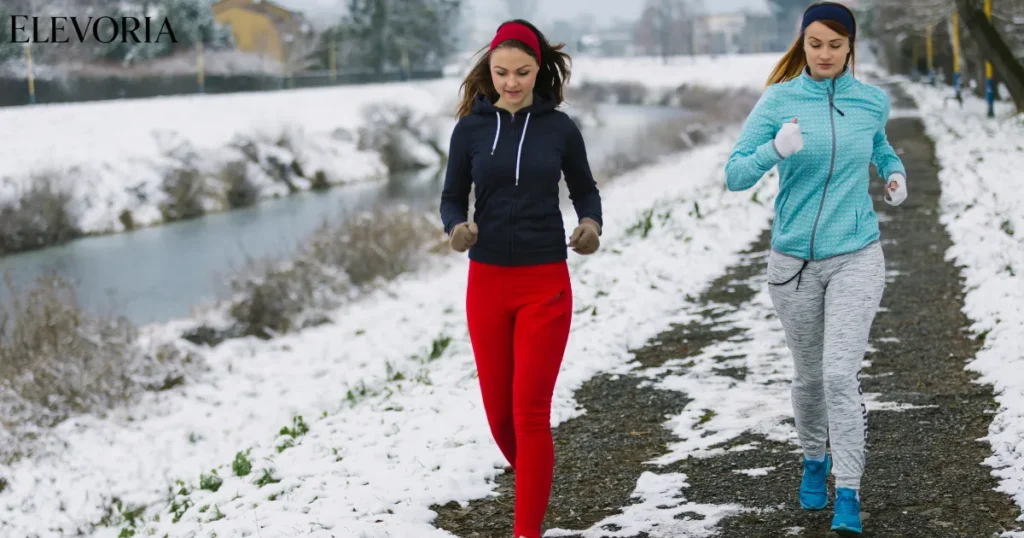
Footwear for winter running
Traction
Ice, packed snow, and wet pavement significantly increase slip risk. Traction devices that attach over regular running shoes, using metal studs or coils, provide meaningful grip improvement on icy surfaces compared to standard running shoe outsoles alone. Some running shoe models are also built with more aggressive, winter-specific outsole patterns designed for better grip in cold, wet, or snowy conditions.
Water resistance
Water-resistant or waterproof running shoes help keep feet dry in slush, light snow, or wet pavement, which matters both for comfort and for reducing the risk of cold-related foot issues on longer runs.
Sock choice
Wool or synthetic moisture-wicking socks perform better than cotton in cold, wet conditions, for the same reasons a cotton base layer underperforms: cotton retains moisture rather than wicking it away, which increases the risk of cold, uncomfortable feet.
Hands, head, and face
- Gloves or mittens: Hands lose heat quickly during cold runs, and lightweight, wind-resistant gloves are one of the most commonly underrated pieces of winter running gear. Mittens tend to trap more warmth than individual-finger gloves, since fingers share heat when kept together.
- Hat or headband: A significant amount of heat is lost through the head, particularly in windy conditions, making a simple running hat or ear-covering headband one of the highest-impact, lowest-cost pieces of winter gear.
- Neck gaiter or face covering: In very cold or windy conditions, a neck gaiter that can be pulled up over the nose and mouth helps warm incoming air before it reaches the lungs and protects exposed skin from windburn.
Visibility gear for shorter daylight hours
Winter running often means running in low light or darkness, whether due to shorter days or simply adjusting a schedule around work and weather. Visibility gear is not optional safety equipment in these conditions; it is a core part of a complete winter running kit.
- Reflective vests, jackets, or accessories that reflect car headlights
- A headlamp or handheld light for trail or unlit road running
- Blinking rear lights, similar to those used by cyclists, clipped to clothing or a running belt
- Bright or high-visibility colors in addition to reflective elements, since reflective strips only work effectively when a light source is present
Other useful winter running gear
- Lip balm with SPF: Cold, dry air combined with wind exposure can chap lips quickly, and many winter runners overlook this simple addition.
- Sunglasses or clear lens glasses: Useful for both bright winter sun reflecting off snow and for protecting eyes from wind.
- A running belt or small pack: Useful for carrying a phone, extra layer, or hydration on longer cold-weather runs, since cold weather clothing often has fewer or smaller pockets than summer gear.
- Hand warmers: Small disposable or reusable warmers can be a useful backup for very cold conditions, particularly for runners prone to cold hands.
Common mistakes people make with winter running gear
- Overdressing. This is one of the most common winter running mistakes. Because running generates significant body heat, dressing as if you were standing outside typically leads to overheating and excess sweating once you start moving. A common guideline is to dress as if it feels about 15 to 20 degrees Fahrenheit warmer than the actual temperature.
- Wearing cotton as a base layer. Cotton absorbs and holds moisture rather than wicking it away, which can lead to a chilled, uncomfortable feeling once sweat builds up.
- Skipping traction devices on icy routes. Standard running shoes can lose significant grip on ice, and skipping traction gear on known icy routes increases fall risk unnecessarily.
- Ignoring visibility in low light. Running at dawn, dusk, or in the dark without reflective or lighted gear is a common and avoidable safety oversight, particularly during winter months when daylight hours are shorter.
- Not protecting extremities. Hands, ears, and face are often the first areas to feel cold and the last areas people think to cover properly, even when the rest of the outfit is well-planned.
- Wearing the same outer layer regardless of wind. A wind-resistant layer matters far more on exposed or windy routes than on calm, still days, and adjusting your outer layer based on wind conditions, not just temperature, leads to a more comfortable run.
Actionable recommendations
- Build your winter running kit around the three-layer system: moisture-wicking base, insulating mid layer, and wind or water-resistant outer layer, adjusting thickness based on temperature.
- Dress as if it is about 15 to 20 degrees Fahrenheit warmer than the actual temperature to avoid overheating once you start running.
- Prioritize traction devices for any route with known ice or packed snow, rather than relying on standard running shoe outsoles alone.
- Treat visibility gear as essential rather than optional for any run during low light, dawn, dusk, or full darkness.
- Do not overlook hands, ears, and face. These extremities often need more protection than the rest of the body relative to their size.
- Adjust your outer layer based on wind exposure on a given route, not just the general temperature for the day.
- Keep a small emergency kit of hand warmers or an extra layer in a running belt for longer runs in unpredictable conditions.
Frequently asked questions
What should I wear for winter running? A three-layer system works well for most conditions: a moisture-wicking base layer, an insulating mid layer, and a wind or water-resistant outer layer, along with gloves, a hat or headband, and moisture-wicking socks.
How cold is too cold to run outside? This varies by individual cold tolerance and wind chill, but many runners consider extreme wind chill, particularly conditions where exposed skin faces frostbite risk within minutes, a signal to move a run indoors or shorten time outside.
Do I need special shoes for winter running? Not always, but water-resistant shoes and traction devices become important on icy, snowy, or consistently wet winter routes. Standard running shoes may be sufficient in dry, cold conditions without ice.
How do I stay visible during winter runs? Reflective clothing or accessories, a headlamp or handheld light for low-light or unlit areas, and blinking lights are the most effective ways to stay visible during darker winter mornings and evenings.
Should I wear cotton for winter running? No. Cotton absorbs sweat and moisture rather than wicking it away, which can leave you feeling colder and more uncomfortable once you start sweating, even in cold temperatures.
How many layers do I need for winter running? This depends on temperature and wind. A common range is two to three layers, adjusted based on how cold, windy, or wet the conditions are on a given day.
What is the biggest mistake people make with winter running gear? Overdressing is one of the most common mistakes. Because running generates significant body heat, dressing as if you were standing outside typically leads to overheating once you get moving.
Do I need traction devices for winter running? If your running routes regularly include ice or packed snow, traction devices that attach to your shoes provide meaningfully better grip than standard running shoe outsoles alone, reducing slip and fall risk.
The bottom line
The best winter running gear is not a single product but a system: layering that manages moisture and insulation together, footwear suited to the actual surface conditions you are running on, and visibility gear that treats low light as a real safety consideration rather than an afterthought. Getting the layering system right, and resisting the urge to overdress, solves most of the common discomfort issues that come with cold-weather running, while traction and visibility gear address the two biggest safety factors specific to winter conditions.
Read More: Denim Jacket Guide: How to Choose, Style, and Care for a Wardrobe Staple
[…] Read More: Best Winter Running Gear: A Complete Guide to Staying Warm, Dry, and Safe […]