

Quick answer
Black tie is a formal evening dress code that traditionally requires a tuxedo for men and a floor-length or elegant cocktail-length gown for women. For men, the core pieces are a black tuxedo jacket, matching trousers with a satin stripe, a white dress shirt, a black bow tie, and patent leather shoes. For women, the standard is a formal evening gown, though a sophisticated cocktail dress is increasingly accepted at less traditional events. Black tie sits between business formal and white tie in strictness, and it typically applies to evening events starting after 6 p.m.
If you searched “black tie dress code,” you are most likely trying to figure out exactly what to wear to an event with this dress code, what is and is not acceptable, and how to avoid common mistakes that make an outfit read as underdressed or overdressed. This guide breaks that down clearly for both men and women, along with how black tie compares to related dress codes.
What does black tie actually mean?
Black tie is a formal Western dress code historically reserved for evening social events such as galas, formal weddings, opera and theater premieres, awards ceremonies, and upscale holiday parties. It sits below white tie, the most formal dress code, and above cocktail attire or business formal.
The name comes from the black bow tie that is a defining piece of the traditional men’s outfit. Despite the name, the dress code covers a full coordinated outfit, not just the tie itself.
Black tie for men
The core pieces
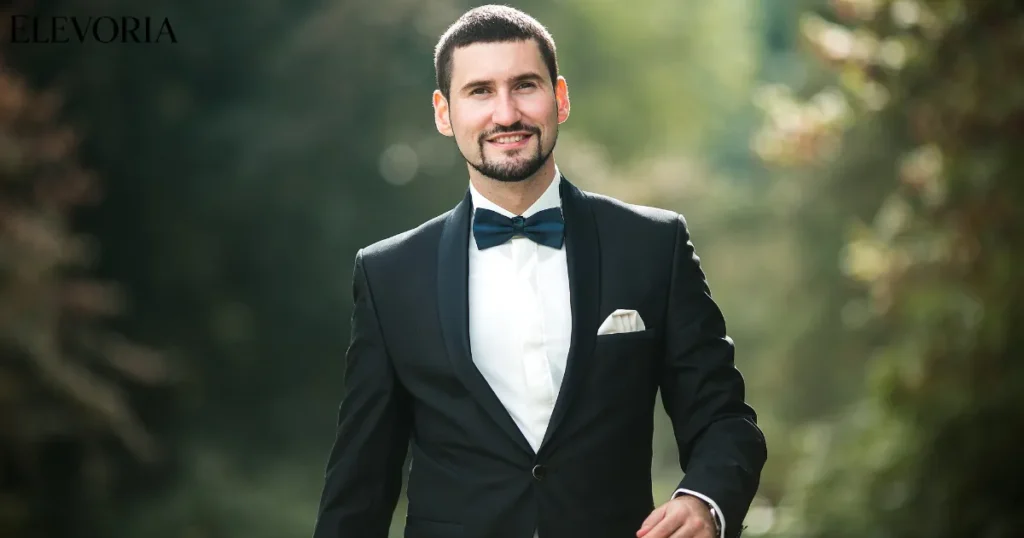
- Tuxedo jacket: traditionally black, in wool or a wool-blend fabric, with satin or grosgrain lapels. Midnight blue is also considered acceptable and can look even richer than black under evening lighting.
- Trousers: matching the jacket, with a single satin stripe down the outer leg and no cuffs.
- Dress shirt: white, typically with a pleated front or a subtle pique bib, and a turndown or wing collar designed to be worn with a bow tie.
- Bow tie: black, in silk or a silk-like fabric, self-tied rather than pre-tied when possible.
- Waist covering: either a cummerbund or a formal waistcoat, matching the black or midnight blue color scheme, worn to conceal the waistband where the shirt meets the trousers.
- Shoes: black patent leather oxfords or formal opera pumps, paired with black dress socks.
- Studs and cufflinks: simple, formal sets, typically in black onyx, mother-of-pearl, or subtle metal tones, used instead of standard shirt buttons on a formal-front shirt.
What men should avoid
- A standard business suit, even a black one, is not a substitute for a tuxedo. The satin lapels and formal shirt details are what distinguish black tie from business formal.
- A long necktie instead of a bow tie is a common mistake and is not considered correct for traditional black tie.
- Brown shoes, sneakers, or boots do not fit the dress code, regardless of how well they otherwise coordinate with an outfit.
- Novelty or brightly colored bow ties move an outfit away from traditional black tie and toward a more relaxed or “black tie optional” interpretation, which may or may not fit the specific event.
Black tie for women
The core pieces
- Gown or formal dress: traditionally a floor-length evening gown, though a well-tailored, elegant midi or cocktail-length dress is now widely accepted, especially for less traditional or more modern black tie events.
- Fabric and finish: formal fabrics such as silk, satin, velvet, or fine crepe are typical, generally with a more polished finish than an everyday dress.
- Shoes: formal heels or elegant flats, chosen to coordinate with the dress rather than for daytime casual wear.
- Accessories: a small clutch or evening bag, and jewelry that leans elegant rather than casual, such as fine metals or classic gemstones.
- Outerwear: a wrap, shawl, or formal coat for outdoor transitions, chosen to complement rather than compete with the dress.
What women should avoid
- Casual fabrics like jersey knit, denim, or overly simple daytime dress silhouettes generally read as underdressed for black tie.
- Overly casual footwear, including flat sandals or sneakers, does not fit the formality of the dress code, even if the dress itself is formal.
- Everyday handbags, especially large totes or casual crossbody bags, tend to clash with the formality of a gown or formal dress.
Black tie versus other dress codes
| Dress code | Formality level | Typical men’s outfit | Typical women’s outfit |
|---|---|---|---|
| White tie | Most formal | Black tailcoat, white waistcoat, white bow tie | Full-length ball gown, formal gloves often expected |
| Black tie | Very formal | Tuxedo with black bow tie | Floor-length or elegant cocktail-length gown |
| Black tie optional | Formal, some flexibility | Tuxedo preferred, dark formal suit acceptable | Formal dress or elegant gown, cocktail-length generally acceptable |
| Cocktail attire | Semi-formal | Dark suit and tie | Cocktail dress, knee-length to midi |
| Business formal | Professional, less formal | Suit and tie | Tailored dress, suit, or professional separates |
Understanding where black tie sits on this scale helps explain why substitutions like a dark suit or a simple dress, while appropriate for cocktail attire, generally read as underdressed for a strict black tie event.
What “black tie optional” and “black tie preferred” actually mean
These variations are common on invitations and often cause confusion.
Black tie optional means a tuxedo is preferred but a dark, formal suit is an acceptable alternative for men. For women, this generally still calls for a formal dress or gown, since the flexibility in this phrasing is aimed primarily at menswear.
Black tie preferred and black tie invited carry a similar meaning to black tie optional: full black tie is encouraged, but not strictly mandatory, giving guests some room to dress slightly less formally if a tuxedo is not available.
Creative black tie invites guests to interpret the traditional dress code with more personal or fashion-forward touches, such as a colored bow tie, a patterned jacket, or a bolder dress silhouette, while still keeping the overall formality of the event in mind.
If an invitation does not specify which version of black tie applies, it is reasonable to assume standard, traditional black tie unless other context (such as a very casual venue) suggests otherwise.
When is black tie typically required?
Black tie is most commonly requested for:
- Formal weddings, particularly evening ceremonies and receptions
- Galas and formal fundraisers
- Awards ceremonies and formal industry events
- Opera, ballet, and theater opening nights
- New Year’s Eve parties and formal holiday events
- Formal corporate dinners and milestone celebrations
Black tie is almost always tied to evening events. Daytime versions of similarly formal dress codes typically use different terminology, such as formal day dress, rather than black tie.
Common mistakes people make with black tie
- Wearing a standard business suit and calling it black tie. Even a very sharp black suit lacks the satin lapels, formal shirt, and bow tie that define the dress code.
- Choosing a long tie instead of a bow tie. This is one of the most common giveaways of an unfamiliar black tie guest.
- Underestimating shoe formality. Casual leather shoes or brown dress shoes do not fit traditional black tie, even if they are otherwise high quality.
- Assuming any dark, formal-looking dress qualifies. For strict black tie events, an everyday dark dress without a more elevated fabric or silhouette can still read as underdressed.
- Ignoring the specific wording on the invitation. Black tie, black tie optional, and creative black tie all carry different expectations, and treating them as interchangeable can lead to a mismatched outfit for the event.
- Overdressing for a black tie optional event. While a tuxedo is always a safe choice, going with excessive accessories or overly elaborate styling can look mismatched if the rest of the room has taken the more relaxed, suit-based interpretation.
Actionable recommendations
- Read the invitation wording carefully. Black tie, black tie optional, and creative black tie each call for a slightly different outfit.
- For men, a well-fitted tuxedo remains the safest and most universally correct choice for any version of black tie.
- For women, choose a formal dress in an elevated fabric such as silk, satin, or velvet, rather than judging formality purely by length.
- When in doubt about a specific event, it is generally safer to lean slightly more formal than the minimum requirement rather than underdress.
- Coordinate shoes and accessories with the same level of formality as the main outfit. A formal jacket or dress paired with casual shoes undermines the overall look.
- If renting or borrowing formalwear, confirm fit well before the event, since black tie garments are more noticeably ill-fitting than casual clothing when sized incorrectly.
Frequently asked questions
What is the difference between black tie and black tie optional? Standard black tie calls for a tuxedo for men and a formal gown or elegant dress for women. Black tie optional allows men to wear a dark, formal suit instead of a tuxedo, while women are generally still expected to wear a formal dress or gown.
Can I wear a suit to a black tie event? For strict black tie, a tuxedo is expected rather than a standard suit. A dark, formal suit is generally only acceptable when the invitation specifies “black tie optional” or a similar flexible variation.
Do women have to wear a floor-length gown for black tie? Traditionally yes, but a well-tailored, elegant cocktail-length or midi dress in a formal fabric is now widely accepted at many black tie events, especially less traditional ones. When in doubt, checking the specific event’s expectations or erring toward a longer, more formal option is the safer choice.
Is a long tie ever acceptable for black tie? No. A black bow tie is a defining element of the traditional black tie dress code for men, and a long necktie is not considered correct within this dress code.
What color should a black tie tuxedo be? Black is the traditional and safest choice. Midnight blue is also considered fully acceptable and is a popular alternative, since it can appear richer than black under evening lighting.
What shoes should men wear with black tie? Black patent leather oxfords or formal opera pumps are the traditional choice, paired with black dress socks. Brown shoes, sneakers, and casual boots do not fit the dress code.
Is black tie the same as formal attire? Black tie is one specific level of formal attire, sitting below white tie and above cocktail or business formal. “Formal attire” is a broader, less precise term that can refer to different dress codes depending on the event.
What does creative black tie mean? Creative black tie allows guests to add personal or fashion-forward touches, such as a patterned jacket or a bolder dress silhouette, while still keeping the overall formality expected of a black tie event.
The bottom line
Black tie is a well-defined formal dress code with clear expectations: a tuxedo and black bow tie for men, and a formal gown or elegant dress for women. The most common mistakes come from either underestimating the formality required or misreading invitation language like “black tie optional” versus standard black tie. Paying attention to the specific wording on your invitation, and matching your shoes and accessories to the same formality level as your main outfit, are the two habits that consistently keep a black tie look correct.
Read More: What to Wear With Black Jeans: A Complete Styling Guide


[…] Read More: Black Tie Dress Code: A Complete Guide for Men and Women […]