

Quick answer
A white dress is one of the most versatile wardrobe pieces, appropriate for everything from casual summer outings to weddings, depending on the style, fabric, and cut. The main etiquette consideration is context: guests are generally expected to avoid wearing white to someone else’s wedding, since the color is traditionally reserved for the bride, while white dresses are otherwise appropriate for nearly any other occasion, from work to formal events.
If you searched “white dress,” you are most likely trying to figure out what style suits a specific occasion, how to style it, or whether it is appropriate to wear in a given setting, particularly around weddings. This guide covers all of that with practical, specific guidance.
Why white dresses are a wardrobe staple
White works as a true neutral, similar to black, which means it pairs easily with almost any accessory color, shoe style, or layering piece. It also has a strong seasonal association with warm weather and lighter fabrics, though white is worn year-round in various weights and styles, from lightweight cotton sundresses to heavier wool or knit dresses for cooler months.
The versatility of white dresses comes largely from styling rather than the dress itself. The same white dress can look casual with sandals and a denim jacket, or elevated with heels and gold jewelry, making it one of the more adaptable pieces in a wardrobe.
White dress etiquette: when to avoid wearing white
The most common question around white dresses relates to wedding etiquette, and the short answer is straightforward: guests are traditionally expected to avoid wearing white, ivory, or any shade that could be mistaken for a bridal color to someone else’s wedding, regardless of the dress code specified.
This norm exists specifically to avoid drawing attention away from the bride or creating confusion about who the bride is. It applies to the wedding itself, and many people extend the same courtesy to related events like bridal showers and engagement parties, particularly if the bride has expressed a preference either way.
Outside of weddings, there is no broad etiquette restriction on wearing white. It is considered appropriate for work, casual outings, parties, and most formal events where the guest of honor is not a bride.
White dress styles by occasion
Casual and everyday
- Lightweight cotton or linen sundresses
- Simple shirt dresses
- Casual midi dresses paired with sandals or sneakers
Work and professional settings
- Structured shift dresses
- Tailored sheath dresses
- Midi-length dresses with a blazer for a polished, professional look
Date night and dinner
- Fitted white dresses in more elevated fabrics like satin or crepe
- Off-the-shoulder or one-shoulder styles for a slightly dressier evening look
- Wrap dresses, which offer a flattering, adjustable fit for a variety of body types
Formal events (non-wedding)
- Floor-length white gowns in silk, satin, or crepe
- Structured, tailored white dresses for galas or formal dinners
- Cocktail-length white dresses in dressier fabrics for semi-formal events
Summer and vacation
- Flowy, lightweight white maxi dresses
- Off-the-shoulder or halter-style sundresses
- Crochet or eyelet white dresses for a relaxed, warm-weather look
Choosing the right white dress fabric
| Fabric | Feel and drape | Best suited for |
|---|---|---|
| Cotton | Breathable, structured or soft depending on weave | Casual and everyday wear, warm weather |
| Linen | Breathable, naturally textured, wrinkles easily | Casual summer and vacation wear |
| Silk or satin | Smooth, fluid drape, more formal appearance | Date nights, formal events, evening wear |
| Crepe | Structured but with some movement, matte finish | Work dresses, semi-formal events |
| Lace or eyelet | Textured, often layered over a lining | Warm-weather casual to semi-formal occasions |
| Knit | Soft, stretchy, warmer | Cooler-weather white dresses, casual wear |
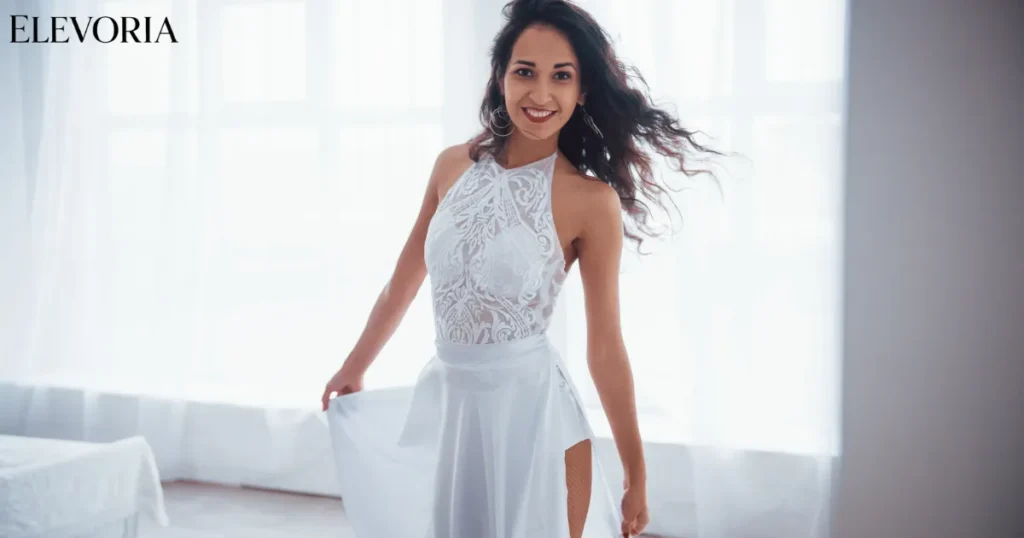
How to avoid the see-through issue with white dresses
One of the most common practical concerns with white clothing is sheerness, particularly in lighter fabrics or under bright lighting.
- Check the fabric’s opacity by holding it up to light before buying, or trying it on in a well-lit fitting room
- Consider a dress with a built-in lining, which many white dresses include specifically to address this issue
- Choose nude or skin-tone undergarments rather than white or contrasting colors, which are less noticeable under white fabric than the reverse might suggest
- For dresses without a lining, a slip in a matching skin tone can solve the issue without altering the look of the dress
How to style a white dress
Casual styling
Pair a white dress with sandals, sneakers, or flat mules, and add a denim jacket or straw bag for an easy, relaxed daytime look.
Elevated or evening styling
Heels, statement jewelry, and a structured clutch shift the same white dress toward a dressier evening look. Gold or warm-toned metals tend to stand out clearly against white, while silver or cooler tones offer a more understated contrast.
Layering for cooler weather
A white dress is not limited to warm months. Layering with tights, a cardigan, or a tailored coat allows white dresses to be worn comfortably in cooler seasons as well.
Color pairing
White works well with nearly every color, but a few combinations are particularly common and reliable:
- White and tan or camel, for a soft, neutral look
- White and black, for high contrast and a classic finish
- White with a single bold accessory color, such as red or cobalt, for a simple pop of color
- White with metallics (gold or silver), for a more elevated evening look
Common mistakes people make with white dresses
- Wearing white to someone else’s wedding. This remains one of the most widely recognized style etiquette rules, and unintentionally wearing white, ivory, or a very pale, easily mistaken shade can create an awkward situation, even if unintentional.
- Not checking for sheerness before an event. Bright lighting or outdoor sun can reveal more than expected with unlined or lightweight white fabrics, so checking opacity ahead of time avoids last-minute issues.
- Wearing the wrong undergarment color. White or brightly colored undergarments often show through white fabric more than skin-toned options.
- Assuming white is only for summer. White dresses in knit, wool blends, or heavier fabrics work well in cooler months, particularly when layered.
- Ignoring stain visibility. White shows stains more visibly than most other colors, which is worth considering for events involving food, drinks, or extended outdoor activity.
White dress care tips
- Wash white garments separately to avoid color transfer from other clothing
- Treat stains as soon as possible, since white fabric shows staining more clearly and stains can set in more visibly over time
- Avoid high heat when drying certain white fabrics, since some can yellow or shrink with repeated high-heat exposure
- Store white garments away from direct sunlight for extended periods, since prolonged light exposure can cause gradual yellowing in some fabrics
Actionable recommendations
- Avoid wearing white, ivory, or a very pale, easily mistaken shade to someone else’s wedding, regardless of the specified dress code.
- Check fabric opacity before an event, especially for lightweight or unlined white dresses, and use a skin-toned slip or undergarments if needed.
- Choose fabric based on occasion: cotton or linen for casual wear, silk or crepe for more formal settings.
- Layer white dresses with tights, cardigans, or coats to extend the style beyond warm-weather months.
- Treat stains quickly and wash white garments separately to keep them looking their best over time.
- Use accessory color and metal tone (gold versus silver) intentionally, since these choices noticeably shift the overall look of a white dress.
Frequently asked questions
Is it OK to wear a white dress to a wedding? As a guest, it is generally considered inappropriate to wear white, ivory, or a very pale shade that could be mistaken for a bridal color, regardless of the wedding’s specified dress code. This norm exists to avoid confusion with or drawing attention away from the bride.
Can you wear a white dress in winter? Yes. White dresses in heavier fabrics like knit or wool blends, layered with tights, cardigans, or coats, work well in cooler months and are not limited to summer wear.
How do I stop a white dress from being see-through? Check the fabric’s opacity in good lighting before wearing it, choose a lined dress if possible, and wear skin-toned rather than white or brightly colored undergarments underneath.
What shoes go best with a white dress? This depends on the occasion. Sandals or sneakers suit a casual look, while heels create a more elevated or formal appearance. Both are appropriate depending on the specific dress and event.
Can I wear a white dress to a baby shower or bridal shower? For baby showers, white is generally acceptable unless the host has specified otherwise. For bridal showers, many guests choose to avoid white as a courtesy to the bride, though this is a softer norm than the rule for the wedding itself and can vary by the bride’s own preference.
Does a white dress make you look bigger? Fit, fabric, and structure matter far more than color alone. A well-fitted white dress in a structured or slightly textured fabric can be just as flattering as any other color, and color alone is not considered a reliable factor in how a garment appears on the body.
How do I keep a white dress from staining? Immediate stain treatment is the most effective approach, along with avoiding high-risk situations like eating messy foods while wearing lighter, unlined fabrics, and washing white garments separately from colored items.
What is the difference between white and ivory dresses? White is a true, cool-toned white, while ivory has a warmer, slightly creamy undertone. Both are commonly avoided by wedding guests for the same reason, since ivory can also be mistaken for a bridal shade in certain lighting or fabric types.
The bottom line
A white dress is one of the most flexible pieces a wardrobe can include, moving easily from casual daytime wear to formal evening events depending on fabric, cut, and styling. The one consistent rule worth remembering is wedding etiquette: white, ivory, and closely related pale shades are best avoided as a guest, while nearly every other setting welcomes a white dress without restriction.
Read More: Smart Casual: What It Means and How to Dress It Right



[…] Read More: White Dress Guide: How to Choose, Style, and Wear One for Any Occasion […]