
Gel Manicure: The Complete Guide to What It Is, How It Works, and What to Expect
A gel manicure is one of the most requested nail services today, mostly because it solves a problem regular polish never could: chipping within a day or two. This guide covers exactly what a gel manicure involves, how it compares to other manicure types, how to take care of one, and what to know before booking your first appointment.
What Is a Gel Manicure
A gel manicure is a type of nail polish application that uses a gel-based polish cured under UV or LED light, rather than air-dried like traditional polish. The curing process hardens the polish almost instantly, which is why gel manicures come out of the salon fully dry and resistant to smudging right away.
The gel formula itself is chemically different from regular nail polish. It contains photoinitiators, compounds that react to UV or LED light and trigger a hardening process called polymerization, which is what makes the polish cure quickly and last significantly longer than regular lacquer.
How a Gel Manicure Differs From Regular Polish
| Factor | Gel Manicure | Regular Polish |
|---|---|---|
| Drying method | Cured under UV or LED light | Air dries over time |
| Typical wear time | Two to three weeks | Three to seven days |
| Dry time in salon | A few minutes per coat | 20 to 60 minutes to fully harden |
| Removal method | Soaked in acetone, gently scraped | Regular polish remover |
| Shine level | High gloss, long lasting | Fades faster, needs top coat reapplication |
| Cost | Generally higher | Generally lower |
| Nail damage risk | Higher if removed improperly | Lower |
The core tradeoff is durability versus nail health. Gel manicures last significantly longer, but improper removal is one of the most common causes of nail damage associated with this service.
Gel vs Dip Powder vs Acrylic: How They Compare
These three services are often confused, so it helps to separate what each one actually is.
Gel manicure applies a gel polish over the natural nail and cures it under light. It adds color and shine but very little structural strength or length.
Dip powder involves dipping the nail into colored powder, layered with a bonding agent, rather than using a brush-applied polish. It tends to be more durable than gel and does not require a UV or LED lamp, though it can be slightly bulkier looking.
Acrylic is a liquid and powder mixture applied and shaped to add length and strength to the nail, most often used for extensions rather than simply adding color to natural nails.
If length or added strength is the goal, gel is not the right service. Gel is primarily a polish enhancement, not a nail extension method, though it can be combined with extensions in some salon services.
The Gel Manicure Process Step by Step
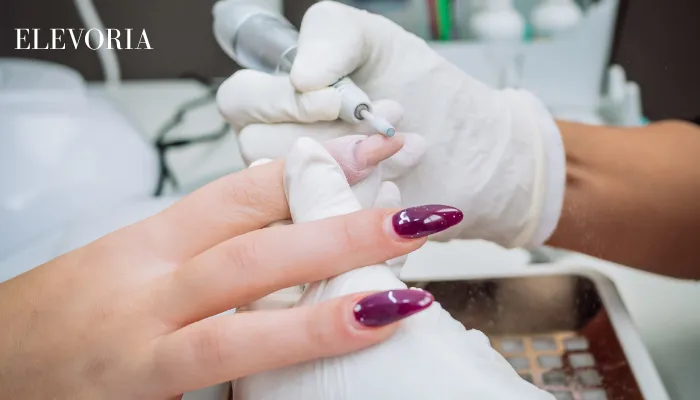
- Nail prep. Nails are shaped, cuticles are pushed back or trimmed, and the natural nail surface is lightly buffed to help the gel adhere properly.
- Base coat application. A thin gel base coat is applied and cured under UV or LED light, usually for 30 to 60 seconds depending on the lamp type.
- Color application. One or two thin coats of gel color are applied, each cured separately under the lamp before the next layer is added.
- Top coat application. A glossy gel top coat seals the color and is cured a final time, giving the manicure its signature shine.
- Cleanup. Any sticky residue left on the surface after curing, known as the inhibition layer, is wiped away with alcohol, leaving a smooth, fully cured finish.
How Long Does a Gel Manicure Last
Most gel manicures last between two and three weeks before noticeable regrowth or chipping occurs. Actual wear time depends on several factors, including how fast the individual’s nails grow, how much the hands are exposed to water and chemicals, and how well the manicure was applied in the first place.
Nails naturally grow at different rates, which affects how quickly the base of the gel manicure starts to show a gap at the cuticle, even if the polish itself has not chipped.
How to Remove a Gel Manicure Safely
Improper removal is one of the leading causes of nail thinning and damage associated with gel manicures, which makes proper technique important.
- Lightly buff the top glossy layer of the gel to break the seal, without buffing into the natural nail.
- Soak a cotton ball in acetone and place it directly on the nail, then wrap the fingertip in foil to hold it in place.
- Leave the foil wraps on for about 10 to 15 minutes to allow the acetone to soften the gel.
- Gently push off the softened gel using a cuticle stick, without scraping or forcing any areas that have not fully softened.
- If gel remains after gentle scraping, repeat the soaking process rather than forcing it off, since forcing removal is what typically causes nail thinning.
Picking or peeling off gel polish without soaking it first is one of the most damaging habits associated with gel manicures, since it often pulls off layers of the natural nail along with the polish.
Is Gel Manicure Bad for Your Nails
Gel manicures themselves are not inherently damaging when applied and removed correctly. Most nail damage associated with gel manicures comes from improper removal, particularly peeling or picking off the polish instead of soaking it off properly.
Repeated buffing before each new application can also thin the natural nail over time if done too aggressively. Taking occasional breaks between gel manicures allows nails to rehydrate and recover, particularly if any thinning or brittleness has been noticed.
Regarding UV exposure, the lamps used for curing emit UV or LED light for short, repeated intervals. For most people getting occasional gel manicures, this exposure is limited. Those with specific skin cancer risk factors or concerns about cumulative UV exposure can ask salons about LED lamps, which typically require shorter curing times than UV lamps, or request sunscreen application on the hands before curing.
Common Mistakes People Make With Gel Manicures
Peeling off gel polish instead of soaking it off. This is the single most common cause of nail damage linked to gel manicures, since peeling removes layers of the natural nail along with the polish.
Getting gel manicures back to back with no breaks. Continuous cycles without any recovery time between removals can leave nails thinner and more brittle over time.
Skipping cuticle oil during the wear period. Gel polish can make nails look and feel dry over time if cuticle oil is not used regularly, since the gel seal can reduce natural moisture exchange.
Choosing a salon with poor sanitation practices. Nail tools that are not properly sanitized between clients carry a risk of fungal or bacterial infection, which is a legitimate health consideration regardless of manicure type.
Removing gel manicures at home without proper technique. Rushing the soak time or forcing the gel off before it has fully softened increases the risk of nail damage.
Expert Insight: Why Two Thin Coats Outperform One Thick Coat
One detail often missed in general gel manicure guides is that application technique affects durability as much as the product itself. Two thin, evenly cured coats of gel color typically last longer and resist chipping better than one thick coat, because thick gel layers can trap uncured product underneath the surface, leading to soft spots that chip prematurely.
This is part of why salon-applied gel manicures often outlast at-home attempts, since proper thin-layer application and full curing time between coats require some technique and patience that is easy to rush when doing it yourself.
At-Home Gel Manicure Kits: What to Know
At-home gel kits have become widely available and typically include a small UV or LED lamp along with gel base coat, color, and top coat. These can work well for maintenance between salon visits or for people comfortable with the application process.
The main challenges with at-home application are achieving thin, even coats and ensuring full curing under a smaller, less powerful lamp compared to professional salon equipment. Incomplete curing is a common issue that leads to gel manicures chipping earlier than expected when done at home.
Actionable Recommendations
- Always request or perform a proper acetone soak-off rather than peeling gel polish, regardless of whether the manicure was done at home or in a salon.
- Apply cuticle oil daily during the wear period to offset the drying effect gel polish can have on the surrounding skin and nail.
- Take a short break between gel manicure cycles if nails start to feel thin or brittle.
- Choose a salon with visible sanitation practices, including sealed tool packaging or proper sterilization equipment.
- If using an at-home kit, apply thin coats and confirm full curing time for each layer rather than rushing the process.
Conclusion
A gel manicure offers a longer-lasting, chip-resistant alternative to regular polish, but the benefits depend heavily on proper application and removal. Understanding how gel differs from dip powder and acrylic, following correct removal technique, and giving nails occasional breaks are the main factors that determine whether a gel manicure looks great and stays healthy over time. With the right approach, gel manicures can be a reliable, low-maintenance option for weeks at a time without compromising nail health.
FAQ
How long does a gel manicure last?
Most gel manicures last between two and three weeks, depending on nail growth rate, water and chemical exposure, and application quality.
Is a gel manicure bad for your nails?
Gel manicures are not inherently damaging when applied and removed correctly. Most nail damage comes from improper removal, particularly peeling the polish off instead of soaking it away with acetone.
What is the difference between gel and dip powder nails?
Gel is a light-cured polish applied over the natural nail, while dip powder involves dipping the nail into colored powder layered with a bonding agent. Dip powder tends to be more durable but does not require a UV or LED lamp.
Can you remove a gel manicure at home?
Yes, using the acetone soak-off method with foil wraps, though care should be taken to avoid forcing off any gel that has not fully softened.
Why do gel manicures require a UV or LED lamp?
Gel polish contains photoinitiators that react to UV or LED light to trigger a curing process called polymerization, which hardens the polish quickly.
How much does a gel manicure typically cost?
Costs vary widely by location and salon, but gel manicures generally cost more than regular polish manicures due to the additional product and curing process involved.
Can you get a gel manicure while pregnant?
Many people continue to get gel manicures during pregnancy, though those with specific concerns about UV exposure can ask about LED lamps, which typically require shorter curing times, or discuss any concerns with a healthcare provider.
How often should you take a break from gel manicures?
There is no fixed rule, but taking a short break between cycles if nails appear thin, brittle, or dehydrated is a reasonable practice to support nail health.
Read More: Summer Nail Colors: Best Shades and How to Choose

[…] Read More: Gel Manicure: Complete Guide to What to Expect […]