
Pastel Nails: Colors, Designs, and How to Get Them Right
Pastel nails are one of those looks that photograph beautifully, feel endlessly wearable, and work almost regardless of occasion. They sit between neutral and colorful without fully committing to either, which is part of their lasting appeal. A soft lavender or a butter yellow reads as polished at work and playful at a weekend brunch.
But if you have ever tried painting pastels at home, you already know the frustrating truth: they are one of the trickiest polish shades to apply cleanly. Light formulas go on streaky, colors can look washed out on some skin tones, and a shade that looked dreamy in the bottle can seem almost invisible on the nail.
This guide covers what you actually need to know: which pastels are trending now, how to choose shades for your skin tone, the right application technique for streak-free results, and the design ideas worth bookmarking for your next appointment or at-home session.
What Are Pastel Nails?
Pastel nails refer to any manicure using pastel-colored polish, which is nail color that has been mixed with white to produce a pale, soft, light-toned version of a base hue. Pastel pink is pink diluted with white to produce a gentle blush. Pastel blue is blue lightened to a sky or powder tone. Pastel green becomes mint or pistachio. The defining quality is a low saturation, airy look rather than a deep or vivid color.
Pastel nails are not the same as “dusty” or “muted” nails, though the two are often confused. Muted or dusty shades are desaturated with grey rather than white, which produces a softer, sometimes vintage-toned result. Dusty mauve and dusty rose are muted colors. Baby pink and blush are pastels. Both trends are popular but they have distinctly different visual effects, and they suit different outfits and complexions.
Why Pastel Nails Are Always Popular
Pastel shades have remained a consistent fixture in nail trends for decades, with good reason.
- They are versatile enough to work across every nail length, from short and natural to long acrylics and coffin-shaped extensions.
- They suit almost any outfit because they function as near-neutrals while still adding visible color.
- They photograph well in natural light, which matters to anyone who documents their manicure on social media.
- They are professional enough for most workplaces while still feeling expressive.
- They are seasonally flexible, peaking in spring and summer but genuinely workable year-round when the shade and finish are chosen thoughtfully.
Popular Pastel Shades and What Makes Each Special
Not all pastels behave or look the same. Here is a breakdown of the most enduring and currently trending shades.
Butter Yellow
<cite index=”50-1″>Butter yellow first gained mainstream attention in 2025, with searches for the shade surging globally, and it has since been hailed as a “new neutral” that bridges the gap between traditional neutrals and pastels.</cite> It is a creamy, warm, slightly off-white yellow that reads as sophisticated rather than childish, and it works particularly well on medium to deeper skin tones where it creates a striking contrast. On lighter skin tones, a yellow base coat helps prevent the shade from disappearing against the nail.
Lavender
Lavender is one of the most consistently requested pastel shades in salons, and it suits a wide range of skin tones because cool purple has natural depth that other pastels like pale pink sometimes lack. It ranges from barely-there lilac to a more decisive soft violet depending on the specific formula.
Mint Green
Mint green is one of the cooler-toned pastels, reading as fresh rather than earthy. It photographs particularly well in natural light and works across nail shapes. Pistachio, a slightly greener, nuttier interpretation of mint, has become more prominent as an alternative that feels current and slightly unexpected.
Baby Blue and Periwinkle
<cite index=”56-1″>Pastel gel polish in lavender, mint, baby pink, and butter yellow is dominating as a clean, modern finish that works across all nail lengths for everyday and occasion wear.</cite> Alongside these, periwinkle, a blue with a purple undertone, has emerged as a particularly flattering take on blue for those who find straight baby blue a little cold.
Blush Pink and Soft Peach
These shades sit closest to nude territory, making them the most universally work-appropriate pastel options. Blush leans slightly cooler and rosy, while peach has a warm, golden undertone. Both are popular for bridal manicures and events where the nails need to feel polished without distracting.
Milky White
Technically a pastel when it has a slight sheer or off-white quality, milky white is one of the most popular finishes in the current nail landscape. It is the basis for the “glazed nails” and “soap nails” trends and serves as a clean, minimal alternative to a full-coverage pastel for those who want a subtle effect.
Choosing Pastel Shades for Your Skin Tone
Skin tone has a real effect on how pastel polish reads once it is on the nail, and choosing with this in mind prevents the disappointment of a shade looking very different from its bottle color.
Fair or Light Skin Tones
Virtually every pastel works on fair skin, though very pale shades such as barely-there blush or pure milky white can blend so closely into the nail and skin that the color becomes hard to distinguish. Opting for pastels with a slightly stronger concentration of color, such as mint green, a deeper lavender, or a true butter yellow, prevents this effect. Adding a white or cream base coat beneath very light pastels also helps the color read more clearly.
Medium and Olive Skin Tones
Medium and olive tones offer the most flexibility with pastels. Warmer pastels such as peach, coral-pink, and butter yellow are particularly flattering because the contrast creates a vibrant, sun-kissed effect. Cooler pastels work well too, though lavender and baby blue can occasionally read a little more grey-purple or washed out on olive skin if the specific formula lacks adequate pigment.
Deep and Dark Skin Tones
Deeper skin tones can wear pastels, but the results depend heavily on the specific shade and the technique. Very light pastels, including most milky whites and barely-there pinks, may read more as a slight sheen than as a distinct color. The pastel shades that work best are those with sufficient pigment to show up clearly: bright mint, vivid butter yellow, and deeper lavender are typically strong choices. Applying a white base coat before pastel polish is one of the most reliable techniques for making pastels pop on deeper skin tones, as the white creates a true starting point for the color rather than blending into the nail bed.
Pastel Nail Designs: Ideas Worth Trying
Solid pastels are the simplest and often most elegant option, but the range of nail art that works with pastel palettes is genuinely wide. These are the formats that are currently most popular and that work consistently well.
Solid Pastel Manicure
A single pastel shade, evenly applied across all nails, is the starting point and remains one of the most satisfying results you can achieve. The key is execution: proper prep, a white base on deeper tones, and the right number of coats.
Pastel Skittle Nails
The skittle manicure involves painting each nail a different pastel shade, using colors that complement each other without clashing. A classic combination might include blush pink, soft lavender, mint green, baby blue, and butter yellow. It looks best when the shades are kept within a similar saturation level so the palette feels cohesive rather than random.
Pastel French Tips
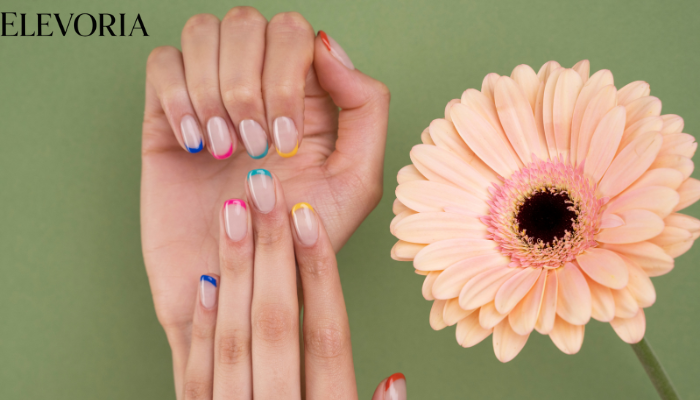
<cite index=”54-1″>Polka dots remain a seasonal favorite reimagined for 2026 with a lighter touch, and pastel French tips continue to be one of the most wearable designs, offering a subtle, chic alternative to the classic white tip format.</cite> A pastel French tip uses a soft color at the nail’s free edge rather than the traditional stark white, usually over a sheer or natural base. Butter yellow, lavender, or mint all work well for this, and the result feels modern and refined.
Pastel Ombre and Gradient Nails
Ombre blends one pastel into another across the nail, typically using a makeup sponge to dab two colors at the transition point. <cite index=”54-1″>In pastels, the gradient is particularly beautiful when combining complementary shades such as lilac, pink, and salmon, as the transition between similar-temperature tones is subtle and elegant rather than abrupt.</cite> Single-color ombre, where a pastel fades from deeper at the base to lighter at the tip, is slightly easier to execute at home.
Pastel Floral Nail Art
Delicate flowers painted onto a pastel background, or onto a clear or nude base, are one of the most perennially popular forms of pastel nail art. Micro florals, tiny detailed flowers painted with a fine-tipped nail art brush, are a current trend specifically, and work particularly well on a pastel blue, lavender, or mint background.
Pastel Swirls and Abstract Art
Abstract swirls in contrasting pastels, typically painted freehand or using a blooming gel technique, have been widely popular and remain a strong option. The organic, non-symmetrical quality of swirls is forgiving for at-home attempts, and the results look intentional even when the lines are imperfect.
Two-Tone Geometric Designs
<cite index=”54-1″>Two-tone geometry featuring a duo of contrasting pastels divided by a soft wavy line is one of the current high-impact designs that is surprisingly achievable at home.</cite> The approach works especially well with pairs like mint and butter yellow, or lavender and peach.
Pastel Cloud Nails
A whimsical design featuring soft, fluffy cloud shapes painted over a sheer or pastel base has become one of the more distinctive current looks, particularly as a way to wear the barely-there trend with more personality.
Nail Shapes That Work Best With Pastels
Pastel polish works across all nail shapes, but some shapes show off light colors more effectively.
- Short and square creates a clean, modern look with solid pastel shades. The flat edge emphasizes the color clearly.
- Oval and almond are considered among the most flattering for pastel french tips, as the gentle shape echoes the softness of the color palette.
- Coffin and stiletto make a graphic impact with pastels, particularly when combined with nail art such as swirls or florals.
- Squoval (the hybrid between square and oval) is currently one of the most popular shapes and suits virtually every pastel design.
How to Apply Pastel Nail Polish Without Streaks
This is where most at-home pastel manicures go wrong. The reason pastel polishes streak more than darker shades is not a coincidence of product quality: it is structural. <cite index=”57-1″>Sheer and light-colored polishes, including pastels and whites, often have a thinner consistency, which can lead to visible streaks. Polishes with a high water content or old polishes that have thickened over time can also look streaky.</cite>
The good news is that streaky pastels are a technique problem, not an insurmountable one. Here is the process that works.
Step 1: Prepare the Nail Surface Properly
Remove all existing polish completely and wash your hands. Buff the nail surface lightly with a fine-grit buffer to smooth out any ridges, then wipe each nail with a little acetone or a nail dehydrator to remove surface oils. Oil residue is one of the most common reasons even quality polish looks patchy.
Step 2: Apply a Ridge-Filling Base Coat
A standard base coat helps, but a ridge-filling base coat is a better choice for pastels specifically because it creates a genuinely smooth, even surface that light-pigmented formulas can adhere to without emphasizing the ridges or variations in the nail surface.
For pastels on deeper skin tones, or for any shade that tends to look transparent, applying a white or cream-tinted base coat here makes a significant visual difference to the final color payoff.
Step 3: Apply the First Color Coat in Thin Strokes
<cite index=”57-1″>Apply thin, even strokes starting from the base of the nail and moving toward the tip using three strokes: one in the center, one to the left, and one to the right. Let the first coat dry for a minute or two before applying the second coat.</cite> Do not try to achieve full coverage in the first coat. With pastels, the first coat will almost always look streaky and uneven. This is normal and expected. The goal of the first coat is to create an even but thin base for the second coat to build on.
Step 4: Use the Matte Topcoat Sandwich Trick
This is the technique most competing guides miss entirely, and it makes a noticeable difference. After your first color coat dries, apply a thin layer of matte topcoat over it before adding your second color coat. The slightly textured surface of the matte topcoat gives the second layer of pastel polish more to grip onto, which produces significantly more even coverage. Once the second color coat is dry, seal with your regular glossy topcoat as normal. The matte layer disappears entirely in the final result.
Step 5: Apply the Second and Third Thin Coats
<cite index=”62-1″>The secret to a streak-free finish is applying multiple thin coats rather than one or two thick ones. A thick coat takes longer to dry and is more likely to smudge, bubble, and look uneven.</cite> Most pastels need two to three thin coats for full, even coverage. Wait fully between coats, do not rush, and resist the urge to touch up while the coat is still wet.
Step 6: Cap the Free Edge
Run your topcoat brush along the very tip of each nail to seal the free edge. This single step significantly extends how long a manicure lasts before chipping starts, and it is one of the most consistently overlooked steps in at-home manicures.
Gel Pastel Nails: Why They Work Better
<cite index=”56-1″>Gel nail polish continues to lead across nail trends, offering durability, high shine, and flexibility for nail art. Using high-pigment gel nail polish for smooth, even coverage and finishing with a gel topcoat to enhance shine and durability is recommended.</cite>
Gel pastels specifically outperform regular polish pastels in a few practical ways. Gel formula does not thin out or become sheer during application the way regular polish can, which means the pigment tends to distribute more evenly with fewer coats. Gel also cures hard under an LED or UV lamp rather than air-drying, which eliminates the smudging risk during the drying window. And gel results typically last two to three weeks without chipping, which matters a great deal for light colors where a chip is highly visible against the pale base.
The trade-off is the requirement for a lamp, a proper gel base coat, and acetone-based removal. If you have an at-home gel setup, using it for pastels is strongly worth considering over regular polish. If you are going to a salon, gel or dip powder in a pastel shade will give you a longer-lasting and more evenly colored result than regular polish in the same shade.
Pastel Nails by Season
Pastels are most strongly associated with spring, but treating them as exclusively seasonal limits their potential.
Spring and early summer are the natural peak. <cite index=”53-1″>Soothing lavender, butter yellow, powdery pink, delicate sky blue, and frosted pastel green add a hint of elegance and feel refreshing for spring and summer occasions like brunch, garden parties, and beyond.</cite>
Late summer is a time when pastels shift toward slightly warmer, more peachy or coral tones that feel less delicate and more sun-soaked.
Autumn suits dustier, slightly deeper pastels, including sage green, dusty lilac, and muted blush, which share a pastel’s lightness but have enough depth to feel seasonally appropriate alongside heavier fabrics and darker wardrobes.
Winter is where pastels are least intuitive but most surprising. Ice-toned pastels, including icy blue, pale silver-lavender, and ghost white, photograph beautifully against winter backdrops and offer an alternative to the heavy reds and deep greens of the typical winter manicure palette.
Expert Insight: What Makes a Pastel Manicure Look Expensive
The gap between a professional-looking pastel manicure and a streaky at-home attempt usually comes down to three factors: surface preparation, coat thickness, and clean edges.
Professionals consistently note that surface prep is the step most people rush or skip. <cite index=”64-1″>Wiping each nail with alcohol or a dedicated nail dehydrator to remove invisible oils and dust creates a clean canvas that allows polish to glide on evenly and adhere properly.</cite> Skipping this step, especially after applying lotion or cooking, is the most common single reason for uneven coverage.
The second factor is coat thickness. A thick coat is tempting because it feels efficient, but pastels specifically punish thick application with visible brush strokes, slow drying, and patchy color. Three thin coats achieve better results than two thick ones, every time.
The third is edge cleanup. A small brush dipped in acetone, run along the skin line around each nail after the final coat dries, removes any smudges or overpainting and immediately gives the manicure a tidier, salon-quality finish.
Common Mistakes With Pastel Nails
Applying only one or two coats and expecting full coverage. Pastels need more coats than darker shades to look even and opaque. Two thin coats is often the minimum, and three may be necessary with sheerer formulas.
Using a basic base coat rather than a ridge-filling one. A ridge-filling base coat creates a genuinely smoother surface that pastels adhere to more evenly. The difference is especially noticeable on nails with natural ridges.
Choosing the wrong shade for your skin tone without testing it. A shade that reads as clearly pastel lavender in the bottle may read as grey-purple or barely visible on your specific nail and skin tone. If you are buying polish for home use, swatching on a practice nail or the inside of your wrist gives a better preview than the bottle alone.
Applying a topcoat too soon. Applying topcoat over polish that is not yet fully dry causes the color to drag, creating a streaky result in the final sealed layer. Waiting a full two to three minutes between the final color coat and the topcoat prevents this.
Skipping cuticle prep. Dry or overgrown cuticles interrupt the clean line at the base of the nail, which is especially visible with pale shades. Pushing back cuticles and applying cuticle oil as part of the pre-manicure routine significantly improves how the finished look reads.
Actionable Guide: Achieving Pastel Nails at Home
- File nails to your preferred shape and buff the surface smooth.
- Push back cuticles and wipe nails with a dehydrator or a cotton pad dampened with acetone.
- Apply a ridge-filling base coat and allow to dry for 90 seconds.
- If the pastel shade is very light or your skin tone is deeper, apply a white or cream base coat over the ridge-filling base.
- Apply the first thin coat of pastel polish using three strokes per nail: center, left side, right side.
- Allow to dry fully, at least two minutes, before the next coat.
- Apply a thin layer of matte topcoat and allow to dry.
- Apply the second thin coat of pastel polish. The coverage should be noticeably more even now.
- Apply a third coat if needed once the second is dry.
- Finish with a glossy topcoat, including capping the free edge of each nail.
- Clean up any skin-line errors with a thin brush dipped in acetone.
- Apply cuticle oil around the skin border for a finished look.
Conclusion
Pastel nails succeed when the shade suits your skin tone, the application technique handles the light formula correctly, and the design is chosen with the nail shape and occasion in mind. They are not the easiest category of polish to apply perfectly, but the specific challenges, sheer pigment and streak-prone formulas, have reliable solutions once you know what they are.
Whether you choose a single butter yellow on every nail, a skittle rainbow across all fingers, or an intricate floral design on a lavender base, the fundamentals are the same: prep the surface well, use thin coats, and use the matte sandwich technique for streak-free results. Get those three things right and pastel nails are one of the most consistently beautiful and wearable manicure choices available.
Frequently Asked Questions
What are pastel nails? Pastel nails are manicures using nail polish shades that have been lightened with white pigment to produce soft, pale versions of colors such as pink, blue, green, yellow, and purple. They are characterized by low saturation and a light, airy appearance.
What are the most popular pastel nail colors right now? <cite index=”53-1″>Nail artists in 2026 are leaning toward pastel hues including butter yellow, soft pink, baby blue, lavender, and mint green, which give a refreshing, light take on colorful nails.</cite> Pistachio and periwinkle are also gaining popularity as slightly more unexpected alternatives to the classic pastel palette.
Why do pastel nails go streaky? Pastel formulas tend to be thinner and more translucent than darker shades because the white pigment that creates the pastel effect dilutes the color and reduces the formula’s overall density. This makes streaks more visible. The solution is multiple thin coats, a ridge-filling base coat, and the matte topcoat sandwich technique between color coats.
How many coats of pastel nail polish do I need? Most pastel polishes require a minimum of two to three thin coats for even, opaque coverage. Sheer or very light formulas may need an additional white base coat before the color coats to achieve a clean result.
Do pastel nails work on dark skin tones? Yes, but shade selection and technique matter. Pastels with more visible pigment, such as mint green, butter yellow, or a deeper lavender, show up more clearly on deeper skin tones. Applying a white or cream base coat beneath pastel polish significantly improves color visibility and payoff on all skin tones.
Are pastel nails only for spring and summer? No. While pastels are most closely associated with spring and summer, they work year-round with thoughtful shade selection. Dusty pastels with a slight grey undertone suit autumn, and ice-toned pastels in silver-lavender, pale blue, or ghost white can work well in winter manicures.
What nail shapes suit pastel polish best? Pastels work across all nail shapes, but oval, almond, and squoval shapes are particularly popular because their curved lines complement the softness of light colors. Coffin and stiletto shapes make a more graphic impact with pastels, especially when combined with nail art.
Is gel or regular polish better for pastel nails? Gel polish generally produces better results for pastels than regular polish because the formula is more pigmented, cures hard rather than air-drying, and lasts significantly longer without chipping. If you have access to an at-home gel lamp and products, gel pastels are worth choosing for a more professional finish.
What is the best base coat for pastel nail polish? A ridge-filling base coat creates a smoother surface that light-pigmented pastel polishes adhere to more evenly. For very light pastels or deeper skin tones, a white or cream-tinted base coat applied over the ridge-filler further improves color payoff and prevents the pastel from looking transparent.
Read More: Skin Boosters: Benefits, Types & What to Expect in 2026


[…] Read More: Pastel Nails: Colors, Designs, and How to Get Them Right […]