
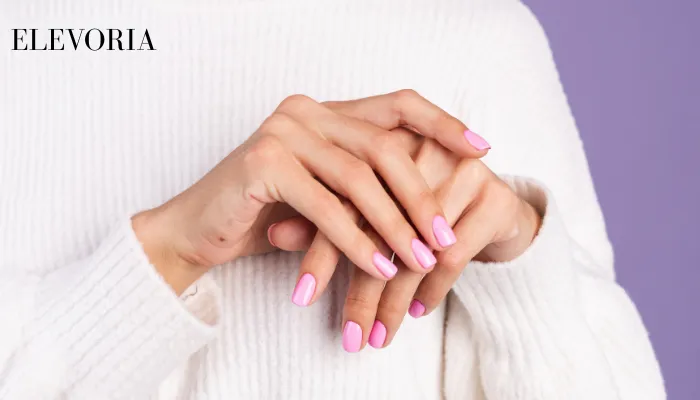
Hard Gel Nails: What They Are and How to Wear Them
Hard gel is a thick, durable gel that is applied to the nail and cured under a lamp. Unlike soft gel or gel polish, it cannot be soaked off with acetone. It is removed by filing. Hard gel is used for overlays, extensions and clients who want a strong, long-lasting set.
What Hard Gel Actually Is
Hard gel is a type of gel nail enhancement that is cured under a UV or LED lamp. The British Association of Dermatologists explains that gel nails are derived from (meth)acrylates and can be applied over the natural nail or used to sculpt extensions, and that the gel needs to be cured or hardened under a UV lamp. It also notes that hard gel cannot be removed by soaking and must be buffed off from the nail.
Hard gel comes in pots and is applied with a brush. It is thicker than gel polish and designed to build structure. You may hear it called traditional gel or hard builder gel. It is different from soft gel, which is more flexible and can be soaked off with acetone.
Hard Gel vs Soft Gel: What Changes
The main difference is removal. Hard gel is filed off. Soft gel, also called soak-off gel, is removed with acetone. This matters if you change your nails often or if you prefer a gentler removal process.
Hard gel is generally considered stronger and more durable. It is commonly recommended for longer extensions, clients who are hard on their nails, and anyone who wants a set that holds its shape for weeks. Soft gel works well for natural nail overlays and shorter lengths.
Application also differs. Hard gel needs to be built in thin layers and guided with a brush because it does not self-level in the same way as some soft gels. It is often used with forms or tips to create length. Soft gel is easier to apply at home, but hard gel generally requires professional training to use safely and well.
Application and Removal
A hard gel appointment starts with prep. The natural nail is filed, the cuticles are pushed back, and the surface is buffed to remove shine. A primer or bonder is applied to help the gel adhere. Then the gel is applied in thin layers and cured under a lamp between each layer.
Hard gel can be used as an overlay on natural nails or built into an extension using forms or tips. The technician shapes the gel to create an apex for strength, then files and refines the surface. A top coat seals the set.
Removal is done by filing. The bulk of the gel is filed away with a coarse file or an e-file, then the technician switches to a finer grit as they approach the natural nail. Over-filing or prying the gel off can damage the nail plate. Never peel hard gel off at home. Book a removal with a trained technician.
Safety and UK Regulations
The British Association of Dermatologists has warned that (meth)acrylate chemicals in gel nails, gel polish and acrylic nails are causing a contact allergy epidemic in the UK and Ireland. Their concerns are based on a study which found that 2.4 per cent of people tested had an allergy to at least one type of (meth)acrylate chemical. Reactions can include redness, itching, swelling or a rash on the fingertips or elsewhere on the body.
The risk rises when uncured product touches the skin. This is more likely with home kits or if the gel is not cured fully. UK law restricts certain acrylates, including HEMA, in nail products to professional use only. Products containing HEMA must be labelled “For professional use only” and “can cause an allergic reaction”. It is illegal to sell HEMA-containing nail products for home use in the UK.
There is also a UK ban on TPO, a photoinitiator used in some UV-cured nail products. Manufacturers could no longer place new products containing TPO on the market from 15 August 2026, and from 14 February 2027, products containing TPO can no longer be purchased by professionals. Salons can continue to use existing stock purchased before that date.
Hygiene matters too. Nail tools and drill bits should be cleaned and disinfected between clients. Electric drills and files should not be used on the natural nail. Ask your technician how they clean their tools.
Aftercare for Hard Gel
Aftercare is simple. Apply cuticle oil daily to keep the surrounding skin comfortable. Wear gloves for cleaning, washing up and gardening, and avoid using your nails as tools. If a nail lifts or breaks, do not pick at it. Book a repair or removal.
If your nails feel thin or sensitive after removal, give them a break before your next set. Cuticle oil and a hand moisturiser can help while they recover. Avoid peeling or forcing off any gel, as this can strip layers from the natural nail.
This is general educational content, not medical advice, and was not reviewed by a medical professional. Patch test any new product first. Results vary by person, skin type and sensitivity. If you are pregnant, breastfeeding or living with a diagnosed skin, allergy or eye condition, check with a doctor, pharmacist or dermatologist before starting a new active ingredient. See a licensed provider for a persistent, severe or worsening reaction. Avoid sharing nail tools, follow storage and period-after-opening guidance, and be careful with counterfeit nail products.

[…] Read More: Hard Gel Nails: What They Are and How to Wear Them […]