
What Is a Gel Manicure?
A gel manicure is a nail polish treatment where a gel formula is painted onto your nails and hardened under a UV or LED lamp. It dries instantly once cured and typically lasts two to three weeks without chipping. The finish is glossy and the colour stays put far longer than regular polish.
What Gel Manicure Actually Means
Gel polish is a premixed product that sits somewhere between traditional nail varnish and gel extensions. It is a hybrid of gel and nail varnish, with a similar consistency to regular polish and applied in a similar way. The difference is what happens next: instead of drying in the air, it cures or hardens under a UV or LED lamp.
The British Association of Dermatologists explains that gel nails are derived from (meth)acrylates, which can be applied over the natural nail or used to sculpt extensions. Gel polish is a premixed version of this, applied like a varnish and cured under a lamp.
This curing step is what gives gel its staying power. A regular polish manicure can take over half an hour to dry and may still smudge. Gel polish cures in 60 to 90 seconds under a specialised lamp, and once cured it cannot be smudged or chipped the minute you leave the salon.
How a Gel Manicure Is Applied
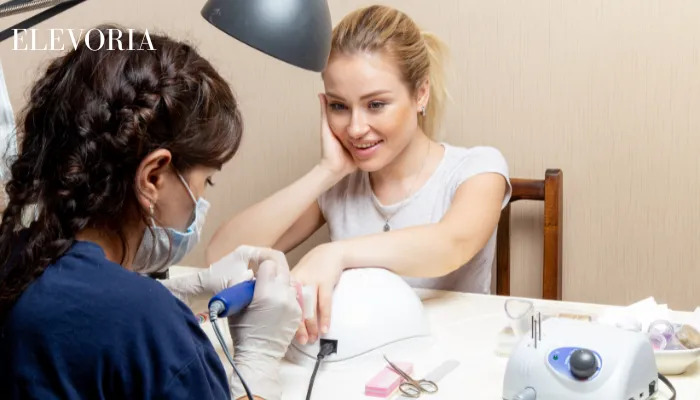
The appointment usually starts with prep. Your technician files your nails to shape, pushes back the cuticles and lightly buffs the surface of the nail to remove shine. This prep helps the gel bond and reduces the chance of lifting.
A base coat goes on first, then one or two coats of colour, then a top coat. Each layer is cured under the lamp before the next one goes on. The lamp emits UVA light, which triggers a chemical reaction that hardens the gel. LED lamps work faster than UV lamps, but both emit UV radiation.
Once the top coat is cured, the nails are wiped with cleanser to remove the sticky layer left behind. The result is a hard, glossy finish that feels dry immediately.
How Long It Lasts and How to Care for It
A well-applied gel manicure should comfortably last two to three weeks. Some people get closer to three weeks without chipping or lifting. How long it lasts depends on your nail growth, how much you use your hands, and how well you look after it.
Aftercare is simple. Apply cuticle oil daily to keep the nail and surrounding skin comfortable. Wear gloves for washing up, cleaning and gardening, and avoid using your nails as tools to open cans or peel labels. If a nail lifts or chips, do not pick at it. Book a removal or a repair instead.
Removal is done with acetone. The top layer of the gel is filed to break the seal, then cotton pads soaked in acetone are placed on each nail and wrapped in foil. After 10 to 20 minutes the gel should look crinkled and can be gently pushed away. Peeling or forcing the gel off before it has softened can strip layers from your natural nail and leave it thin and dry.
Allergies, UV Lamps and Safety
The British Association of Dermatologists has warned that (meth)acrylate chemicals in gel nails, gel polish and acrylic nails are causing a contact allergy epidemic in the UK and Ireland. Their concerns are based on a study that found 2.4 per cent of people tested in UK and Irish dermatology units had an allergy to at least one type of (meth)acrylate.
The risk rises when uncured product touches the skin. This is more likely with home kits or if the gel is not cured fully. Symptoms can include redness, swelling, itching or pain around the nail bed, cuticles or fingertips. Some people develop a rash on their face or neck. If this happens, have the gel removed and speak to a doctor or dermatologist. Once sensitised, you may react to related chemicals in dental fillings, medical adhesives and some cosmetics.
UK and EU cosmetic regulations restrict certain acrylates in nail products to professional use only, with labels stating “for professional use only” and “can cause an allergic reaction”. If you are applying gel at home, follow the lamp and curing instructions exactly, and keep the product off your skin.
UV lamps are another consideration. A 2023 study published in Nature Communications indicated that chronic use of UV-emitting devices during a gel manicure can damage DNA in human cells. Cancer organisations report that occasional gel manicures are not considered a major skin cancer risk, but the evidence shows potential risk rather than definitive proof. If you get gel regularly, you can wear fingerless UV protective gloves or apply sunscreen to your hands before your appointment.
When to Skip Gel
Gel manicures are not suitable for everyone. Do not apply gel to nails that are cracked, split or bruised, as this can increase the chance of a reaction and may make the damage worse. If you have had a reaction to gel polish or acrylics before, speak to a pharmacist or doctor before trying gel again. Some people find that taking a break between sets helps their natural nails recover.
If your nails feel thin, sensitive or sore after removal, give them time before booking another appointment. Cuticle oil and a hand moisturiser can help while they recover.
This is general educational content, not medical advice, and was not reviewed by a medical professional. Patch test any new product first. Results vary by person, skin type and sensitivity. If you are pregnant, breastfeeding or living with a diagnosed skin, allergy or eye condition, check with a doctor, pharmacist or dermatologist before starting a new active ingredient. See a licensed provider for a persistent, severe or worsening reaction. Avoid sharing nail tools, follow storage and period-after-opening guidance, and be careful with counterfeit nail products. Makeup with SPF is not a substitute for dedicated sun protection unless an official source confirms the exact wording.
Read More: Hard Gel Nails: What They Are and How to Wear Them
[…] Read More: What Is a Gel Manicure? A Clear Guide […]