
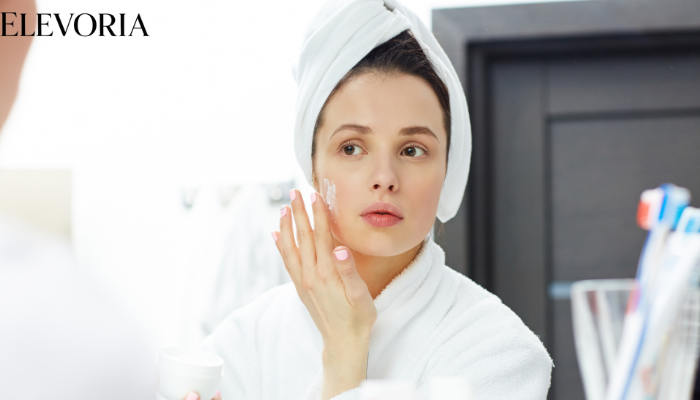
SKIN LAYERING: THE COMPLETE GUIDE TO APPLYING SKINCARE PRODUCTS IN THE RIGHT ORDER
Introduction
You have invested time and money into building a skincare routine. You have the cleanser, the serum, the moisturizer, and the SPF. But are you applying them in the right order?
This question is one of the most frequently asked in the beauty world, and the answer matters more than you might think. Applying products in the wrong sequence can render expensive ingredients ineffective or, worse, irritate your skin. When you layer correctly, your skin absorbs active ingredients efficiently, ensuring you get the maximum benefit from every product you use.
Skin layering is simply the practice of applying skincare products in a specific, methodical order to achieve the best possible results. It is not about using more products. It is about using the right products in the right sequence.
This guide will walk you through everything you need to know about layering skin products, from the fundamental rules to skin-type specific advice, common mistakes, and expert insights.
What Is Skin Layering?
Skin layering is the strategic application of multiple skincare products in a deliberate sequence to maximize absorption and effectiveness. Each product creates a layer on the skin, and when applied correctly, these layers work together to deliver active ingredients where they need to go while sealing in moisture.
The concept gained widespread popularity through Korean beauty routines, which often feature 7 to 10 steps of lightweight hydration. However, the principle applies equally to simpler routines. Whether you use three products or ten, the order in which you apply them determines how well they work.
Think of your skin like a sponge. If you pour water on a dry sponge, it absorbs instantly. If you cover that sponge in thick oil first and then try to pour water on it, the water will just roll off. The same logic applies to your face. Heavier, occlusive products create a seal. If you apply them too early, they block lightweight ingredients from penetrating the skin barrier.
Why Does Layering Order Matter?
Your skin acts as a barrier. It protects you from external impurities while controlling what gets absorbed. Not everything you apply to your skin actually penetrates it. Factors like molecular size, ingredient compatibility, and formulation type dictate how well products sink in and what effect they have.
When you layer products incorrectly, several problems can occur:
Reduced effectiveness: Active ingredients may not reach the deeper layers of skin where they are needed. Applying a heavy cream before a lightweight serum can block the serum from penetrating at all.
Pilling: Products can clump together on the surface of your skin, creating small balls of product that roll off. This happens when oil-based and water-based products are layered incorrectly or when products aren’t given time to absorb.
Irritation: Incompatible ingredients applied together can cause redness, stinging, and inflammation. Some active ingredients neutralize each other, while others create irritating byproducts.
Barrier damage: Layering too many active ingredients, particularly acids and retinoids, can damage your skin’s moisture barrier, making skin more prone to inflammation, dryness, and accelerated aging.
The Golden Rules of Skin Layering
Rule 1: Thin to Thick
This is the single most important rule in skincare layering. Apply products from the thinnest, most watery consistency to the thickest, richest consistency. Lightweight, serum-like products sink in faster and settle into your skin. Then thicker products come in to lock in the benefits.
The typical progression is:
- Watery liquids (toners, essences)
- Gels and serums
- Lotions
- Creams
- Balms and oils
Rule 2: Water-Based Before Oil-Based
Water and oil do not mix. If you apply oil-based products first, water-based serums will struggle to penetrate. Using water-based products on top of oil-based products can also lead to pilling. Always apply water-based formulations before oil-based ones.
Rule 3: Allow Time Between Layers
Products need time to absorb before you apply the next layer. Rushing through your routine causes pilling and reduced absorption. Most experts recommend waiting 30 seconds to one minute between each product. Some dermatologists suggest waiting 5 to 10 minutes, particularly after applying active treatments.
Rule 4: Cleanse First
Every routine starts with a clean canvas. Before you layer anything on, you need to remove dirt, oil, environmental pollutants, and makeup residue so your treatment products can penetrate the skin.
The Complete Step-by-Step Layering Order
Morning Routine
Step 1: Cleanser
Start with a gentle, pH-balanced cleanser to remove impurities that have accumulated overnight. Look for a cleanser that cleanses without stripping your natural moisture barrier.
Step 2: Toner or Essence
Apply a hydrating toner or balancing essence to add an extra layer of moisture and help subsequent serums absorb more effectively. Toners can also help balance your skin’s pH after cleansing.
Step 3: Vitamin C Serum
Vitamin C is a potent antioxidant that protects skin cells from damage caused by UV radiation and pollution. It is best used in the morning and should be applied after toning.
Step 4: Eye Cream (Optional)
If you use an eye cream, apply it before your moisturizer. Use a small amount and gently pat it around the orbital bone.
Step 5: Moisturizer
Apply a moisturizer to hydrate your skin and seal in the active ingredients from previous layers. Choose a formula appropriate for your skin type.
Step 6: Sunscreen
Sunscreen is always the final step in your morning routine. Apply a broad-spectrum sunscreen with SPF 30 or higher to protect against UVA and UVB rays. The only thing you should layer over sunscreen is makeup like powder, concealer, or foundation.
Evening Routine
Step 1: Double Cleanse
In the evening, start with an oil-based cleanser to remove makeup and sunscreen, followed by a water-based cleanser to remove remaining impurities.
Step 2: Toner or Essence
Apply toner or essence on clean, slightly damp skin.
Step 3: Exfoliant (2-3 Times Per Week)
Chemical or enzymatic exfoliators gently dissolve dead skin cells, smoothing the surface and prepping the skin to absorb active ingredients more deeply. Use exfoliants 2 to 3 times per week, not daily.
Step 4: Treatment Serums
Apply your treatment serums, starting with the thinnest consistency. This is where you apply active ingredients like retinol, niacinamide, or hyaluronic acid. Limit yourself to no more than two serums per routine.
Step 5: Eye Cream (Optional)
Step 6: Moisturizer
Apply a richer moisturizer at night to support overnight skin regeneration.
The Basic Minimum Routine
If you are a beginner or prefer a minimalist approach, dermatologists agree on these non-negotiable steps: cleanser, moisturizer, and sunscreen in the morning; cleanser and moisturizer in the evening. Everything beyond these basics is optional and should be added based on your specific skin concerns.
Morning vs Evening: Why It Matters
Not all products are suitable for both morning and evening use. Understanding when to use certain ingredients is essential for both safety and efficacy.
Vitamin C is best used in the morning because it functions as an antioxidant, protecting skin cells from UV-induced free radicals.
Retinol and retinoids are recommended for night use because they make skin more sensitive to UV light and undergo photodegradation in sunlight. Using them at night also supports the skin’s natural overnight regeneration process.
Niacinamide is photostable and can be used in both morning and evening routines.
Sunscreen is only needed in the morning but is absolutely non-negotiable. Sunscreen should be the final step in your morning skincare routine.
Many people make the mistake of treating morning and night routines as interchangeable. They are not. Morning routines focus on protection; evening routines focus on repair and regeneration.
Skin Type Specific Guidance
Layering for Dry Skin
Dry skin needs extra hydration and barrier support. The key is to apply humectant-rich products on damp skin, followed by emollients and occlusives to seal in moisture.
For dry skin:
- Cleanse with a gentle, non-stripping cleanser
- Apply toner on damp skin
- Use hydrating serums with hyaluronic acid or glycerin
- Layer a rich moisturizer with ceramides
- For very dry skin, finish with an occlusive like a balm or facial oil
Layering for Oily Skin
Oily skin still needs hydration, but lightweight products are essential. Oily skin can be dehydrated, meaning it lacks water even though it produces excess oil.
For oily skin:
- Use a gentle, balancing cleanser
- Choose lightweight, water-based formulations
- Opt for gel or water-cream moisturizers
- Avoid heavy oils and thick creams
- Layer multiple lightweight products rather than one heavy one
Layering for Sensitive Skin
Sensitive skin requires a minimal approach with soothing ingredients. The priority is protecting and repairing the skin barrier.
For sensitive skin:
- Limit your routine to 3 to 4 essential products
- Choose fragrance-free, gentle formulations
- Introduce new products one at a time
- Avoid layering multiple active ingredients
- Look for calming ingredients like centella asiatica, oat extract, or ceramides
Layering for Combination Skin
Combination skin has both oily and dry areas, typically an oily T-zone and dry cheeks. The approach is to use lightweight products overall while adding extra hydration to dry areas.
For combination skin:
- Use a gentle, balanced cleanser
- Apply lightweight hydrating layers
- Use a gel or lightweight cream moisturizer
- Add a richer moisturizer only to dry areas if needed
Active Ingredient Compatibility
Not all active ingredients play well together. Understanding which combinations work and which don’t is essential for effective, irritation-free layering.
Compatible Combinations
Vitamin C + Vitamin E: These antioxidants work synergistically, with Vitamin E helping to regenerate Vitamin C.
Niacinamide + Retinol: These two ingredients work together synergistically to improve uneven skin tone and reduce fine lines.
Hyaluronic Acid + Anything: Hyaluronic acid is a humectant that attracts water. It layers well with virtually any other ingredient.
Incompatible or Risky Combinations
Vitamin C (L-ascorbic acid) + Retinol: These can be irritating when used together and may reduce each other’s effectiveness. Use Vitamin C in the morning and retinol at night.
Vitamin C + Niacinamide: Products with high acid levels (pH below 4) can react with niacinamide, making it less effective. However, this is a pH issue, not a class effect. Some forms of Vitamin C can be combined with niacinamide.
Multiple Acids: Layering multiple exfoliating acids (AHAs, BHAs) can irritate and damage the skin barrier.
Retinol + Exfoliating Acids: Using retinol and acids in the same routine can cause significant irritation. Use them on alternating nights or separate morning and evening.
General Active Ingredient Guidelines
- Use no more than two serums per routine
- Alternate products if you have many serums, using different ones in the morning and evening
- Introduce new active ingredients slowly, one at a time
- Always perform a patch test before using a new product
Common Layering Mistakes and How to Fix Them
Mistake 1: Wrong Application Order
The Problem: Applying heavy products first blocks lighter formulations from penetrating.
The Fix: Follow the thin-to-thick rule. Cleanser always comes first, sunscreen always comes last. Everything in between should progress from thinnest to thickest consistency.
Mistake 2: No Wait Time Between Products
The Problem: Rushing causes pilling and reduces absorption.
The Fix: Wait 30 to 60 seconds between each product layer. For active treatments like retinol, consider waiting 5 to 10 minutes.
Mistake 3: Using Too Much Product
The Problem: Over-application clogs pores, wastes product, and reduces effectiveness.
The Fix: Use correct amounts. Serums need only 2 to 3 drops. Moisturizer needs a dime-sized amount. More product does not mean better results.
Mistake 4: Mixing Incompatible Ingredients
The Problem: Some combinations neutralize each other or cause irritation.
The Fix: Use Vitamin C in the morning and retinol at night. Research ingredient compatibility before combining actives. When in doubt, consult a dermatologist.
Mistake 5: Neglecting Neck and Décolletage
The Problem: Stopping at the jawline creates obvious aging differences over time.
The Fix: Extend all products from your face down to your neck and chest using upward motions.
Mistake 6: Aggressive Application Technique
The Problem: Rubbing damages the skin barrier and reduces product effectiveness.
The Fix: Use gentle pressing and patting motions instead of rubbing. The skin on your face is delicate and should be treated accordingly.
Mistake 7: Not Adjusting for Seasonal Changes
The Problem: Using the same routine year-round ignores seasonal and hormonal skin changes.
The Fix: Adjust your products monthly. Add hydrating toners in winter and use lighter formulas in summer. Your skin’s needs change with the environment.
Special Layering Techniques
The Sandwich Method
The sandwich method involves applying a moisturizer, then a treatment (like retinol), then another layer of moisturizer. This technique is particularly useful for sensitive skin or when introducing potent active ingredients. The moisturizer layers buffer the treatment, reducing irritation while still allowing it to be effective.
Skin Flooding
Skin flooding involves layering multiple lightweight, humectant-rich products on damp skin to maximize hydration. The technique typically includes:
- Cleansing
- Applying a facial mist
- Layering a hydrating toner or essence
- Applying a hyaluronic acid serum
- Sealing with a moisturizer
This approach is particularly effective for dehydrated skin and is recommended by dermatologists for conditions like eczema.
Skin Glazing
Skin glazing is a technique for oily skin that involves layering multiple lightweight products to encourage moisture without heaviness. The goal is hydration without clogging pores. Unlike slugging, which uses a thick occlusive layer, skin glazing relies on thin, water-based layers.
Expert Insights
Dermatologists emphasize that skincare layering is about strategy, not quantity. “Layering doesn’t mean using lots of products, it simply means applying the right textures in the right order so your actives work properly,” explains Dr. Devine.
The confusion around layering has increased in recent years. Board-certified dermatologist Dr. Laura Scott notes, “It’s confusing. Some of these products are called serums, but they’re more of a lotion, or they’re labeled a toner but they exfoliate”. This is why understanding the underlying principles, rather than memorizing product names, is so important.
The Australasian Society of Cosmetic Dermatologists provides evidence-based guidance on layering, emphasizing that the order of application should be: cleanser, active serum (if using), eye cream (optional), moisturizer, and sunscreen in the morning. This sequence ensures that active ingredients can penetrate effectively before being sealed in by moisturizer and protected by sunscreen.
Dr. Niketa Sonavane, a celebrity dermatologist, advises using no more than two serums per routine and alternating products between morning and evening to maximize absorption. She also recommends waiting 30 seconds to a minute between layers.
How to Build Your Layering Routine Gradually
If you are new to skincare or overwhelmed by the number of products available, start simple and build gradually.
Month 1-2: The Basics
- Morning: Cleanser → Moisturizer → Sunscreen
- Evening: Cleanser → Moisturizer
Month 3-4: Add a Serum
- Morning: Cleanser → Vitamin C Serum → Moisturizer → Sunscreen
- Evening: Cleanser → Serum (hyaluronic acid or niacinamide) → Moisturizer
Month 5-6: Add a Treatment
- Morning: Cleanser → Vitamin C Serum → Moisturizer → Sunscreen
- Evening: Cleanser → Retinol (2-3 times per week) → Moisturizer
Month 7+: Personalize
- Add toner or essence
- Add eye cream
- Adjust based on seasonal needs and skin concerns
The key is to introduce new products one at a time. This allows you to identify which products work and which cause reactions. It also gives your skin time to adjust.
Product Prioritization: What to Buy First
If you are on a budget, prioritize these products in this order:
- Sunscreen: This is non-negotiable. Sun damage is the leading cause of premature aging.
- Cleanser: You need a gentle, effective cleanser to remove impurities without stripping your skin.
- Moisturizer: Hydration is essential for all skin types, including oily skin.
- Treatment Serum: Choose one serum that addresses your primary concern (aging, hyperpigmentation, acne, or dehydration).
- Additional Products: Add toners, essences, eye creams, and additional serums only after the basics are covered.
A simple, consistent routine with the right products will always outperform an elaborate routine with the wrong products.
Troubleshooting Common Problems
My Products Are Pilling
Pilling occurs when products clump together on the skin. Causes and solutions:
- Solution 1: Wait longer between layers. Give each product 30 to 60 seconds to absorb.
- Solution 2: Check your layering order. Oil-based products should come after water-based products.
- Solution 3: Use less product. Over-application is a common cause of pilling.
- Solution 4: Apply products with gentle patting motions rather than rubbing.
My Skin Feels Irritated
Irritation can result from incompatible ingredients, over-exfoliation, or using too many active products.
- Reduce your routine to the basics (cleanser, moisturizer, sunscreen)
- Stop using active ingredients (retinol, acids, Vitamin C) until irritation subsides
- Introduce products one at a time to identify the culprit
- Consider using the sandwich method for retinol application
My Skin Is Still Dry
Persistent dryness may indicate your routine lacks sufficient hydration.
- Apply hydrating products on damp skin to improve absorption
- Add a hyaluronic acid serum
- Use a richer moisturizer or add a facial oil
- Consider skin flooding or the sandwich method
I’m Not Seeing Results
If you have been consistent for 8 to 12 weeks and aren’t seeing results:
- Reassess your layering order
- Check ingredient compatibility
- Ensure you are using the right products for your skin type and concerns
- Consider whether your products have appropriate concentrations of active ingredients
- Consult a dermatologist for personalized advice
Conclusion
Skin layering is not about complicating your skincare routine. It is about applying the products you already use in the right order so they can work as effectively as possible. The fundamental principles are straightforward: thin to thick, water-based before oil-based, and allow time between layers.
A morning routine should prioritize protection with Vitamin C and sunscreen. An evening routine should focus on repair with retinol and restorative ingredients. Your routine should evolve with your skin’s needs, adjusting for seasonal changes and new concerns as they arise.
The most important takeaway is that consistency and correct application matter more than the number of products you use. A simple, correctly layered routine will always outperform a complex, incorrectly layered one. Start with the basics, build gradually, and always listen to your skin.
If you are unsure about which products to use or how to layer them, consult a dermatologist. They can provide personalized guidance based on your skin type, concerns, and goals.
Frequently Asked Questions
What is the correct order to apply skincare products?
The standard order is: cleanser, toner or essence, treatment serums (from thinnest to thickest), eye cream, moisturizer, and sunscreen in the morning. The general rule is to apply products from thinnest to thickest consistency and water-based before oil-based.
Does serum go before or after moisturizer?
Serum always goes before moisturizer. Serums are lighter and designed to penetrate deeper into the skin. Moisturizers are thicker and seal in the active ingredients from serums while providing hydration.
Can I use Vitamin C and retinol together?
Vitamin C and retinol are best used at different times. Use Vitamin C in the morning for antioxidant protection and retinol at night for skin regeneration. Using them together can cause irritation and reduce their effectiveness.
How long should I wait between skincare layers?
Most experts recommend waiting 30 seconds to one minute between each product layer. For active treatments like retinol, some dermatologists suggest waiting 5 to 10 minutes for full absorption.
What causes pilling in skincare?
Pilling occurs when products clump together on the skin surface. Common causes include applying products too quickly without allowing absorption, using oil-based products before water-based ones, and using too much product.
Should I apply sunscreen before or after moisturizer?
Sunscreen is always the final step in your morning routine, applied after moisturizer. The only exception is if you are applying makeup, which goes over sunscreen.
Can I layer too many skincare products?
Yes. Layering excessive products can cause redness, irritation, and dryness and may contribute to conditions like perioral dermatitis. Using too many active ingredients can also damage your skin’s moisture barrier. Stick to the products your skin actually needs.
What is the sandwich method in skincare?
The sandwich method involves applying moisturizer, then a treatment like retinol, then another layer of moisturizer. This technique buffers the treatment to reduce irritation while still allowing it to be effective.
Is the Korean 10-step routine necessary?
No. The Korean 10-step routine is an approach, not a requirement. Many dermatologists recommend a simpler routine focused on the essentials: cleanser, moisturizer, sunscreen, and targeted treatments for specific concerns.
How do I know if I’m layering products correctly?
If your products absorb well without pilling, your skin feels comfortable (not tight, irritated, or overly oily), and you are seeing gradual improvement in your skin concerns, you are likely layering correctly. If you experience persistent issues, reassess your routine or consult a dermatologist.
Read More: Tan Blur: What It Is, How It Works, and Best Results



[…] Read More: Skin Layering Guide: Correct Skincare Order for Best Results […]