
Raised Bumps on Skin: Causes, Types, and When to See a Doctor
You are washing your hands or putting on lotion when your fingertips brush against something unexpected on your skin. A rough patch, a tiny bump, or a cluster of raised spots that you do not remember being there before. Your mind starts racing. Is it a rash? An allergic reaction? Could it be something serious?
The sudden appearance of raised bumps on the skin can be unsettling. But the vast majority of skin bumps are harmless. Many are caused by common, easily manageable conditions. However, because some bumps can be a sign of something more serious, it is important to know what to look for and when to seek medical advice.
This guide covers the most common causes of raised skin bumps, how to identify them, and when you should see a doctor.
What Are Raised Skin Bumps?
Raised skin bumps are exactly what they sound like: areas of the skin that protrude above the surrounding surface. In dermatology, these are often referred to as papules, nodules, or plaques, depending on their size, shape, and depth.
According to the MSD Manual, papules are elevated lesions usually less than 10 millimeters in diameter that can be felt or palpated. Examples include moles, warts, insect bites, acne lesions, and actinic keratoses. Plaques are palpable lesions greater than 10 millimeters in diameter that are elevated or depressed compared to the skin surface. Nodules are larger, solid, raised bumps that extend deeper into the skin.
The causes of raised skin bumps are numerous. They can result from common skin conditions such as acne and contact dermatitis, growths such as cysts and skin tags, and infections such as chickenpox or impetigo. In some cases, they can be a sign of skin cancer, including melanoma or carcinoma.
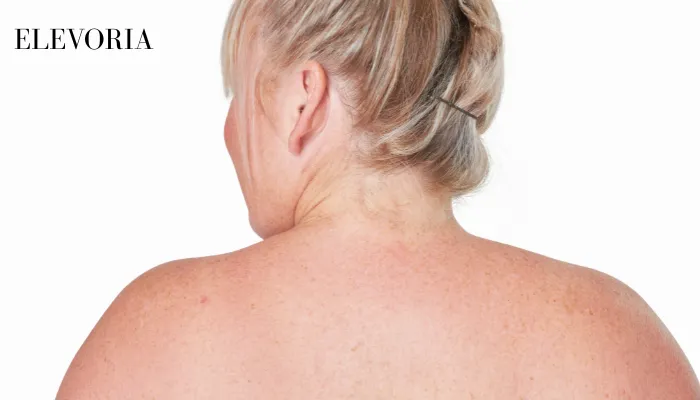
Common Causes of Raised Skin Bumps
Keratosis Pilaris (Chicken Skin)
Keratosis pilaris is one of the most common causes of raised skin bumps. This harmless condition causes dry, rough patches and tiny bumps that often feel like sandpaper. It develops when a protein called keratin forms a scaly plug that blocks the opening of the hair follicle.
The bumps usually appear on the upper arms, thighs, buttocks, and sometimes the face (especially in children). “This is an extremely common skin condition, much like acne,” says Dr. Narat Eungdamrong, a Cedars-Sinai dermatologist. Keratosis pilaris affects 50% to 80% of teens, as well as 40% of adults. The bumps are usually harmless and often resolve on their own by age 30.
Molluscum Contagiosum
Molluscum contagiosum is a fairly common skin infection caused by a virus. It causes round, firm, painless bumps ranging in size from a pinhead to a pencil eraser. The bumps typically have a small dent or dot at the top near the center.
The infection spreads through skin-to-skin contact, contact with infected objects (such as towels or wrestling mats), and sexual contact. Though most common in children, it can affect adults as well. Left untreated, the bumps usually disappear in 6 months to 2 years.
Folliculitis
Folliculitis is a common skin condition that happens when hair follicles become inflamed, often caused by a bacterial infection. It appears as clusters of small bumps or pimples around hair follicles, and may include pus-filled blisters that break open and crust over. Razor bumps (pseudofolliculitis barbae) are a form of folliculitis.
Heat Rash (Miliaria)
Heat rash occurs when sweat is trapped in the skin, leading to small, inflamed bumps. There are different types: miliaria crystallina appears as tiny, clear, fluid-filled bumps that break easily, while miliaria rubra appears as clusters of small, inflamed blister-like bumps that can produce intense itching.
Other Common Bumps
Acne is a common cause of raised bumps, including whiteheads, blackheads, papules, pustules, cysts, and nodules. Acne is caused by blocked pores that become infected.
Hives (urticaria) are raised, often itchy, red bumps on the surface of the skin, usually from an allergic reaction.
Warts are raised bumps caused by a viral infection. Skin tags are small, harmless growths that often appear in skin folds. Cysts are growths that develop under the skin.
Ingrown hairs can cause raised bumps that resemble pimples. Contact dermatitis can cause raised, itchy bumps from exposure to irritants or allergens.
When to See a Doctor
Most skin bumps are harmless and do not require medical treatment unless they cause discomfort. However, there are certain signs that warrant a visit to a healthcare provider.
You should see a doctor if you notice:
- A bump that is painful
- A bump that is growing in size
- A bump that is bleeding
- A bump that is not resolving on its own for a long time
- A bump that is itching persistently
- A new growth on the skin that might look like a mole, a bump, or a scab
- A sore on the skin that won’t heal
- Changes to a mole or freckle, such as getting bigger or changing color
Dr. Eungdamrong notes that “the most common type of skin cancer, basal cell carcinoma, can be a pink bump that tends to bleed, so any non-healing area should be checked”.
Skin cancer can appear in many forms. According to the Mayo Clinic, basal cell carcinoma often looks like a bump that is skin-colored or pink on white skin, or a bump that is brown or glossy black on brown and Black skin. Melanoma, the most dangerous form of skin cancer, may appear as a mole that changes size, shape, or color.
If you notice any changes to your skin that worry you, make an appointment with a doctor or other healthcare professional.
Treatment and Self-Care
Treatment for raised skin bumps depends entirely on the underlying cause.
For keratosis pilaris, moisturizing with a thick emollient may help decrease itchiness, and chemical exfoliants may smooth bumpy skin. Over-the-counter creams containing lactic acid, salicylic acid, or urea can help remove dead skin cells.
For molluscum contagiosum, the bumps usually disappear on their own within 6 months to 2 years. To prevent spreading the virus, wash your hands regularly, avoid touching the bumps, and do not share personal items like towels or clothing.
For folliculitis, warm compresses and keeping the area clean can help. Over-the-counter antibacterial washes or creams may be recommended. For heat rash, cooling the skin and avoiding further sweating can help resolve the bumps.
Do not scratch, pick, or rub your skin, as this can lead to infection and scarring. If you are unsure about a bump or it is causing concern, seek professional medical advice.
Frequently Asked Questions
What are the most common causes of raised skin bumps?
The most common causes include keratosis pilaris (rough bumps on arms and thighs), molluscum contagiosum (viral bumps with a central dimple), folliculitis (inflamed hair follicles), acne, hives, warts, and skin tags. Infections such as chickenpox and conditions like contact dermatitis can also cause bumps.
When should I worry about a raised bump on my skin?
You should see a doctor if a bump is painful, growing in size, bleeding, not healing, or changing in appearance. Any new growth, sore that won’t heal, or changes to a mole should be evaluated by a healthcare professional.
What does a skin cancer bump look like?
Skin cancer can appear in many forms. Basal cell carcinoma often looks like a bump that is skin-colored, pink, brown, or glossy black. Melanoma may appear as a mole that changes size, shape, or color. Squamous cell carcinoma may appear as a rough patch or a sore that won’t heal.
Is keratosis pilaris dangerous?
No. Keratosis pilaris is a harmless skin condition that causes small, rough bumps, often on the upper arms and thighs. It is not contagious and often improves with age.
Can raised skin bumps be itchy?
Yes. Many conditions that cause raised bumps can be itchy, including hives, heat rash, folliculitis, and molluscum contagiosum. Persistent itching that does not improve may warrant a visit to a doctor.
How can I prevent raised skin bumps?
Prevention depends on the cause. For keratosis pilaris, regular moisturizing can help. For molluscum contagiosum, avoid skin-to-skin contact and sharing personal items. For heat rash, stay cool and avoid excessive sweating. For acne, gentle cleansing and non-comedogenic products may help.
Are raised skin bumps contagious?
Some are, and some are not. Molluscum contagiosum is contagious and spreads through skin-to-skin contact and contact with infected objects. Warts are also contagious. Keratosis pilaris, acne, and skin tags are not contagious.
Do raised skin bumps go away on their own?
Many do. Molluscum contagiosum bumps usually disappear within 6 months to 2 years. Keratosis pilaris often improves with age. Hives typically resolve within hours to days. However, bumps that persist, grow, or change should be evaluated by a doctor.
Conclusion
Raised bumps on the skin are common and usually harmless. They can be caused by a wide range of conditions, from the very common and benign (like keratosis pilaris) to infections (like molluscum contagiosum and folliculitis) to, in rare cases, skin cancer.
The key is to pay attention to your skin and know the warning signs. Most bumps do not require treatment. But if you notice a bump that is painful, growing, bleeding, or changing in appearance, see a healthcare professional. Early detection is critical for conditions like skin cancer.
Important: This article is for educational purposes and does not constitute medical advice. The information provided is general in nature and not a substitute for professional medical evaluation. If you have persistent, severe, or worsening skin concerns, or if you are unsure about a diagnosis, see a licensed healthcare provider rather than relying on this information.
Read More: Cleanser for Combination Skin: How to Choose the Right One


[…] Read More: Raised Bumps on Skin: Causes, Types, and When to See a Doctor […]